中文
中文 English
 Español




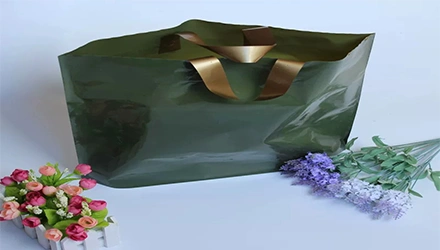
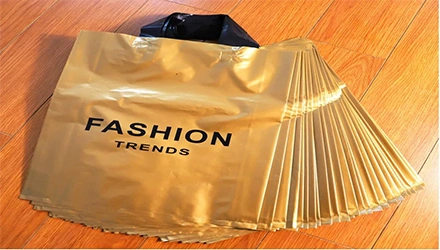
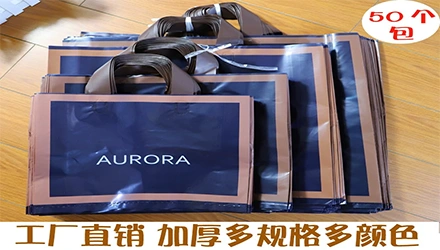
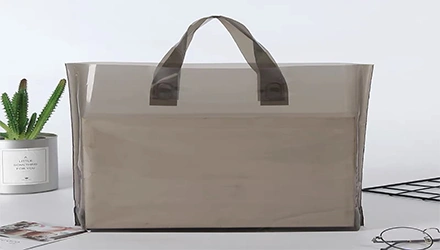
Featuring a drawstring closure for sturdy handles and reinforced bottoms, these bags are ideal for supermarket shopping, fresh produce, and heavy-item packaging.

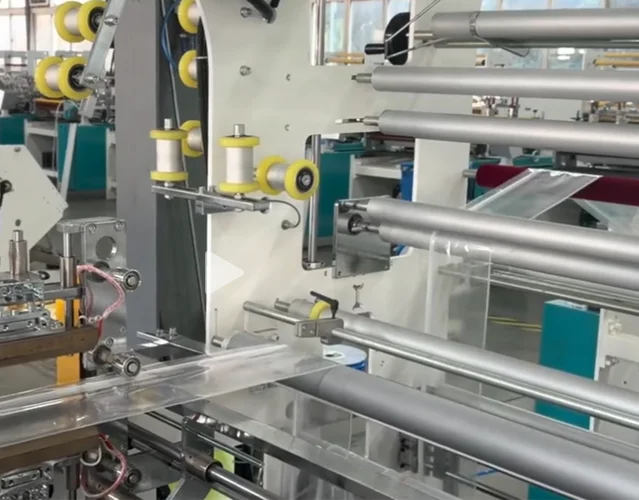
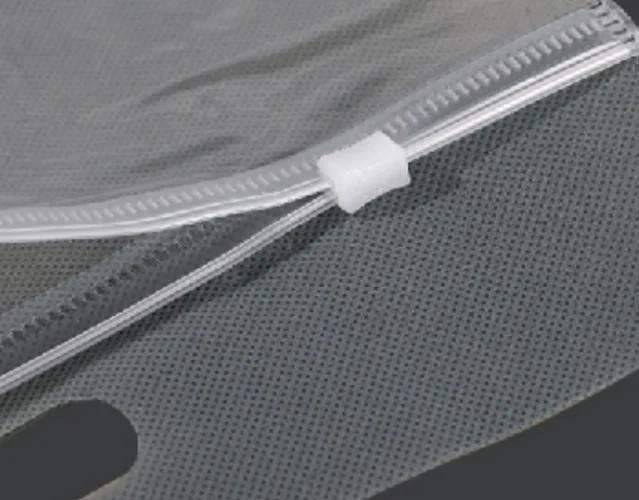
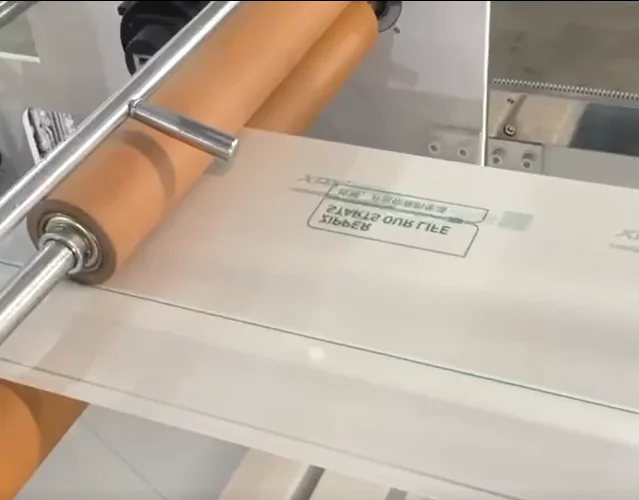
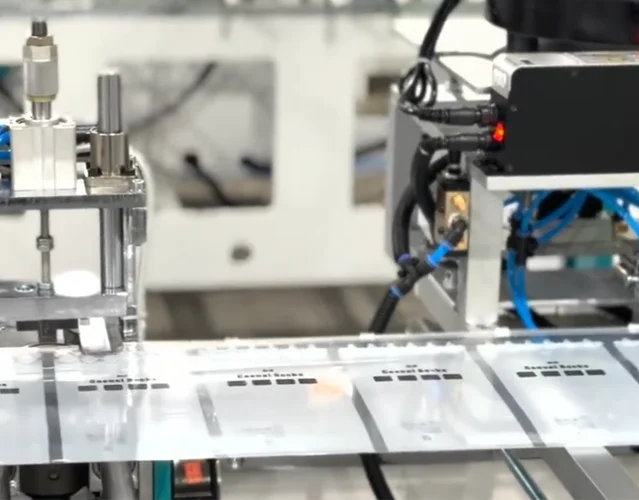
The cost difference between flexographic and gravure film printing is primarily determined by three factors: tooling investment, run length, and operating efficiency. Flexo requires lower upfront tooling costs (photopolymer plates) but has higher per-unit costs at very high volumes, while gravure demands substantial cylinder engraving investment but delivers lower long-run costs. The break-even point typically depends on order volume, design change frequency, and substrate compatibility.
Choosing between flexographic and gravure printing for flexible film packaging is not simply a matter of picking the "better" technology. It is a cost-structure decision that depends on your production volume, design change frequency, material requirements, and quality expectations. This article breaks down the actual cost components, explains where each process has economic advantages, and provides a practical framework for evaluating your specific situation.
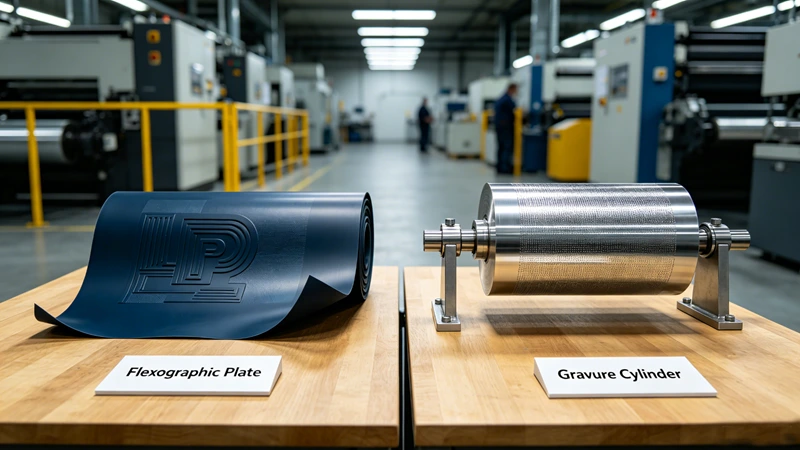
Before comparing costs, it helps to understand what makes each process different at the mechanical level.
Flexographic printing uses flexible photopolymer plates mounted on plate cylinders. Ink is transferred from an anilox roller to the raised image areas on the plate, then pressed onto the film substrate. Modern flexo presses can handle 2-6 colors and are widely used for plastic film, paper, and non-woven materials.
Gravure printing uses engraved metal cylinders — typically copper plated with chrome — where the image is etched into the cylinder surface. Ink fills the engraved cells, and a doctor blade wipes the non-image areas clean before transfer to the substrate. This process is known for high-resolution reproduction and consistent long-run quality.
The fundamental difference in how images are carried to the substrate drives almost every cost difference between the two methods.
To compare costs fairly, you need to look beyond the sticker price of the printing press itself. The total cost structure breaks down into four categories:
| Cost Category | Flexographic Printing | Gravure Printing |
| Image carrier cost | Photopolymer plates: lower per-unit cost | Engraved cylinders: higher per-unit cost |
| Setup/changeover cost | Faster plate mounting and makeready | Longer cylinder changeover and registration |
| Run cost per unit | Higher at very high volumes | Lower at very high volumes |
| Substrate flexibility | Broad — plastic film, paper, non-woven | Primarily film, paper, and composites |
The image carrier is the most dramatic cost difference. A set of photopolymer flexo plates for a multi-color job can cost hundreds to low thousands of dollars depending on size and complexity, while a set of engraved gravure cylinders for the same job can run several thousand dollars due to the precision engraving process.
However, this comparison is incomplete without considering how these costs amortize over the production run.
The cost per printed unit is what ultimately matters for production planning. Here is how the economics shift across different run lengths:
Short to medium runs (roughly under 200,000 linear meters): Flexo typically has a cost advantage. Lower plate costs and faster makeready mean the tooling investment is recovered more quickly. The per-unit cost gap narrows or disappears at these volumes.
High-volume runs (roughly 500,000 linear meters and above): Gravure becomes increasingly cost-effective. The higher cylinder cost is spread across a much larger output, and gravure's consistent quality and faster running speeds reduce per-unit costs. Industry analysis suggests that the break-even point where gravure becomes more economical than flexo can fall in the 80,000–200,000 linear meter range for many job profiles, though this varies significantly by job complexity and color count.
Frequent design changes: Flexo is almost always more economical. Replacing photopolymer plates is faster and cheaper than engraving new cylinders. If your production schedule involves multiple SKUs or seasonal artwork changes, the tooling replacement cost alone can make gravure impractical for anything other than very long, stable runs.
The cost comparison cannot stop at tooling and run length. Several operational factors significantly affect the true cost of ownership:
Makeready time is a major cost driver, especially for shorter runs. Flexo plate mounting and registration typically take less time than gravure cylinder changeover. Industry data indicates that press makeready operations average around 21 minutes for some flexo configurations, with estimates suggesting roughly 9 minutes of that time can represent recoverable waste per setup. Gravure changeover generally takes longer due to the weight and precision requirements of cylinder handling.
Material waste during setup is another cost that accumulates across many small jobs. Every changeover generates some film waste before registration and color are optimized. Flexo's faster makeready tends to produce less setup waste per changeover, which matters more as run lengths shrink.
Cylinder and plate wear affects long-term maintenance costs. Gravure cylinders have a substantially longer life than flexo plates. Chrome-plated gravure cylinders can be re-chromed and re-engraved multiple times, and research has explored coatings that extend cylinder life further. Flexo plates, by contrast, have a finite impression life and must be replaced more frequently, though their lower replacement cost partially offsets this disadvantage.
Cost is not the only factor, and quality requirements can override pure economics.
Gravure is traditionally associated with higher resolution and more consistent print quality across the web, particularly for photographic images and fine text. Flexo has made substantial progress in narrowing the quality gap, with modern plate technology and press automation enabling resolutions that are competitive for most packaging applications.
For film substrates specifically — LDPE, PP, PET, and composite films — both processes are viable, but the optimal choice depends on the specific film and ink system. Water-based and UV-curable ink systems are increasingly used in flexo, which can affect both cost and regulatory compliance. Gravure typically uses solvent-based inks, though energy-saving UV gravure systems are also available.
Use the following checklist when evaluating which printing process fits your production profile:
Choose flexo when:
Your typical run length is under 200,000 linear meters
You have multiple SKUs or frequent artwork changes
Upfront tooling investment needs to be minimized
You want broader substrate flexibility (film, paper, non-woven)
Faster changeover is a production priority
Choose gravure when:
Your runs consistently exceed 500,000 linear meters
Print quality and long-run consistency are critical
Design changes are infrequent
You are printing high-color-count, detailed graphics
The cylinder investment can be amortized across substantial repeat demand
Evaluate both when:
Your run lengths fall in the 200,000–500,000 linear meter range
You have a mix of long and short jobs
Quality requirements are moderate to high
The printing press itself is only one part of the investment equation. For flexible film producers considering an integrated production setup, the ability to connect printing equipment directly with blown film and bag-making lines can affect overall operational costs through reduced handling and intermediate winding steps.
Xinxin's printing press series is designed for integration with blown film production lines, supporting 2-6 color flexographic or gravure configurations with high registration accuracy. For operations evaluating printing equipment as part of a larger production line, reviewing the available configurations and discussing material and production requirements with a technical team can help clarify which setup aligns with specific cost and quality targets.
Q: How much does a flexo printing plate cost compared to a gravure cylinder?
Flexo photopolymer plates are generally less expensive than gravure cylinders. Published industry ranges suggest flexo plates may cost a fraction of the price of engraved gravure cylinders per color, though actual costs depend on plate size, imaging area, and resolution requirements. Buyers should request specific quotes based on their artwork and job specifications.
Q: At what production volume does gravure become more economical than flexo?
The break-even point varies widely based on job complexity, color count, and operating conditions. Industry analyses often cite a range of approximately 80,000 to 200,000 linear meters, but this should be verified with actual production data for each specific job.
Q: Can the same printing press handle both flexo and gravure?
Most presses are designed for one process or the other. Some equipment configurations support both flexographic and gravure printing modules, but this is not universal. The printing machine product page provides an overview of available configurations.
Q: How does cylinder life compare between the two processes?
Gravure cylinders are designed for extended life, with chrome plating providing wear resistance that allows re-use and re-engraving. Flexo plates have a finite impression life and are replaced more frequently. The total cost impact depends on run volume and plate replacement frequency.
Q: Does film material affect the cost comparison between flexo and gravure?
Yes. Substrate compatibility varies between processes. Flexo handles a broader range of materials including plastic film, paper, and non-woven. Gravure is primarily used for film and composite substrates. The specific film and ink system can affect both setup time and running costs.
Q: What about digital printing as an alternative?
Digital printing is increasingly used for very short runs and variable data applications. However, for the production volumes typically relevant to flexible film packaging manufacturers, flexo and gravure remain the primary industrial options. Digital is generally not competitive at the volumes discussed in this article.
The cost difference between flexo and gravure film printing is not a fixed number — it is a function of your specific production profile. Tooling costs favor flexo, long-run efficiency favors gravure, and the break-even point sits somewhere between 80,000 and 200,000 linear meters for many typical jobs.
Before making a decision, gather real data for your intended jobs: artwork complexity, run lengths, material specifications, and changeover frequency. A printing technology that looks cheaper on paper may not be the most economical in practice if it does not match your production pattern.
For operations evaluating flexo or gravure printing equipment, reviewing the technical specifications and discussing production requirements with a supplier is a practical next step. The printing machine section provides an overview of available flexo and gravure configurations designed for flexible film production.
Waste in zipper film blowing rarely comes from a single source. It typically results from a combination of thickness variation, bubble instability, gel contamination, start-up losses, and edge trim. The most effective reduction strategy is to diagnose the dominant waste category first, then adjust the corresponding process parameters—rather than making broad changes across the line. This guide explains the common waste types, their root causes, and practical steps to reduce them on LDPE zipper film extrusion lines.
Blown film extrusion runs as a continuous process. A small irregularity—whether a temperature drift, a contaminated pellet, or an unstable bubble—can propagate across hundreds of meters of film before it is detected. By the time the defect reaches the winding station, the entire affected section may need to be scrapped.
Zipper film adds a further dimension: the film must not only meet thickness and optical requirements but also provide a consistent surface for zipper profile attachment. Any gauge variation or surface irregularity can compromise zipper sealing quality, leading to downstream bag rejects.
Reducing waste in this process therefore requires attention to both general blown film parameters and the specific requirements of zipper film production.
Based on production experience and published blown film troubleshooting data, waste in zipper film extrusion typically falls into five categories:
| Waste Type | Typical Manifestation | Primary Stage | Relative Impact |
|---|---|---|---|
| Thickness variation | Gauge bands across web width | Die and cooling zone | High—affects entire roll |
| Bubble instability | Oscillation, frost line fluctuation | Bubble formation zone | High—can cause line stoppage |
| Gel particles and specks | Fish-eyes, black specks | Extrusion and filtration | Medium—localized but recurring |
| Wrinkling and blocking | Winding defects, fold marks | Collapsing and winding | Medium—affects roll quality |
| Start-up and changeover scrap | Off-spec film during transitions | Line start-up | Variable—reducible with procedure |
Each category has distinct root causes and requires different corrective actions. Trying to address all five simultaneously usually leads to over-adjustment and further instability.
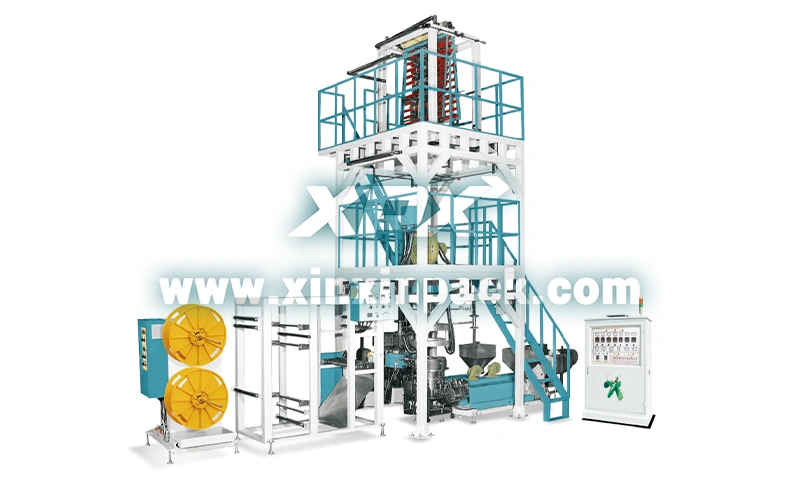
In blown film extrusion, thickness variation directly determines material utilization. When film thickness fluctuates, operators typically run heavier than the target specification to ensure that no section falls below the minimum requirement. This “running heavy” approach guarantees compliance but generates predictable and ongoing material waste.
Thickness variation can be classified into two types:
Machine direction (MD) variation: thickness changes along the length of the film. Often caused by extruder output drift, screw speed fluctuation, or haul-off speed inconsistency.
Transverse direction (TD) variation: thickness changes across the width of the film. Typically linked to die flow channel design, air ring uniformity, or temperature distribution around the die circumference.
Verify die gap consistency: Use a feeler gauge to check the die gap at multiple points around the circumference. A deviation exceeding ±5% of the nominal gap warrants adjustment or die inspection.
Check air ring airflow uniformity: Blocked or unevenly distributed air ring holes create localized cooling differences, which translate into thickness variation. Clean air ring passages on a scheduled basis.
Monitor melt pressure stability: Fluctuating melt pressure usually indicates inconsistent feeding, screen pack blockage, or temperature instability. A stable melt pressure profile is a prerequisite for consistent thickness.
Consider gravimetric or yield control: Automatic yield control systems continuously adjust extruder speed based on real-time material weight and line speed data. Published results suggest that tighter control can improve yield by approximately 2%–3% through reduced resin overuse.
Use online thickness measurement when available: Without real-time data, thickness adjustments are reactive and often late. Online gauging allows operators to detect deviation before a full roll is affected.
For lines where thickness consistency is critical to zipper attachment quality, reviewing the available configuration options on a dedicated zipper film blowing machine can help clarify what level of process control is practical for your production requirements.
Bubble instability—manifested as oscillation, frost line fluctuation, or irregular bubble diameter—is particularly damaging because it affects the entire film web simultaneously. A bubble that shifts left and right creates varying cooling conditions around the circumference, leading to gauge bands that can persist for the length of the instability event.
Common causes of bubble instability include:
Uneven air ring outlet distribution
Environmental air currents (open doors, HVAC vents, nearby equipment)
Die head temperature non-uniformity
Insufficient or inconsistent internal bubble cooling (IBC)
Inappropriate blow-up ratio (BUR) for the resin being processed
| Check | Method | Acceptable Condition |
|---|---|---|
| Air ring airflow | Anemometer reading at multiple points | Variation < 10% around circumference |
| Frost line height | Visual observation over 5-minute window | Fluctuation < 10 mm |
| Bubble diameter | Laser or ultrasonic measurement | Stable within ±2% of setpoint |
| Die temperature | Infrared or contact probe | Each zone within ±3°C of setpoint |
| Environmental airflow | Smoke test or visual assessment | No cross-flow affecting bubble |
If bubble instability persists after environmental factors are eliminated, the root cause is likely in the die, air ring, or resin formulation. In such cases, technical review of the extrusion system and cooling configuration may be required.
Gel particles and black specks are localized defects that—while small in area—can cause significant waste because they render affected sections of film unusable for zipper bag production. Common sources include:
Unmelted polymer from insufficient screw mixing
Carbon buildup in die flow dead zones
Screen pack degradation or breakthrough
Contaminated recycled material with incompatible polymer fractions
Additive or pigment agglomeration
Screen pack maintenance: Use a multi-stage filtration configuration. For operations processing recycled content, a continuous melt filtration system can maintain filtration efficiency without interrupting production for screen changes.
Purging routine: Establish a scheduled purging protocol using appropriate purging compounds to remove carbon buildup before it migrates into the film.
Die head inspection: Mirror-polished die heads with no dead zones reduce carbon accumulation. Inspect and clean die surfaces during planned maintenance windows.
Incoming material control: Verify recycled material quality and compatibility before blending. Incompatible polymer fractions are a frequent but often overlooked source of gel formation.
Wrinkling and blocking are often treated as downstream issues, but their root causes frequently originate in the film forming and cooling stages. Film that is wound too hot, with uneven thickness, or with insufficient slip properties will develop wrinkles or block on the roll. These defects may not be detected until the film reaches the bag-making stage, at which point the entire roll may be rejected.
| Problem | Likely Cause | Adjustment Direction |
|---|---|---|
| Longitudinal wrinkles | Uneven thickness; excessive tension | Check die and air ring; reduce winding tension |
| Diagonal wrinkles | Web misalignment; collapsing frame issue | Verify guide roller alignment |
| Blocking on roll | Insufficient cooling; inadequate slip agent | Increase cooling; verify slip additive level |
| Roll edge buildup | Edge trim not properly removed | Verify trim removal and edge guide function |
For zipper film specifically, wrinkles near the zipper attachment zone can prevent proper zipper sealing in the downstream bag-making process—turning a film issue into a full bag rejection.
Start-up and material changeover periods generate waste that is sometimes accepted as unavoidable. In reality, this waste is highly reducible through procedural discipline.
Pre-heat and stabilize: Ensure all temperature zones reach setpoint and stabilize before introducing material. Insufficient soaking time leads to off-spec film during the first minutes of production.
Prepare the next material in advance: For changeovers, pre-stage the incoming resin and purge material to minimize transition time.
Use a documented start-up sequence: A written procedure with specific checkpoints prevents variability between operators and shifts.
Track start-up scrap as a KPI: What gets measured gets managed. Recording start-up waste per changeover creates a baseline for improvement.
Use this checklist as a starting point for a structured waste reduction review:
Not every item will apply to every line. The purpose of this checklist is to provide a structured starting point for identifying the dominant waste source on your specific production setup.
Q1: What is the most common cause of waste in zipper film blowing?
Thickness variation is typically the most significant and persistent waste source, because it forces operators to run film heavier than necessary to guarantee specification compliance. This generates ongoing material overuse that accumulates across every production run.
Q2: Can recycled material be used in zipper film blowing without increasing waste?
Recycled material can be used, but it typically requires adjusted process parameters—including temperature profiles, screw speed, and filtration configuration—compared to virgin resin. The key is to verify recycled material quality and compatibility before blending, and to confirm that filtration is adequate to handle the contamination variability inherent in recycled feedstock.
Q3: How does bubble instability affect film waste?
An unstable bubble creates varying cooling conditions around the film circumference, which produces thickness bands and surface irregularities. These defects can persist for the entire length of the instability event, and the affected film is often unusable for zipper bag production.
Q4: What is the role of frost line height in waste reduction?
Frost line height influences both film properties and bubble stability. If the frost line is too low or unstable, the film may have inconsistent crystallinity and optical properties. If it is too high, the bubble may become difficult to control. Monitoring frost line height is a practical early indicator of bubble stability.
Q5: How can edge trim be handled to minimize waste?
Edge trim is an inherent part of the process. The practical approach is to recover it through an inline recycling system that returns trim material to the extruder feed. The recovery system should be sized to handle the trim output rate without causing feeding inconsistencies that could introduce new instability.
Q6: When should a production manager seek technical review for persistent waste issues?
If waste persists after thickness control, bubble stability, and contamination checks have been addressed, the root cause may involve die design, screw geometry, or cooling system configuration. In these situations, a technical review with the equipment supplier is the appropriate next step.
Reducing waste in zipper film blowing is a process of systematic diagnosis rather than universal adjustment. The most practical approach is to identify the dominant waste category on your line—thickness variation, bubble instability, gel contamination, winding defects, or start-up losses—and focus corrective actions on the relevant parameters.
The most important principle to remember: do not adjust multiple variables simultaneously. Each change should be isolated and its effect observed. This is the difference between effective waste reduction and a cycle of over-correction.
If waste persists after internal process adjustments, reviewing the mechanical configuration of the extrusion and cooling systems can clarify whether the limitation is procedural or equipment-related. The zipper film blowing machine category page provides an overview of available system configurations and process control options to support that evaluation.
The ideal haul‑off speed for a zipper film blowing line is the speed at which the film is pulled away from the bubble after cooling — and it is determined by the balance between extrusion output rate, target film thickness, material rheology, cooling efficiency, and downstream bag‑making requirements. There is no single “correct” speed; the optimal setting varies by material, die size, and production goals. This article explains the key factors that influence haul‑off speed selection and how to approach setting it correctly for your zipper film line.
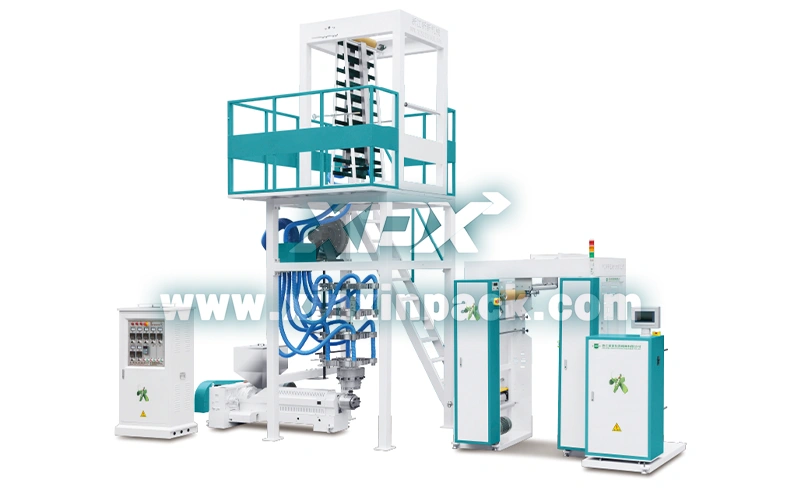
Haul‑off speed — also referred to as take‑up speed or line speed — is the rate at which the collapsed film tube is pulled through the nip rollers after exiting the die and passing through the cooling zone. Together with the extrusion rate (determined by screw RPM), the haul‑off speed directly controls the final film thickness.
For a given output rate, increasing the haul‑off speed stretches the film more in the machine direction, reducing thickness. Conversely, decreasing the haul‑off speed allows the film to emerge thicker. This inverse relationship is the most fundamental principle in blown film extrusion: haul‑off speed × film thickness × film width = constant output rate (at steady state).
For zipper film lines specifically — where the film must accommodate a zipper profile either during extrusion or in a subsequent lamination step — haul‑off speed also affects zipper alignment, sealing zone integrity, and overall film flatness.
The most direct factor in haul‑off speed selection is the required finished film thickness.
Thinner films require higher haul‑off speeds to stretch the melt more before solidification
Thicker films require lower haul‑off speeds to allow more material to accumulate per unit length
In practice, a film blowing line running at a fixed screw speed will produce thinner film when the haul‑off speed is increased, and thicker film when it is reduced. This means that when switching between bag types with different thickness requirements, the haul‑off speed must be adjusted accordingly.
For zipper bags, typical film thicknesses range from 30 to 120 microns depending on the application — food packaging often uses thinner films, while industrial or heavy‑duty bags require thicker gauges.
The haul‑off speed must be matched to the extrusion output rate. If the screw turns faster and pushes more melt through the die, the haul‑off speed must increase proportionally to maintain the same film thickness.
The relationship can be expressed as:
Haul‑off speed ≈ Extrusion output rate ÷ (Film thickness × Film width × material density)
In practice, this means that when production output is increased (by raising screw RPM), the haul‑off speed must also be increased to avoid producing film that is too thick. Many modern zipper film blowing lines use synchronized drive systems that automatically adjust haul‑off speed in response to screw speed changes.
Different polymers behave differently under stretching, and this affects how haul‑off speed should be set.
| Material | Characteristics | Haul‑off Speed Consideration |
|---|---|---|
| LDPE | High melt strength, easy to stretch | Can run at higher speeds; stable bubble |
| LLDPE | Lower melt strength, requires more cooling | May need slower speeds to avoid bubble instability |
| PP | Stiffer, higher melting point | Often requires tighter speed control; water cooling may be needed |
| Blends / Co‑extrusions | Variable behavior | Speed must be tuned to the dominant material characteristics |
LDPE is the most common material for zipper film production due to its excellent processability and sealing performance. However, when running LLDPE blends or multi‑layer co‑extruded films, the haul‑off speed may need to be reduced to maintain bubble stability and avoid film breakage.
The position of the frost line — where the molten film transitions to solid state — is critical for determining maximum haul‑off speed.
If the haul‑off speed is too high, the film may be pulled before it has fully cooled, leading to:
Poor dimensional stability
Inconsistent thickness
Surface defects
Zipper profile distortion
If the haul‑off speed is too low, the film cools excessively before being drawn, which can cause:
Reduced production efficiency
Increased thickness variation
Air‑cooled systems typically operate at stable speeds of 18–20 meters per minute, with outputs ranging from 35 to 70 kg/h depending on the model. Water‑cooled systems may operate at slightly different speed ranges due to faster heat removal.
The blow‑up ratio — the ratio of the final bubble diameter to the die diameter — affects the transverse orientation of the film. The haul‑off speed, together with the BUR, determines the overall draw ratio and final film properties.
For a given die size and BUR, the haul‑off speed must be set to achieve the desired film thickness while maintaining bubble stability. A larger BUR generally requires more careful haul‑off speed control, as the bubble is more sensitive to variations in take‑up rate.
For integrated zipper bag production lines, the haul‑off speed of the film blowing section must be coordinated with the speed of downstream processes — printing, slitting, and bag making.
If the film blowing line runs too fast, downstream equipment may not keep up, causing film accumulation and waste
If it runs too slow, production capacity is underutilized
In fully automated lines, the haul‑off speed is often integrated into a master control system that synchronizes all sections from film blowing to bag packing.
Zipper film lines differ from standard film blowing lines because the zipper profile must be formed or attached during the process.
The haul‑off speed affects:
Zipper alignment — if the speed fluctuates, the zipper may shift off‑center
Zipper seal integrity — the sealing zone must cool properly at the right speed
Film flatness — uneven haul‑off can cause wrinkles that interfere with zipper attachment
For this reason, zipper film lines typically require more precise haul‑off speed control than standard film lines. Servo‑driven haul‑off systems are increasingly common for this application.
When setting or adjusting the haul‑off speed on a zipper film blowing line, consider the following:
| Mistake | Consequence | Prevention |
|---|---|---|
| Setting haul‑off speed too high | Thin spots, film breaks, bubble instability | Increase speed gradually; monitor thickness |
| Setting haul‑off speed too low | Oversized thickness, material waste, low output | Match speed to screw output; use synchronized control |
| Ignoring material changes | Inconsistent film properties | Re‑calibrate speed when switching materials |
| Neglecting cooling adjustments | Frost line shift, poor film quality | Adjust air flow when changing speed |
What is the relationship between haul‑off speed and film thickness?
Haul‑off speed and film thickness are inversely related. For a fixed extrusion output rate, increasing the haul‑off speed reduces film thickness, and decreasing it increases film thickness. This is because the same amount of melt is being stretched over a longer or shorter length.
Can I run a zipper film line at the same haul‑off speed for all materials?
No. Different materials have different melt strengths and cooling requirements. LDPE can typically run at higher speeds, while LLDPE and PP may require slower speeds to maintain bubble stability. When changing materials, the haul‑off speed should be re‑evaluated.
How do I know if my haul‑off speed is too high?
Signs of excessive haul‑off speed include: film breaks, bubble instability, uneven thickness (thin spots), surface defects, and zipper profile misalignment. If the frost line moves too close to the die, the speed is likely too high.
Does haul‑off speed affect zipper quality?
Yes. Fluctuations or incorrect haul‑off speed can cause the zipper to shift off‑center, create wrinkles in the sealing zone, or result in poor zipper seal integrity. Consistent haul‑off speed is essential for consistent zipper quality.
What is a typical haul‑off speed range for zipper film blowing?
Stable production speeds for air‑cooled systems typically range from 18–20 meters per minute, with outputs of 35–70 kg/h depending on the model and material. Actual speeds vary significantly by equipment configuration and production requirements.
The ideal haul‑off speed for a zipper film blowing line is not a fixed number — it is a dynamic parameter that must be determined based on target film thickness, extrusion output rate, material type, cooling efficiency, die geometry, downstream requirements, and zipper integration needs.
The most important principle to remember is the inverse relationship between haul‑off speed and film thickness: faster speed = thinner film, slower speed = thicker film. Beyond this, the key to success is maintaining stable, consistent speed control — which is why modern zipper film lines increasingly rely on servo‑driven haul‑off systems and synchronized production controls.
Before committing to a specific speed setting, always run test samples and measure thickness consistency across the full film width. When in doubt, consult your equipment supplier for configuration‑specific recommendations.
To explore available zipper film blowing machine configurations and technical specifications, review the product lineup or discuss your material and production requirements with the technical team.
The short answer is this: servo motors provide closed-loop control, higher torque at speed, and better accuracy under variable loads, while stepper motors operate open-loop and lose torque as speed increases. For bag making machines—where registration accuracy, sealing consistency, and production speed directly affect material waste and output—servo drives have become the preferred choice for most modern equipment configurations.
This article explains the technical differences between servo and stepper motors, why those differences matter in bag production, and what buyers should consider when evaluating drive systems.
Before comparing their performance in bag making applications, it helps to understand how each motor type works.
Stepper motors divide a full rotation into discrete steps—typically 200 steps per revolution (1.8° per step). The controller sends pulses, and the motor moves one step per pulse, without any feedback to confirm the movement actually occurred. This is called open-loop control. If the motor encounters resistance that exceeds its torque capacity, it can miss steps without the controller knowing.
Servo motors, by contrast, operate with closed-loop control. An encoder or resolver continuously reports the motor’s actual position and speed back to the driver. If the motor falls behind the commanded position, the system increases power to correct it. If it overshoots, the system adjusts accordingly. This feedback loop enables precise position and speed control even under changing loads.
The table below summarizes the critical differences between the two drive types in the context of bag making machine operation:
| Performance Factor | Stepper Motor | Servo Motor |
|---|---|---|
| Control method | Open-loop (no position feedback) | Closed-loop (encoder feedback) |
| Torque at high speed | Drops significantly | Maintains rated torque |
| Position accuracy | ±1 step (can miss steps undetected) | ±1 encoder pulse (typically much finer) |
| Response to load changes | Delayed or may miss steps | Immediate correction |
| Heat generation | Higher at standstill | Lower, more efficient |
| Noise level | Can be noisier at certain speeds | Generally quieter |
| Stopping accuracy | Can overshoot without feedback | Controlled deceleration with feedback |
| Cost | Lower initial cost | Higher initial cost |
Bag making requires precise positioning for cutting, sealing, and zipper attachment. When a stepper motor misses steps—which can happen when running at higher speeds or when film tension changes—the cutting position shifts. The result: bags cut at the wrong length, seals placed incorrectly, or zippers misaligned.
A servo motor’s closed-loop feedback ensures the cutting knife or sealing bar stops at the exact position commanded, regardless of minor load variations. This directly translates to fewer rejects and less material waste.
For production lines running at 120 to 220 pouches per minute, even a 1% rejection rate represents thousands of wasted bags per shift. Servo accuracy helps minimize that loss.
Stepper motors deliver maximum torque at standstill. As speed increases, torque drops off rapidly. At higher bag making speeds—where rapid acceleration and deceleration are required for each cycle—a stepper motor may not have enough torque to maintain position.
Servo motors, on the other hand, deliver consistent torque across a wide speed range. This allows bag making machines to run at higher speeds without sacrificing positional accuracy. For production managers evaluating equipment, this means servo-driven machines can often sustain higher output rates with more consistent quality.
Film tension in bag making is never perfectly constant. Material rolls change diameter as they unwind, film thickness varies slightly, and different materials (LDPE, LLDPE, HDPE, PP, non-woven fabrics) have different mechanical properties.
A stepper motor operating open-loop cannot adjust to these variations. If tension increases, the motor may miss steps. If tension decreases, the system may overshoot.
A servo motor detects load changes through its encoder and adjusts power output in real time. This makes servo-driven bag makers more adaptable to different materials and production conditions.
Stepper motors draw full current even when stationary to hold position, which generates heat. In a production environment, excess heat can affect nearby components and increase cooling requirements.
Servo motors draw current only as needed. When holding position, they consume significantly less power. This difference can translate to lower energy costs over the equipment’s lifetime, though the exact savings depend on duty cycle and operating conditions.
When a stepper motor decelerates to a stop, there is no feedback to confirm it stopped at the correct position. If mechanical inertia causes overshoot, the controller has no way of knowing.
Servo motors use controlled deceleration profiles with encoder feedback to ensure the load stops exactly at the commanded position. For sealing operations—where the sealing bar must align precisely with the film—this accuracy directly affects seal quality and bag appearance.
Stepper motors are not obsolete. They remain a practical choice for:
Lower-speed applications where torque requirements are modest
Simple bag designs with less demanding registration requirements
Budget-constrained purchases where the higher cost of servos cannot be justified
Retrofit or replacement scenarios where the existing control system is designed for steppers
However, for production lines targeting higher speeds, multiple bag types, or materials with varying properties, servo drives typically provide better long-term value despite the higher initial investment.
When comparing bag making machines with different drive configurations, consider these questions:
What is the machine’s rated speed range? Servo-driven machines often have a wider usable speed range.
What materials will you run? If you plan to process multiple material types, servo adaptability is an advantage.
What is your acceptable rejection rate? Servo accuracy can help reduce waste.
What is your production duty cycle? For continuous high-speed operation, servo motors run cooler and more efficiently.
Is the control system compatible with future upgrades? Servo systems are generally more flexible for integration with production monitoring and automation.
“Stepper motors are simpler, so they’re more reliable.”
Stepper motors are simpler in design, but open-loop operation means the controller cannot detect problems when they occur. A servo system’s feedback loop actually enables better diagnostics—if the motor cannot reach the commanded position, the system can alert the operator rather than continuing to produce out-of-spec bags.
“Servo motors are overkill for bag making.”
For low-speed, simple bag production, this may be true. But for any operation running at moderate to high speeds, or producing bags with printed registration marks or attached zippers, servo accuracy directly impacts quality and yield.
“The cost difference isn’t worth it.”
The payback calculation depends on production volume, material costs, and acceptable waste rates. For high-volume operations, the reduction in rejects alone can offset the higher initial cost within the first year of operation.
Q: Can a stepper motor bag making machine produce quality bags?
Yes, especially at lower speeds and with simpler bag designs. However, as speed increases or when running materials with varying properties, stepper motors are more prone to position errors that affect cut and seal accuracy.
Q: How much more does a servo-driven bag making machine cost?
The price difference varies by manufacturer, machine size, and configuration. Buyers should compare total cost of ownership—including energy consumption, maintenance, and waste rates—rather than focusing only on purchase price.
Q: Can I upgrade a stepper-driven machine to servo later?
In some cases, yes—but it typically requires replacing the motor, driver, and control system components. The feasibility and cost depend on the machine’s design and the existing control architecture. It is generally more cost-effective to specify servos at the time of purchase.
Q: Do servo motors require more maintenance than stepper motors?
Servo motors have more complex electronics but typically require similar routine maintenance—primarily keeping the motor and encoder clean and ensuring proper cooling. The feedback components (encoders) are sealed and generally maintenance-free under normal operating conditions.
Q: Which motor type is better for high-speed zipper bag production?
For high-speed production—typically above 120 cycles per minute—servo motors are generally the better choice due to their torque characteristics, accuracy, and ability to handle variable loads without losing position.
Q: How do I know if a bag making machine uses servo or stepper motors?
Check the machine specifications or ask the supplier directly. Servo-driven machines typically list servo motor specifications, encoder resolution, and control system details. Many modern bag making machines from established manufacturers use servo drives as standard or optional equipment.
The choice between servo and stepper motors for bag making machines comes down to production requirements. Servo motors offer superior accuracy, better speed-torque characteristics, and adaptive control under variable loads—all of which translate to higher quality output and less material waste. Stepper motors remain a viable option for lower-speed, simpler applications where initial cost is the primary concern.
For production managers and buyers evaluating equipment, the key is to match the drive technology to actual production needs: material types, target speeds, acceptable waste rates, and long-term operating costs.
If you are reviewing bag making machine configurations and want to understand which drive options are available for your production requirements, review the available machine models and specifications. The right configuration depends on your specific materials, output targets, and quality standards.
The output speed of a zip‑lock pouch workflow is not determined by a single machine specification. It is the result of interaction between material properties, equipment configuration, process parameters, and operator practices. In practical terms, most production lines achieve sustainable speeds between 120 and 220 pouches per minute, but the actual number depends on multiple variables that buyers and production managers must evaluate together.
This article breaks down each major factor so you can understand what really drives—or limits—your zipper bag production speed.
The material you run through your line is the first and most fundamental speed determinant. Different polymers behave differently during extrusion, sealing, and cutting.
| Material | Characteristics | Impact on Speed |
|---|---|---|
| LDPE | Good melt strength, easy sealing | Generally supports higher speeds |
| LLDPE | Higher tear resistance, requires more heat | May require slower sealing cycles |
| HDPE | Stiffer, higher melting point | Needs precise temperature control |
| PP | Higher heat seal temperature | May reduce maximum speed |
| PE/PP Composite | Multi-layer behavior | Speed depends on layer compatibility |
| Non-Woven | Different sealing mechanism (ultrasonic) | Speed limited by sealing method |
| Multi-layer Co-extruded Film | Complex layer structure | Requires careful process tuning |
The material directly affects:
Heat sealing time – thicker or higher-melting-point materials require longer sealing dwell time, which reduces cycle speed
Film stability – materials with poor melt strength can cause film breakage at higher speeds
Zipper attachment – some materials bond more readily to zipper profiles than others
Buyer's note: When evaluating equipment, always confirm the machine's speed rating for your specific material—not just for standard LDPE.
The equipment itself has inherent speed limitations based on its design and components.
The primary bag making machine determines the baseline speed of your workflow. Key specifications include:
Maximum mechanical speed – typically stated in pieces per minute (e.g., 120–220 pcs/min for standard models)
Bag width capacity – wider bags generally run slower due to longer sealing and cutting distances
Sealing system type – hot knife vs. impulse sealing vs. ultrasonic sealing, each with different cycle times
Drive system – servo-driven machines offer better speed control and stability compared to traditional mechanical drives
The ZIP-500L model, for example, offers a speed range of 30–180 pcs/min with a 500mm bag width, while the automatic production line variant reaches 50–220 pcs/min. This illustrates that even within the same product family, configuration choices affect the speed range.
Review the available zipper bag making machine configurations to understand how different specifications affect your target output.
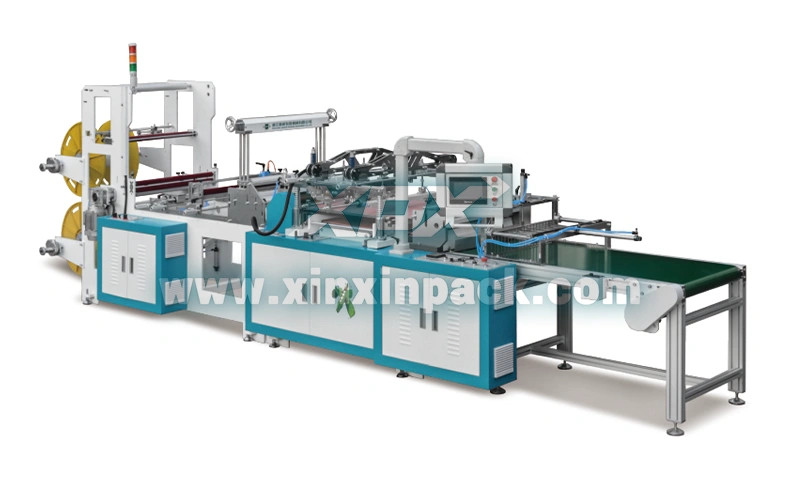
A zipper pouch workflow typically includes:
text
Film Blowing → Printing → Slitting → Bag Making → Bag Packing → Boxing
The overall output speed is constrained by the slowest link in this chain. Key integration factors include:
Inline vs. offline – inline configurations (blown film directly feeding the bag maker) eliminate intermediate winding steps and can increase overall efficiency by over 20%
Tension control – inconsistent tension between machines causes web breaks and slows production
Automatic roll changing – reduces downtime between film rolls
Downstream equipment such as bag sorting machines, boxing machines, and bundling machines must match the bag maker's output. For example, the TPL-600INS automatic zipper bag packing machine operates at 30–180 pcs/min—if your bag maker runs at 200 pcs/min, the packing line becomes the bottleneck.
Even with the best materials and equipment, incorrect parameter settings will limit speed.
Extrusion temperature – affects film quality and consistency
Sealing temperature – too low causes weak seals; too high causes film distortion or sticking
Cooling efficiency – inadequate cooling forces slower speeds to allow proper setting
Modern systems with precise temperature control can maintain higher speeds more consistently.
Film tension must be carefully managed throughout the workflow. Key considerations:
Consistent tension prevents wrinkles and misalignment
Automatic web guiding maintains film position during high-speed operation
Tension control systems reduce breakage and allow higher sustained speeds
The sealing and cutting cycle is often the most time-sensitive operation in bag making:
Sealing dwell time – must be long enough for proper bond formation
Cooling time – seals need to cool before cutting or stacking
Cutting accuracy – higher precision may require slightly slower operation
Equipment with ±0.5mm finished product dimensional error can maintain both speed and quality when properly tuned.
Equipment performance is only as good as the people operating and maintaining it.
Setup time – skilled operators complete changeovers faster (the system can cut setup time by 50% with proper training)
Parameter adjustment – knowing which settings to adjust for different materials or bag sizes
Problem recognition – early detection of issues prevents slowdowns and stoppages
Regular maintenance directly affects sustained speed:
Daily checks – sealing elements, tension systems, and guide rollers
Weekly inspections – drive systems, heating elements, and cooling systems
Preventive replacement – of wear parts before they cause failures
Well-maintained equipment can achieve 98.5% continuous operation stability, while neglected lines experience frequent unscheduled stops.
Not all zipper bags are created equal. Design features that affect speed include:
| Design Feature | Speed Impact |
|---|---|
| Simple flat bag | Fastest |
| With zipper attachment | Moderate reduction |
| With bottom gusset | Additional operation, slower |
| With embossing | Extra step, slower |
| With handle or hanging hole | Additional punching step |
| Multi-color printing | May require registration adjustments |
Customized bag types—bottom insertion, embossing, specific colors, and printing content—all add processing steps that reduce overall throughput.
External conditions also play a role:
Ambient temperature – affects cooling efficiency and material behavior
Humidity – can affect film static and sealing quality
Power supply stability – voltage fluctuations affect servo and heating systems
Floor space – influences workflow layout and material handling efficiency
Use this checklist when evaluating your current or planned zipper pouch workflow:
| Factor Category | Typical Speed Impact | Controllability |
|---|---|---|
| Material selection | High (10–30% variation) | Medium (material choice) |
| Machine configuration | Very High (20–50% variation) | Low (equipment purchase decision) |
| Process parameters | Medium (5–20% variation) | High (adjustable) |
| Operator skill | Medium (5–15% variation) | High (training) |
| Maintenance | Medium (5–20% variation) | High (practice) |
| Bag design | Medium (5–25% variation) | Medium (design choice) |
| Environmental | Low (0–10% variation) | Low to Medium |
Q: What is the typical output speed range for a zipper bag making machine?
A: Standard machines typically operate in the range of 30–180 pouches per minute for general production, while high-performance automatic lines can reach 50–220 pouches per minute. Actual speed depends on material, bag size, and configuration.
Q: Does using LDPE always give the fastest production speed?
A: Not necessarily. While LDPE generally processes well at higher speeds due to its good melt strength and sealing characteristics, the specific formulation, thickness, and additive package all affect performance. LLDPE may offer better strength but often requires adjusted sealing parameters that can reduce speed.
Q: How does bag width affect production speed?
A: Wider bags typically run slower because sealing bars need to travel further, and cutting mechanisms require more time. A machine rated for 500mm width may run faster with narrower bags.
Q: Can I increase speed by upgrading just the bag making machine?
A: Only if the rest of the workflow can keep up. The overall line speed is determined by the slowest component. Upgrading the bag maker without matching upstream film supply or downstream packing capacity will not improve total output.
Q: How much can operator training improve production speed?
A: Proper training can significantly reduce setup time—systems with smart PLC/servo controls and one-touch operation can cut setup time by up to 50%. Skilled operators also identify and resolve issues faster, reducing unplanned downtime.
Q: What is the most common bottleneck in zipper pouch workflows?
A: The sealing and cutting station is often the bottleneck, as it requires precise timing for proper seal formation. Downstream packing and boxing operations are also frequent bottlenecks if not properly speed-matched to the bag maker.
The output speed of a zip‑lock pouch workflow is determined by a combination of material choice, equipment configuration, process parameter settings, operator skill, and maintenance practices. No single factor dominates—the actual speed you achieve will be the result of how well all these elements work together.
Key takeaways:
Match your equipment speed rating to your actual production materials, not just ideal conditions
Ensure upstream and downstream equipment are balanced to avoid bottlenecks
Invest in operator training and preventive maintenance—they deliver consistent returns
Account for bag design complexity when setting speed expectations
Before committing to a new production line or upgrading existing equipment, review the available zipper bag making machine configurations to understand how different specifications affect your target output speed. For specific material and production requirements, discuss your needs with the equipment supplier to confirm achievable speeds under your actual operating conditions.
If you are evaluating a zipper bag making machine, the most critical question is not just about speed or price—it is about whether the equipment can actually process the materials you plan to use. Different films behave differently during sealing, cutting, and zipper attachment. The short answer is that a well-configured zipper bag making machine can handle a range of materials including LDPE, LLDPE, HDPE, PP, PE/PP composite films, non-woven fabrics, and multi-layer co-extruded films. However, the specific configuration—heating systems, sealing mechanisms, tension control, and tooling—must be matched to the material’s properties. This guide explains what each material requires, so you can ask the right questions before making a purchasing decision.
The material you choose for your zipper bags directly affects:
Seal strength and integrity – different polymers have different melting points and sealing windows
Zipper attachment quality – the bond between the zipper profile and the film depends on material compatibility
Production speed – some materials run faster than others; the machine must accommodate the optimal speed range
Tooling wear – abrasive materials or those with high filler content can accelerate wear on cutting and sealing components
Final bag appearance – clarity, gloss, and printability vary significantly by material
A machine that runs LDPE flawlessly may struggle with PP or non-woven fabrics if not properly configured. Understanding these differences upfront helps avoid costly production delays and quality issues.
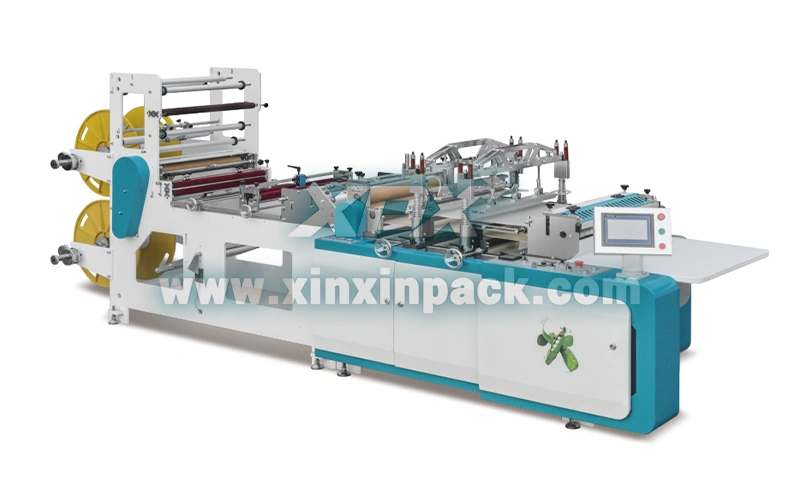
LDPE is the most commonly used material for zipper bags. It is flexible, easy to seal, and offers good clarity. LDPE has a relatively low melting point (around 105–115°C), which makes it forgiving during heat sealing.
Key considerations for LDPE:
Standard heat sealing systems work well
High-speed production is achievable with proper temperature control
Works with both press-lock and slider zipper profiles
Suitable for food packaging, garment bags, and general-purpose resealable bags
LLDPE offers higher tensile strength and puncture resistance than LDPE, making it ideal for heavier-duty applications. However, it has a narrower sealing temperature window and requires more precise temperature control.
Key considerations for LLDPE:
Requires more accurate temperature regulation to avoid weak seals
Often blended with LDPE to balance processability and strength
Suitable for frozen food bags, industrial packaging, and heavy-duty storage bags
HDPE is stiffer and offers better barrier properties than LDPE or LLDPE. It is commonly used for bags that need to stand upright or hold shape.
Key considerations for HDPE:
Higher melting point (around 130–135°C) requires more heating power
Less flexible, which can affect how the zipper profile attaches
May require special sealing jaws to achieve consistent seals
Often used for shopping bags, produce bags, and retail packaging
PP offers excellent clarity, high heat resistance, and good moisture barrier properties. It is widely used in food packaging where transparency and heat resistance are important.
Key considerations for PP:
Higher sealing temperature (around 160–170°C) than PE materials
More rigid, which can affect bag handling and stacking
Requires precise temperature control to avoid film distortion
Commonly used for snack packaging, bakery bags, and high-end retail bags
Composite films combine the properties of multiple materials to achieve specific performance targets—for example, a PE layer for sealing and a PP layer for stiffness and clarity.
Key considerations for composite films:
Sealing must be carefully controlled to avoid delamination
The zipper attachment must bond to the correct layer
May require multi-zone temperature control on the sealing system
Increasingly popular for premium packaging applications
Non-woven zipper bags are growing in popularity for eco-friendly shopping bags, garment bags, and promotional items. Non-woven materials are typically made from PP fibers bonded together.
Key considerations for non-woven fabrics:
Require ultrasonic sealing rather than heat sealing
Standard heat sealing systems will not work effectively
The machine must be equipped with an ultrasonic welding module
Suitable for reusable shopping bags, garment covers, and promotional tote bags
If you are evaluating non-woven production, review the non-woven zipper bag making machine models for specific configuration details.
Co-extruded films combine multiple polymer layers in a single film structure to achieve properties that a single material cannot provide—for example, a seal layer, a barrier layer, and a print layer.
Key considerations for co-extruded films:
Sealing performance depends on the outermost layer
Layer adhesion must be maintained during sealing and cutting
May require customized sealing parameters
Often used for high-barrier food packaging and medical packaging
| Material | Sealing Method | Relative Speed | Typical Applications | Special Requirements |
|---|---|---|---|---|
| LDPE | Heat seal | Fast | Food bags, general-purpose | Standard configuration |
| LLDPE | Heat seal | Medium-Fast | Heavy-duty, frozen bags | Precise temperature control |
| HDPE | Heat seal | Medium | Shopping bags, produce | Higher heat, rigid handling |
| PP | Heat seal | Medium | Snack bags, bakery | Higher temperature, precise control |
| PE/PP Composite | Heat seal | Medium | Premium packaging | Multi-zone temperature control |
| Non-Woven | Ultrasonic | Medium | Eco-friendly shopping bags | Ultrasonic module required |
| Co-extruded Film | Heat seal | Variable | High-barrier packaging | Configuration depends on outer layer |
The sealing system is the most configuration-dependent component. For PE-based materials (LDPE, LLDPE, HDPE), standard heat sealing with temperature-controlled jaws is sufficient. For PP, higher temperatures and longer dwell times may be needed. For non-woven fabrics, the machine must be equipped with an ultrasonic sealing module—heat sealing simply will not work.
The zipper profile must bond securely to the film. PE zipper profiles bond well to PE films. PP profiles bond to PP films. If you plan to use a zipper material different from the bag film, the machine must be configured to handle the temperature and pressure requirements of that specific combination.
Different materials have different elongation characteristics. LDPE stretches more than PP. A machine with inadequate tension control will produce bags with inconsistent dimensions, wrinkled film, or misaligned zippers.
Stiffer materials like HDPE and PP behave differently during cutting and stacking than softer materials like LDPE. The cutting blades, stacking mechanisms, and conveying systems may need adjustment or different tooling.
Before contacting a supplier, prepare the following information:
Mistake 1: Assuming one machine fits all materials. Different materials require different sealing temperatures, pressures, and dwell times. A machine configured for LDPE may not run PP or non-woven effectively.
Mistake 2: Overlooking the zipper material. The zipper profile must be compatible with the bag film. Using a PP zipper on a PE bag may result in poor bonding.
Mistake 3: Ignoring film thickness variation. Thicker films require more heat and longer sealing times. Thinner films are more sensitive to temperature fluctuations and can easily burn through.
Mistake 4: Not planning for material changes. If you plan to switch materials frequently, consider a machine with quick-change sealing jaws and programmable temperature presets.
Material compatibility is not always straightforward. If you are unsure whether your material will run on a particular machine configuration, the safest approach is to:
Provide material samples to the supplier for testing
Request a trial run on the actual machine model you are considering
Discuss your material specifications in detail with the supplier’s engineering team
Xinxin Packaging supports material testing and configuration validation as part of their pre-sales technical support. Their bag-making machine series supports a wide range of materials including LDPE, LLDPE, HDPE, PP, PE/PP composite film, non-woven fabrics, and multi-layer co-extruded film.
Q1: Can the same zipper bag making machine process both LDPE and PP?
Yes, but the machine must be configured with appropriate temperature controls and sealing systems for each material. PP requires higher sealing temperatures than LDPE. Some machines offer programmable temperature presets to facilitate material changes.
Q2: What is the difference between heat sealing and ultrasonic sealing for zipper bags?
Heat sealing uses heated jaws to melt and bond the film layers. Ultrasonic sealing uses high-frequency vibrations to generate heat internally within the material, which is essential for non-woven fabrics that do not respond well to traditional heat sealing.
Q3: Can a zipper bag making machine process recycled materials?
Recycled materials can be processed, but their properties are less consistent than virgin materials. This may require more frequent adjustments to temperature, pressure, and speed settings. Always test recycled material batches before full production.
Q4: How does film thickness affect machine configuration?
Thicker films require higher sealing temperatures and longer dwell times. They also place more load on the cutting system. Thinner films are more heat-sensitive and require precise temperature control to avoid burn-through.
Q5: What materials are not suitable for zipper bag making machines?
Materials that are not heat-sealable or do not bond well with zipper profiles—such as paper, aluminum foil (without a sealable coating), or certain high-temperature engineering plastics—are generally not suitable for standard zipper bag making machines.
Q6: Should I choose a machine based on my current material or future material plans?
If you anticipate changing materials in the future, choose a machine with greater flexibility—programmable temperature controls, quick-change tooling, and the ability to add modules like ultrasonic sealing. It is more cost-effective to invest in a flexible machine upfront than to purchase a second machine later.
Material compatibility is one of the most important—and most overlooked—factors in choosing a zipper bag making machine. LDPE, LLDPE, HDPE, PP, composite films, and non-woven fabrics each have distinct processing requirements that affect sealing, cutting, zipper attachment, and overall production efficiency.
Before making a purchasing decision, clearly define your material requirements, confirm that the machine configuration matches those requirements, and always verify through testing when possible. A machine that is properly matched to your materials will deliver consistent quality, higher output, and lower operating costs over its lifetime.
If you are unsure about which configuration suits your materials, review the available configurations or contact the supplier’s engineering team to discuss your specific material and production requirements.
If you are evaluating film blowing equipment for self-sealing zipper bag production, one question often comes up early in the decision process: does the machine need co-extrusion capability? The short answer is that co-extrusion technology allows you to combine multiple materials with different properties into a single film structure, which directly affects seal strength, barrier performance, and the overall quality of the finished zipper bag. This article explains what co-extrusion is, why it matters for self-sealing packaging film, and what buyers should consider when evaluating co-extrusion film blowing equipment.
Co-extrusion is a film blowing process that uses multiple extruders to feed different polymer materials into a single die, where they are joined together to form a multi-layer film. Unlike single-layer extrusion—which produces film from one material—co-extrusion creates a film structure with distinct layers, each contributing specific properties.
In the context of self-sealing packaging film production, co-extrusion typically involves combining materials such as LDPE, LLDPE, and PP to achieve a balance of mechanical strength, sealing performance, and optical clarity.
Xinxin Packaging offers multi-layer co-extrusion zipper film blowing machines that can process different materials simultaneously through a multi-screw extrusion system. The equipment supports flexible material combinations and is designed to improve film performance through layer integration.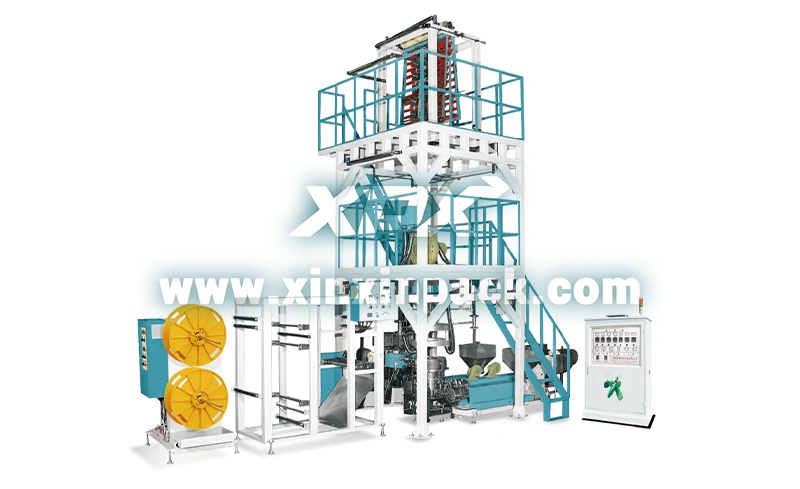
One of the primary reasons packaging manufacturers choose co-extrusion is to enhance barrier performance. Different polymers have different resistance to oxygen, moisture, and other environmental factors. By combining materials in a multi-layer structure, manufacturers can create films that offer superior protection for packaged products.
For self-sealing bags used in food packaging, this means longer shelf life and better product freshness. The barrier layer can be tailored to the specific requirements of the application—whether that means high moisture resistance for dry goods or oxygen barrier for sensitive products.
The self-sealing feature of zipper bags depends on the quality and consistency of the seal. Co-extrusion allows manufacturers to use a sealing layer material that is optimized for heat sealing, while other layers provide strength and structural support. This separation of functions often results in more reliable seals with fewer defects.
Not all layers in a multi-layer film need to be made from expensive, high-performance materials. Co-extrusion enables manufacturers to place costly functional materials only where they are needed—typically in thin functional layers—while using more economical materials for structural layers. This approach can reduce overall material costs while maintaining or improving film performance.
Multi-layer film structures can be engineered to deliver better tensile strength, puncture resistance, and tear resistance than single-layer films of the same thickness. This is particularly important for self-sealing bags that must withstand handling, filling, and transportation without failing.
As sustainability becomes an increasing concern in packaging, co-extrusion offers a pathway to using recyclable material combinations. Some co-extrusion systems are designed with recyclable material compatibility in mind, allowing manufacturers to produce films that meet both performance and environmental requirements.
| Feature | Single-Layer Extrusion | Multi-Layer Co-Extrusion |
|---|---|---|
| Material layers | One material | Two or more materials combined |
| Barrier performance | Limited to the properties of one polymer | Can be tailored by combining different polymers |
| Seal quality | Dependent on single material's sealing properties | Sealing layer can be optimized independently |
| Material cost efficiency | All material must meet highest performance requirement | Functional materials used only where needed |
| Film strength | Limited by single material properties | Can combine strength layers with other functional layers |
| Application flexibility | Suitable for basic packaging needs | Required for high-performance, specialty packaging |
Co-extrusion film blowing equipment for self-sealing packaging typically supports a range of materials. At Xinxin, the zipper film blowing machine series is widely applicable to raw materials such as LDPE, LLDPE, and PP. The multi-layer co-extrusion configuration allows different materials to be fused together through a multi-screw extrusion system, enabling combinations that are not possible with single-layer extrusion.
Common material combinations for self-sealing packaging film include:
LDPE/LLDPE blends for general-purpose zipper bags with good flexibility and sealability
PP-based structures for applications requiring higher heat resistance and clarity
Multi-layer combinations that incorporate barrier materials for extended shelf life
The choice of material combination depends on the specific requirements of the end-use application, including the type of product being packaged, storage conditions, and handling requirements.
Co-extrusion systems are available in various configurations with different output capacities. For example, some multi-layer co-extrusion zipper film blowing machines can achieve outputs of 40 kg/h or higher, depending on the material and configuration. Buyers should evaluate their production volume requirements and select equipment that can meet current and anticipated future demand.
Not all co-extrusion systems offer the same level of flexibility. Some machines are designed for specific layer counts (e.g., two-layer or three-layer), while others can accommodate more complex structures. Xinxin provides custom multi-layer co-extrusion zipper film blowing machines for producing high-barrier, functional films tailored to specific packaging needs.
Energy consumption is a significant operating cost in film blowing. Co-extrusion systems with advanced screw design and servo control technology can achieve measurable energy savings. Xinxin's equipment, for example, is designed to reduce energy consumption by 20% while increasing production capacity by 30%–50%.
Buyers should confirm that the co-extrusion system can process the specific materials they plan to use. Different polymers have different processing temperature requirements and flow characteristics, which affect the design of the extruder screws and the die.
Multi-layer co-extrusion systems are generally more complex than single-layer systems, which may affect maintenance requirements and operating costs. Buyers should consider the availability of spare parts, technical support, and training when evaluating equipment options.
Co-extruded film is used across a wide range of self-sealing packaging applications, including:
Food packaging: Zipper bags for snacks, coffee, pet food, and dry goods
Clothing packaging: Garment bags requiring clarity and tear resistance
Daily necessities packaging: Reclosable bags for household items
Industrial packaging: Bags requiring specific barrier or strength properties
The ability to tailor film properties through co-extrusion makes it suitable for applications with diverse requirements, from basic storage bags to high-end food packaging.
What is the main advantage of co-extrusion over single-layer extrusion for zipper film?
The main advantage is the ability to combine different materials in a single film structure, allowing manufacturers to optimize each layer for a specific function—such as sealability, barrier performance, or mechanical strength. This results in better overall film performance than can be achieved with a single material.
Is co-extrusion more expensive than single-layer extrusion?
Co-extrusion equipment typically has a higher initial capital cost due to the additional extruders and more complex die design. However, the ability to use lower-cost materials in structural layers while reserving expensive functional materials for thin layers can reduce overall material costs. The total cost comparison depends on production volume, material selection, and specific application requirements.
What materials can be used in co-extrusion for self-sealing bags?
Common materials include LDPE, LLDPE, and PP. Multi-layer co-extrusion also enables combinations of different polymers to achieve specific properties such as improved barrier performance. The specific material combination depends on the application and performance requirements.
How does co-extrusion improve the seal quality of zipper bags?
Co-extrusion allows manufacturers to use a sealing layer material that is specifically optimized for heat sealing, while other layers provide strength, barrier, and other properties. This separation of functions typically results in more consistent, reliable seals with fewer defects compared to single-layer films where the same material must perform all functions.
What should I look for when choosing a co-extrusion film blowing machine?
Key factors include the required layer count, material compatibility, production output capacity, energy efficiency, layer configuration flexibility, and the supplier's technical support capabilities. Buyers should also verify that the equipment can process the specific materials they plan to use and confirm the availability of spare parts and maintenance support.
Can co-extruded film be recycled?
The recyclability of co-extruded film depends on the specific materials used and the availability of recycling infrastructure for those material combinations. Some co-extrusion systems are designed with recyclable material compatibility in mind. Buyers should discuss recyclability requirements with their equipment supplier and confirm that the proposed material combination can be processed through available recycling channels.
Co-extrusion technology is not a one-size-fits-all solution, but for manufacturers producing self-sealing packaging film, it offers meaningful advantages in barrier performance, seal quality, material efficiency, and application flexibility. The decision to invest in co-extrusion equipment should be based on a careful evaluation of your specific production requirements, target materials, and quality standards.
Before making a purchasing decision, review the available configurations of co-extrusion zipper film blowing machines and compare the specifications against your production needs. Discuss your material and production requirements with the equipment supplier to confirm that the proposed solution can deliver the performance you expect.
Review the available zipper film blowing machine configurations to understand the options and technical specifications that match your production requirements.
If you are running a small production line and considering non-woven zipper bag manufacturing, the equipment selection process can feel overwhelming. The short answer: a mid-speed non-woven zipper bag making machine with ultrasonic sealing, moderate output capacity (30–80 bags per minute), compact footprint, and flexible bag-type support is typically the best fit for small production lines. The most critical factor is matching the machine‘s output capacity to your actual order volume—over-investing in high-speed equipment that runs below capacity wastes capital, while under-investing creates production bottlenecks.
This guide walks through the key decision factors for small-scale producers, helping you evaluate what matters most when choosing a non-woven zipper bag making machine.
Before comparing machines, it helps to define what “small production line” means in this context. For non-woven zipper bag production, a small line typically has these characteristics:
Daily output requirements range from a few thousand to 10,000–15,000 bags per day
Floor space is limited—often under 50–80 square meters for the bag-making section
Operator availability is constrained—usually 1–2 operators per shift
Product variety is moderate—the line may need to switch between different bag sizes and styles
Capital budget is more tightly controlled compared to large-scale industrial operations
Understanding these constraints helps narrow down which machine specifications actually matter.
For small production lines, output speed requires careful calibration. The WBL-800INS non-woven zipper bag making machine, for example, operates at a mechanical speed of 30–120 bags per minute. For a small line, running at the lower end of this range (30–60 bags per minute) may be entirely sufficient for daily needs while consuming less energy and placing less wear on components.
What to consider:
Calculate your actual daily bag requirement
Factor in setup time, material changes, and quality checks
Choose a machine that can meet peak demand without forcing you to run at maximum speed continuously
A machine that runs comfortably at 70% of its maximum capacity typically offers better stability and longer component life than one pushed to 100% every shift.
Small production facilities cannot afford sprawling equipment layouts. The WBL-800INS has a dimension of 8500×1800×1800 mm—roughly 8.5 meters in length. For a small line, you need to consider not just the machine footprint but also:
Material feeding area (upstream)
Finished bag collection and packaging area (downstream)
Maintenance access space around the machine
Operator workstations
Practical tip: Map out your available floor space before contacting suppliers. Know exactly how much length and width you can dedicate to the bag-making machine, and confirm these dimensions early in the conversation.
Non-woven fabrics behave differently from plastic films like PE or PP. The machine must be specifically designed to handle non-woven materials. Key material-related considerations include:
Sealing method: Non-woven zipper bag making machines typically use ultrasonic sealing or heat sealing. Ultrasonic sealing is generally preferred for non-woven fabrics because it creates strong bonds without excessive heat that can distort the material.
Feed mechanism: Non-woven fabrics have different tension characteristics compared to films—the machine should have adjustable tension control.
Zipper attachment: The zipper must be securely bonded to the non-woven fabric. Machines with dedicated zipper feeding and positioning systems produce more consistent results.
The WBL-800INS supports both PP and non-woven materials, making it suitable for producers who may want to work with multiple material types.For detailed specifications, review the non-woven zipper bag making machine specifications.
Small production lines often serve multiple customers or product lines, requiring the ability to produce different bag types. The non-woven zipper bag making machine should support a variety of bag configurations:
| Bag Type | Typical Application |
| Non-woven document bags | Office supplies, file storage |
| Non-woven garment bags | Clothing retail, dry cleaning |
| Non-woven promotional bags | Trade shows, corporate gifts |
| Eco-friendly bags | Retail shopping, grocery |
The ability to switch between these bag types with minimal downtime is a significant advantage for small lines. Machines that support modular tooling or quick-change systems reduce the time lost during product changeovers.
Small production lines face a trade-off: higher automation reduces labor requirements but increases initial investment and may require more skilled operators for troubleshooting.
For small lines, consider:
Semi-automated machines may be more practical if you have 1–2 operators who can handle multiple tasks
Fully automated feeding and stacking can reduce labor but adds cost—evaluate whether the labor savings justify the investment
User-friendly controls (touchscreen interfaces, clear diagnostics) reduce training time and minimize errors
The WBL-800INS supports customization with multiple functional accessories to achieve multi-purpose use of one machine, meeting the needs of different bag types. This flexibility is particularly valuable for small lines that cannot afford separate machines for each bag style.
For small production lines, operating costs matter as much as the purchase price. Key cost factors include:
Power rating: The WBL-800INS has a power rating of 16KW—understand what this means for your hourly electricity cost
Maintenance frequency: Machines with robust construction and quality components typically require less frequent maintenance
Consumables: Sealing elements, cutting blades, and other wear parts should be readily available and reasonably priced
Ask suppliers about typical maintenance intervals and the cost of common replacement parts before making a decision.
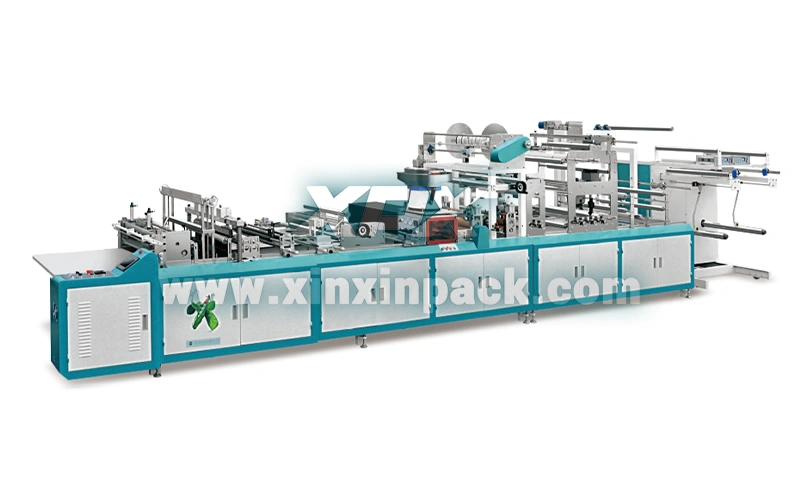
| Factor | Small Production Line Priority | Large Production Line Priority |
| Output speed | Moderate (30–60 bags/min) | High (100+ bags/min) |
| Floor space | Compact footprint | Extended layout acceptable |
| Automation | Semi-automated to moderate | Fully automated |
| Bag type flexibility | High (frequent changeovers) | Moderate (longer runs) |
| Operator requirement | 1–2 operators | 3–4+ operators |
| Initial investment | Cost-sensitive | ROI-driven over longer term |
| Maintenance | Easy access, simple procedures | Scheduled, specialized teams |
This comparison highlights why a machine suitable for a large factory may be entirely wrong for a small producer—and vice versa.
Before contacting suppliers or requesting quotes, work through this checklist:
Once you have this information, review the available zipper bag making machine configurations to see which models align with your requirements.
Mistake 1: Buying too much machine. A high-speed machine running at 30% capacity wastes capital and may actually produce more defects due to sub-optimal operating conditions.
Mistake 2: Ignoring changeover time. If your machine takes 2 hours to switch between bag types and you change over twice daily, that‘s 4 hours of lost production—a significant cost for a small line.
Mistake 3: Underestimating floor space requirements. The machine itself is only part of the equation—material rolls, finished bag storage, and maintenance access all require space.
Mistake 4: Focusing only on purchase price. Operating costs (energy, maintenance, consumables, labor) often exceed the purchase price within the first 2–3 years of operation.
What is the typical output of a small non-woven zipper bag making machine?
For small production lines, operating speeds of 30–60 bags per minute are common and sufficient for most needs. The WBL-800INS has a mechanical speed range of 30–120 bags per minute, giving small producers flexibility to run at lower speeds while having capacity for growth.
Can a small line produce different bag types on the same machine?
Yes. The non-woven zipper bag making machine supports multiple bag types including document bags, garment bags, promotional bags, and eco-friendly bags. Machines with modular accessories can switch between bag styles with reasonable changeover time.
Is ultrasonic sealing necessary for non-woven bags?
Ultrasonic sealing is the preferred method for non-woven materials because it creates strong, clean bonds without excessive heat that can damage or distort the fabric. While heat sealing is possible, ultrasonic sealing typically produces more consistent results for non-woven applications.
How much floor space does a non-woven bag making machine require?
The WBL-800INS has a dimension of 8500×1800×1800 mm (approximately 8.5m × 1.8m). However, you should also plan for material feeding area upstream and finished bag collection downstream, plus maintenance access around the machine. Total space requirement is typically 15–25 square meters depending on layout.
What materials can a non-woven zipper bag making machine process?
These machines are designed for non-woven fabrics and PP materials. Some models may also support other materials—confirm compatibility with your specific material type before purchasing.
How do I know if a machine is right for my production volume?
Calculate your peak daily bag requirement and compare it to the machine‘s output at a comfortable operating speed (not maximum). Choose a machine that can meet your peak demand while running at 60–80% of its maximum capacity—this leaves room for growth and reduces wear on components.
Selecting a non-woven zipper bag making machine for a small production line comes down to matching equipment capabilities to your actual operating constraints. The right machine is one that fits your floor space, meets your output requirements at a comfortable operating speed, supports the bag types you need, and aligns with your operator skill level and budget.
Avoid the temptation to over-invest in high-speed equipment designed for large-scale operations. Instead, focus on machines that offer flexibility, reliable performance at moderate speeds, and practical features that make daily operation straightforward.
Before making a final decision, review the available configurations for non-woven zipper bag making machines and compare models based on your specific production requirements. Discuss your material and production needs with the supplier to confirm that the machine specifications match your actual operating conditions.
Ready to explore equipment options? Browse the zipper bag making machine collection to compare models and configurations.
Selecting a zipper bag making machine is not a one-size-fits-all decision. The right choice depends primarily on two factors: the materials you plan to process and your target output volume. Different film materials—LDPE, PP, non-woven fabrics, PVC, or multi-layer co-extruded films—require different machine configurations in terms of sealing temperature control, tension management, and feeding systems. Similarly, output expectations directly influence whether a standard model, a high-speed unit, or a fully integrated production line is the better fit. This guide breaks down the key selection criteria to help you make an informed decision before you buy.
The first and most critical step in choosing a zipper bag making machine is identifying the primary materials you will process. Xinxin Packaging's bag-making machine series supports a wide range of materials, including LDPE, LLDPE, HDPE, PP, PE/PP composite film, PVC, non-woven fabrics, and multi-layer co-extruded film. However, not every machine configuration handles all materials equally well.
LDPE (Low-Density Polyethylene) and LLDPE (Linear Low-Density Polyethylene) are the most common materials for zipper bag production. They are flexible, easy to seal, and widely used in food packaging, daily chemical products, and e-commerce logistics. Machines processing LDPE typically require:
Precise temperature control for heat sealing (LDPE has a relatively low melting point)
Consistent tension management to prevent film stretching
Compatibility with high-speed operation for mass production
PP offers higher clarity and better rigidity than LDPE, making it suitable for applications where bag appearance matters—such as garment bags and retail packaging. However, PP has a higher melting point and different sealing characteristics. When choosing a machine for PP materials, verify that:
The sealing system can reach and maintain higher temperatures
The film feeding mechanism accommodates PP's different slip properties
The machine supports the specific bag styles you intend to produce
Non-woven zipper bags are increasingly popular for eco-friendly shopping bags, garment bags, and promotional items. Producing these bags requires specialized equipment that supports ultrasonic sealing rather than heat sealing. Not all zipper bag making machines can process non-woven materials, so if this is your primary application, confirm that the machine offers:
Ultrasonic sealing capabilities
Material compatibility with PP and non-woven fabric
Flexible bag structure configuration for diverse bag types
PVC is used for transparent bags with a premium feel, such as cosmetic bags and document bags. Multi-layer co-extruded films offer enhanced barrier properties and strength. These materials may require:
Specialized sealing parameters to avoid degradation
Enhanced tension control for multi-layer structures
Precise temperature management across different layers
Output requirements directly determine which class of zipper bag making machine is appropriate for your operation. Machines in Xinxin's lineup range from standard models to high-speed units with significant capacity differences.
For smaller operations or businesses producing specialized bag types, standard models operating at up to 120 pieces per minute may be sufficient. These machines typically offer:
Lower initial investment
Simpler operation and maintenance
Adequate capacity for niche or custom bag production
Consider this category if you are:
Entering the zipper bag market
Producing custom or low-volume bag styles
Operating with limited floor space or budget
Mid-range machines offer a balance between speed and cost, typically producing 120 to 200 pieces per minute. These are suitable for established operations with consistent order volumes.
High-speed zipper bag making machines can achieve speeds of 200 pieces per minute or more. These machines are designed for:
Large-volume production runs
Operations serving major retail or consumer goods brands
Facilities where labor cost per bag is a critical metric
The ZIP-500H/600H series, for example, operates at speeds up to 230 pieces per minute and supports a wide range of materials including LDPE, PP, PVC, non-woven fabric, OPP, composite film, and LLDPE.
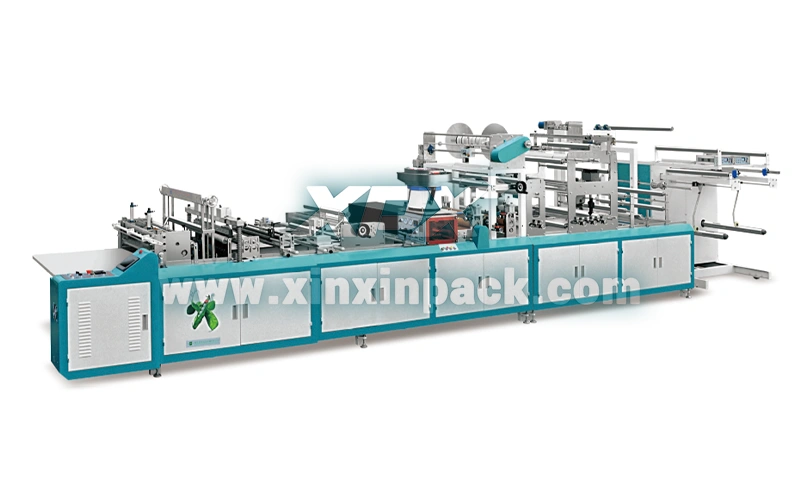
Zipper bag making machines can be configured with various functional modules. Understanding these options helps you select a machine that meets both current and future needs.
Xinxin's bag-making equipment can be flexibly equipped with modules including:
| Module | Function | Best For |
|---|---|---|
| Lamination | Bonds film layers together | Multi-layer bags, composite materials |
| Sliding blocks | Enables slider zipper functionality | Waterproof slider bags, high-seal applications |
| Punching | Creates holes or cutouts | Hang holes, custom openings |
| Patching | Applies reinforcement patches | Diaper bags, heavy-duty packaging |
| Automatic stacking | Stacks finished bags automatically | High-volume production, labor savings |
| Web guiding | Aligns film during processing | High-precision applications |
| Tension control | Maintains consistent film tension | All applications, especially thin films |
Different bag types require different machine configurations:
Zipper Attachment Bag Making Machine: For attaching zippers to PE or PP bags with automatic bonding, sealing, and cutting
Press-Lock Zipper Profile Extruder Machine: Produces hook-and-loop zipper strips using plastic extrusion molding technology
Water Cooling Zipper Bag Making Machine: Produces smoother, more transparent bags suitable for fruit bags and cosmetic bags with high appearance requirements
Waterproof Slider Zipper Bag Making Machine: For highly airtight sliding bags used in clothing moisture-proof bags and electronic product packaging
When evaluating different zipper bag making machines, pay attention to these critical parameters:
Finished product dimensional error is a key quality indicator. High-precision machines utilizing servo motor and planetary reducer structures can achieve dimensional errors of less than 0.5mm. This precision is essential for bags that must meet strict size specifications, particularly in food and pharmaceutical packaging.
Sealing quality directly affects bag performance. Machines with independent control of cutting and heat-sealing time can achieve sealing consistency 15% better than the industry average. For applications requiring strong, reliable seals—such as food bags, freezer bags, and storage bags—this is a critical differentiator.
Film tension control affects bag flatness, print registration, and overall quality. Machines equipped with dual-servo material pulling systems and constant tension control can improve transparent film correction accuracy by 30%. Poor tension control leads to wrinkles, misalignment, and waste.
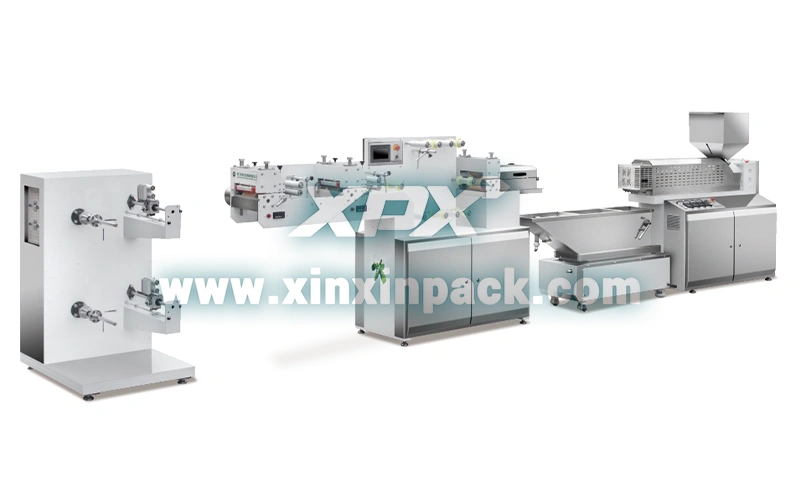
Modern zipper bag making machines offer varying levels of automation:
Basic: Manual feeding and collection
Intermediate: Automatic alarm and shutdown for material breakage, knotting, and material shortage
Advanced: Intelligent detection, fault warning, touch-screen interface with multi-segment parameter memory
Higher automation reduces labor costs and downtime but increases initial investment.
| Material | Common Applications | Key Machine Requirements | Recommended Machine Features |
|---|---|---|---|
| LDPE/LLDPE | Food packaging, daily chemicals, e-commerce bags | Low-temperature sealing, high-speed capability | Standard heat sealing, tension control |
| PP | Garment bags, retail packaging, stationery bags | Higher sealing temperature, slip control | Enhanced temperature system, precise feeding |
| Non-woven fabric | Eco-friendly shopping bags, promotional bags | Ultrasonic sealing | Ultrasonic module, PP compatibility |
| PVC | Cosmetic bags, document bags, gift bags | Precise temperature management | Specialized sealing parameters |
| Multi-layer co-extruded film | High-end packaging, barrier bags | Enhanced tension control, layer compatibility | Advanced tension system, multi-layer feeding |
Based on common industry experiences, here are pitfalls to watch for when selecting a zipper bag making machine:
Overlooking material compatibility: Assuming all machines process all materials. Always verify the machine's material list against your specific films.
Choosing speed over stability: A faster machine with poor stability generates more waste. Evaluate overall efficiency, not just peak speed.
Ignoring changeover time: If you produce multiple bag styles, consider how quickly the machine can switch between configurations. Machines with touch-screen interfaces and multi-segment parameter memory reduce changeover time significantly.
Underestimating maintenance requirements: Review the machine's maintenance access. Features like quick-flip blade design and pull-out conveyor belt tracks can reduce maintenance time by over 70%.
Buying for today's needs only: Consider your growth trajectory. A machine that meets current needs but cannot scale may require replacement sooner than expected.
Before finalizing your zipper bag making machine purchase, verify the following:
What is the most common material used in zipper bag making machines?
LDPE (Low-Density Polyethylene) is the most commonly processed material due to its flexibility, ease of sealing, and wide availability. Most standard zipper bag making machines are optimized for LDPE and LLDPE films.
Can one zipper bag making machine process both LDPE and PP?
Yes, many machines support both materials, but you should verify this specifically. LDPE and PP have different melting points and sealing characteristics, so the machine must offer adjustable temperature control and feeding parameters to accommodate both.
What output speed should I look for in a zipper bag making machine?
The right speed depends on your production volume. Standard models operate at up to 120 pieces per minute, while high-speed machines can reach 230 pieces per minute or more. Consider your current order volumes and growth projections when selecting speed.
How important is tension control in zipper bag production?
Tension control is critical. Poor tension control causes film wrinkles, misaligned zipper attachment, and inconsistent bag dimensions. Machines with dual-servo material pulling systems and constant tension control can improve correction accuracy by 30%.
What is the difference between a zipper bag making machine and a zipper profile extruder?
A zipper bag making machine produces finished bags by sealing, cutting, and attaching zippers to film. A zipper profile extruder, by contrast, produces the zipper strips themselves—the hook-and-loop closure profiles that are later attached to bags. Many production lines use both types of equipment.
How long does a zipper bag making machine typically last?
With proper maintenance, a well-built zipper bag making machine can last over 10 years. Machines with robust frames constructed from 12mm thick steel plates and high-strength welded structures are designed for long-term durability.
Choosing the right zipper bag making machine requires a clear understanding of your material types, output requirements, and operational needs. Start by identifying the primary materials you will process—whether LDPE, PP, non-woven fabrics, or PVC—and confirm that the machine supports them. Then evaluate output speed against your actual production demands, not just maximum capacity. Finally, consider which functional modules and automation features will deliver the best return for your specific operation.
Avoid the common mistake of prioritizing speed over stability, or buying for today's needs without considering future growth. A well-matched machine reduces waste, improves quality, and delivers reliable performance over years of operation.
If you are evaluating specific configurations or have unique material requirements, reviewing the available zipper bag making machine models and their specifications is a practical next step. Explore the zipper bag making machine product range →
If your flexible packaging operation is struggling to keep up with orders, you are not alone. A recent Smithers report, The Future of Flexible Packaging to 2026, projects the market to cross $270 billion, with zippered formats like stand-up pouches growing faster than any other segment. Yet many production managers privately admit that their actual output barely reaches 70% of the line’s nameplate capacity. The disconnect shows up in a familiar scene: a skilled operator standing over a machine, frowning at a stack of pouches with crooked zippers or weak corner seals, while the waste bin fills up and the shipment deadline looms.
Often the root cause isn’t a lack of effort—it’s a mismatch between the demands of high-speed zippered packaging and the tools running the job. If you are still running a conventional zipper bag making machine that wasn’t designed for today’s material structures and throughput targets, these pain points are practically built in. The good news is that output efficiency can be transformed by focusing on five specific areas—no major capital expenditure required at the outset.
Before diving into the fixes, it helps to review the foundation: many converters have already turned to advanced pouch converting systems that embed the following solutions right out of the box. Whether you are upgrading now or later, understanding these levers puts you in control.
1. Precision Film Unwinding and Tension Control
Inconsistent web tension is the silent killer of zipper pouch throughput. When the inner and outer plies of a multi-layer laminate feed at slightly different speeds, the zipper profile gets skewed relative to the pouch edge. You end up stopping the line to realign, scrap every second bag, or—worst of all—ship pouches that fail on the customer’s filling line.
Move from a purely dancer-arm tension setup to a closed-loop, servo-driven unwinding system. Encoder feedback lets the unwind motor compensate for roll eccentricity in real time, while load cells at key idlers keep the web strain within ±1% of the setpoint, even during splice cycles. A mid-sized snack brand implemented this change and watched its zipper alignment rejects drop from 8% to under 0.5% in three weeks.
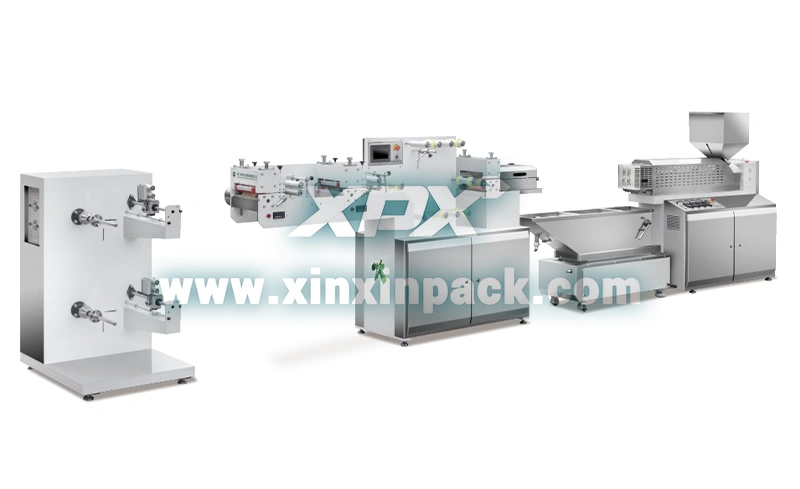
For converters seeking to embed such capability directly into their process, many modern lines now offer precision film handling integrations that eliminate the need for time-consuming retrofits.
2. Ultrasonic or Vision-Guided Zipper Placement
Manually setting zipper guide rails every time you change bag width is not only slow but invites operator-to-operator variability. A more robust approach uses ultrasonic sensors or a high-contrast vision system to detect the edge of the zipper tape on the fly. The controller compares the tape position with the pouch edge and instructs a steering actuator to maintain alignment within 0.2 mm—even at speeds above 100 cycles per minute.
One operation we spoke with slashed its changeover time from 45 minutes to under 12 minutes simply by moving to an automatic zipper alignment workflow. Fewer adjustments meant the line could run an extra production hour every shift.
Once the zipper is perfectly placed, the next hurdle appears: sealing it without burning the film.
3. Multi-Zone Temperature Profiling for Sealing
A single temperature setpoint across the entire sealing bar is rarely optimal. The area around the zipper insertion acts as a heat sink, pulling energy away from the perimeter seal. A more intelligent approach divides the sealing tool into independent zones—cross-seal, side-seal, and zipper-tack zones—each controlled by a dedicated PID loop with thermocouple feedback.
When combined with dwell-time adjustments based on the film structure (e.g., PET/PE vs. Nylon/LLDPE), this method can raise seal strength by 20–40% while dropping the scrap rate caused by burnt seals. The ASTM F88 peel test becomes a reliable quality gate, not a source of Monday-morning panic.
This level of control is especially critical when you plan to run a zipper bag making machine at its upper design speed. Without granular temperature management, the heat seal becomes the bottleneck that caps your entire output, no matter how fast the servo drives move.
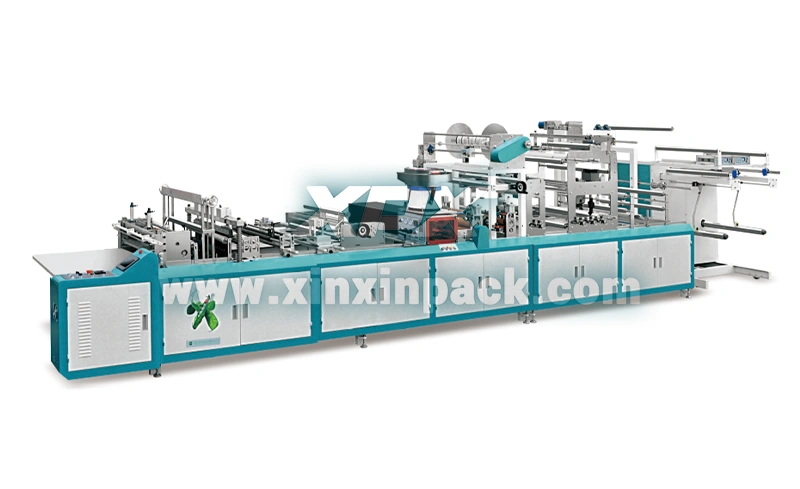
4. Structured Preventive Maintenance, Not Reactive Firefighting
Efficiency gains evaporate if the line is down for unplanned repairs twice a week. Moving from reactive to calendar- and cycle-based maintenance preserves output. Create a tiered checklist:
Daily: Clean zipper guide channels, inspect silicone rubber condition on sealing bars, verify air pressure to the zipper insertion cylinder.
Weekly: Check servo motor couplings for backlash, run a frequency analysis on vibration-prone bearings, and flush the hot-air nozzle if applicable.
Monthly: Replace wear strips, recalibrate load cells, and audit the HMI for alarm log trends that signal degrading components.
Plants that adopt this rhythm commonly report a 10–15% boost in overall equipment availability within six months.
5. Data-Driven OEE Management
If you can’t measure it, you can’t improve it. Many modern pouch lines can output cycle-by-cycle data via OPC-UA or MQTT to a plant dashboard. The key metric is not just the number of pouches produced per minute, but the real OEE: Availability × Performance × Quality. One converting plant discovered that 30% of its downtime was due to “micro-stops”—jams clearing in under a minute that were invisible on shift reports. Connecting sensor data to the MES revealed a pattern of zipper tape curl appearing after 40,000 cycles, pointing to a worn guide bushing that cost just $15 to replace.
When you combine all five strategies, the effect is synergistic. Better tension control reduces zipper misplacements. Automated zipper placement cuts changeover time. Zoned sealing turns out stronger pouches with fewer rejects. And predictable maintenance keeps the system running long enough to collect the data you need for the next round of improvement.
Of course, upgrading an existing line is one path. If you are evaluating a fresh investment to future-proof your packaging capacity, the conversation shifts toward systems that have these efficiency-boosters integrated at the design stage. This is where a specialized partner becomes valuable. Xinxin has developed a portfolio of pouch converting solutions built around high-precision servo drives, rapid changeover tooling, and intuitive OEE monitoring—addressing the exact bottlenecks covered above. Click here to explore Xinxin’s customizable high-output solutions and see how their engineering aligns with the principles of lean converting.
Even the most rugged zipper bag making machine will eventually reach its economic limit. The market’s appetite for zippered packaging isn’t slowing down, and neither should your line. By methodically applying these five strategies—and matching the hardware to the task—you can escape the low-efficiency trap and deliver the output your customers are waiting for.
References: Smithers, “The Future of Flexible Packaging to 2026”; ASTM F88 Standard Test Method for Seal Strength of Flexible Barrier Materials. All customer examples are anonymized to respect confidentiality. This content is for informational purposes; specific results will vary based on operating conditions.
Last summer, a mid-sized flexible packaging converter in Ohio watched its monthly electricity bill climb for the fifth straight month. The real sting, though, wasn’t just the utility invoice—it was the 11 hours of unscheduled downtime that same month, almost all triggered by web breaks and misregister on thin LDPE film. The culprit? An aging drying system working overtime, and a mechanical tension clutch that simply couldn’t keep up.
That story is far from unique. Across North America and Europe, converters running high-speed roll-to-roll lines are caught between the pressure to lower operating costs and the absolute necessity of holding hair-thin tolerances on stretchable substrates. The conversation, increasingly, doesn’t start with “which press brand” but with “how do we stop bleeding cash through the dryer and the waste bin?”
When margins are tight, it’s tempting to focus on throughput—run faster, produce more. But in practice, a 3% gain in line speed can be wiped out by a single tension excursion that introduces 300 meters of unusable laminate. According to a 2023 Smithers report on the flexible packaging market, energy now accounts for up to 15% of total operating expenses for many converters, while material waste—often driven by poor web handling—eats another 5–8%. Together, they can represent the difference between a healthy EBITDA and a break-even quarter.
The root cause usually sits in two interconnected systems: the drying section and the tension control loop. Traditional thermal drying ovens, still common on many lines, consume enormous amounts of electricity or gas to evaporate solvents or water. At the same time, purely mechanical tension regulation—clutches, dancing rollers with limited feedback, manual adjustments at unwind and rewind—struggles to compensate for the rapid acceleration and deceleration cycles of modern production. The result is a cycle of energy waste, creasing, and color-to-color misregister that forces operators to slow down, not speed up.
Here’s where the numbers become compelling. RadTech Europe, in a 2022 field study of narrow- and mid-web printing operations, found that switching from thermal drying to UV LED curing can reduce the energy consumed in the drying process by 40–60%. Unlike hot air ovens that must heat the entire web and a large volume of air, UV curing targets only the ink film, polymerizing it almost instantly. There’s no warm-up time, no solvent abatement system constantly running, and no need to cool the substrate afterward.
For a converter running two shifts a day, that translates into tens of thousands of dollars saved annually on electricity alone—before counting the reduction in scrap. One European label and flexible packaging plant, after retrofitting its narrow-web line with UV LED arrays, reported a 45% drop in energy cost per square meter within the first six months.
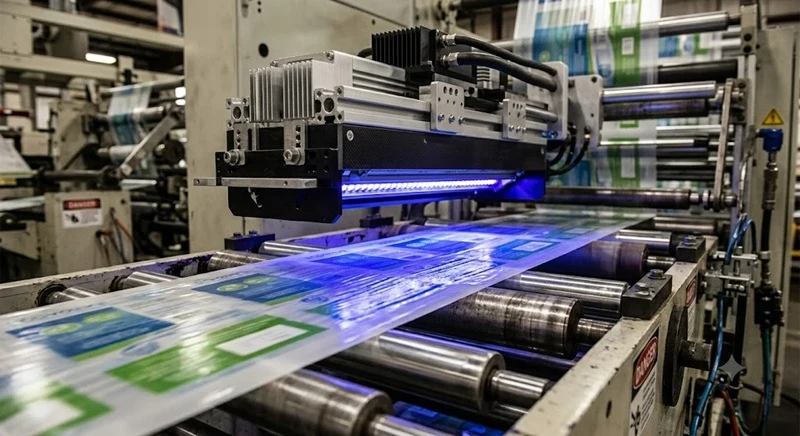
Equally important, the absence of intense heat dramatically reduces substrate distortion. Films like 12-micron PET or thin-gauge shrink sleeve material are notoriously sensitive to temperature; pull them through a 70°C drying tunnel and they can stretch, shrink, or lose their surface treatment. UV curing keeps the web thermally stable, making it significantly easier for the tension system to do its job.
If UV solves the energy half of the puzzle, modern closed-loop tension control solves the waste and quality half. Mechanical systems can maintain a rough average tension, but they cannot react in real time to disturbances—a slightly eccentric unwind roll, a change in ambient humidity that alters film friction, or the sudden inertia shift as a new roll is spliced in. Servo-driven tension control, by contrast, uses load cells or dancer position sensors to continuously feed data back to a motion controller, which adjusts torque on the unwind and rewind motors within milliseconds.
The practical impact on register is immediate and measurable. The ISO 12647-2 standard for process control in graphic technology specifies tight chromatic deviation limits; holding those limits on a flexible film at 300 m/min demands that longitudinal tension stays within a narrow window. With a high-resolution servo tension setup, operations that previously saw ±5% tension fluctuation can now hold ±1% or better. The difference shows up not just in fewer web breaks but in consistent dot gain and color across the entire repeat length.
For teams exploring how to get these benefits without a complete line replacement, presses with integrated servo tension control are worth examining. Many modern configurations allow the tension loops to be tuned per substrate recipe, so an operator can switch from 20-micron BOPP to heavy paperboard with a single recipe recall. That reduces setup waste dramatically—often by more than 40% on job changeovers.
When UV curing and intelligent tension management are deployed together, their benefits multiply. A thermally stable web is inherently easier to control at high speed, which means the tension system operates at a lower gain and consumes less energy itself. Less energy into the dryer, fewer amps into the motors. Less stretch, fewer registration errors. The result is not just a lower utility bill but a higher percentage of saleable output from every master roll.
A real-world example (anonymized from an industry white paper): a converter producing retort pouches was losing approximately 2.7% of its total material to web breaks and misregister-related waste each month. After upgrading to a hybrid UV and servo tension platform, waste fell to 0.8% within two quarters. The combined energy and material savings delivered a payback on the upgrade in under 18 months—faster than the company’s original three-year projection.
For those not ready to replace an entire line, retrofitting an existing press with closed-loop tension control modules can be a pragmatic entry point. Load cell kits and servo drives from several manufacturers can be integrated into older frames, immediately improving web stability while keeping the main press infrastructure intact. Even a partial modernization often delivers enough reduction in waste to justify the investment.
Even the best equipment degrades if small things are ignored. Based on conversations with maintenance engineers across half a dozen converting plants, three preventive steps consistently top the list:
Validate load cell calibration monthly. A drifted load cell might report 100 N of tension while the true value is 115 N—enough to distort thin films. Use a certified weight kit and record the deviation trend.
Clean idler rollers aggressively. Ink mist, dust, and static buildup change the effective coefficient of friction. A roller that grips the film unevenly will induce tension spikes no control system can fully dampen.
Monitor UV lamp output weekly. LED arrays degrade slowly; a 15% drop in irradiance will require slower line speeds to achieve full cure, eating into the energy-saving advantage. Built-in radiometers make this check trivial.
The next evolution is already appearing at trade shows: fully integrated digital platforms that unify UV cure energy monitoring, tension analytics, and predictive maintenance alerts into one dashboard. Instead of reacting to a web break, the system will detect an emerging trend—say, a gradually increasing torque ripple on the unwind motor—and recommend maintenance before any product is affected. Combined with UV LED arrays that can adjust output zone by zone, these smart lines promise to cut total energy consumption by another 15–20% while pushing waste ever closer to zero.
For a converter who wants to future-proof its operation against rising electricity prices and increasingly demanding brand-owner sustainability targets, now is the moment to evaluate platforms that treat energy efficiency and web stability as a single, integrated design challenge rather than separate afterthoughts. When both functions speak the same digital language, the whole becomes greater than the sum of its parts.
If you’re mapping out your next upgrade cycle or simply need benchmark figures on what a truly energy-efficient and stable roll-to-roll line can achieve, Xinxin’s integrated configuration and real-world performance data offer a concrete starting point. The right decision rarely requires a leap of faith—just a clear-eyed look at the kilowatt-hours and waste logs.
Disclaimer: This article is for informational purposes only and does not constitute engineering or operational advice. All performance figures cited from third-party studies (Smithers, RadTech Europe) are publicly available and referenced in good faith. Individual results vary based on equipment configuration, substrate, and operating conditions. Consult a qualified equipment supplier and perform a site-specific assessment before making investment decisions.
Your morning shift is running smoothly until you notice the familiar hiss of a misaligned seal and the groan of a slipping drive belt. A single hour of unplanned downtime on a busy zipper bag production line can bleed thousands of dollars in lost output and wasted film. Yet, too many packaging operations treat maintenance as an afterthought—until a component screams for replacement. Systematic upkeep does more than prevent breakdowns; it preserves the precision that keeps pouch dimensions consistent and seal integrity unshakable. And while daily habits account for a large share of reliability, the design DNA of your equipment—starting with a well-engineered pouch manufacturing system—plays a role from day one, a point we’ll circle back to.
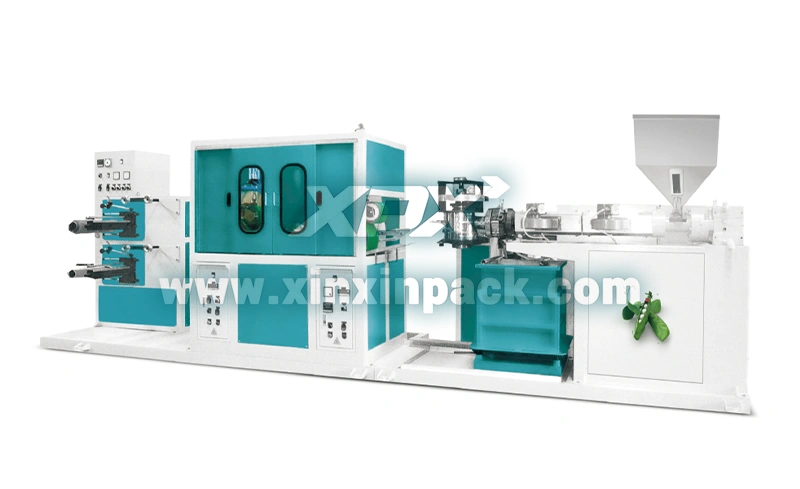
Before a single checklist item, it pays to understand what’s at stake. According to a plant reliability study by the Aberdeen Group, unplanned downtime costs industrial manufacturers an average of $260,000 per hour when factoring in emergency repairs, expedited parts shipping, and missed delivery penalties. In flexible packaging, the domino effect ripples further: a dulled knife edge that escapes notice nibbles away edge quality until retail customers reject an entire batch. A hardened film residue on sealing bars, invisible during a visual glance, quietly raises seal failure rates by 3%—a defect that downstream leak detection will catch, often after thousands of pouches have been filled.
Prevention is radically cheaper. The same research shows best-in-class manufacturers spend 65% less on reactive maintenance than their peers. A modest investment in daily attention pays back in machine lifespan and consistent output.
Floor operators should own these tasks at every shift start and end:
Clean the film path and seal zones: Use a lint-free cloth and an approved solvent to wipe guide rollers, static brushes, and both upper and lower sealing jaw surfaces. Gelled polymer fragments, left to carbonize, will create hot spots that compromise the next heat seal.
Verify temperature and pressure settings: Don’t trust yesterday’s reading. Run a quick seal-peel test on the first three pouches and compare against your validated parameters. A deviation of just 5°C can flip a hermetic seal into a weak bond.
Listen to the machine: Trained ears can catch a dry bearing, a pulley slightly out of alignment, or the whine of a servo hunting. Any new sound warrants a pause-and-inspect.
Daily tasks preserve the surface; deeper checks catch the slow-rolling failures that shorten component life.
Lubrication with precision: Over-greasing is as dangerous as under-greasing. Follow the manufacturer’s map precisely—many modern bag making machines use sealed linear guides that need only a light film. When you do grease, use the NLGI grade specified; incompatible thickeners can break down and abrade ball screws. A maintenance log sheet, hung on the machine frame, removes guesswork.
Inspect belts, chains, and tensioners: Film transport consistency lives or dies by belt tension. Use a tension gauge rather than a thumb-press test. A drop of 10% below spec can introduce 0.3 mm of film slip per cycle, snowballing into registration drift after a few thousand bags.
Cooling system and air filtration: Heat exchanger fins clogged with film dust starve the cooling plate of thermal transfer. Blow out fin stacks monthly with low-pressure compressed air. If your facility is dusty, check filtration every two weeks. Clean cooling directly affects how fast a zipper seal sets—vital for reclosable pouch integrity.
Electrical cabinet check: Heat, humidity, and particulate are the enemies of drives and PLCs. Keep cabinet doors sealed, verify that cooling fans spin, and schedule a thermal imaging scan quarterly to spot loose terminals before they arc.
Even well-intentioned teams can fall into these traps:
“We can stretch the blade change interval.” Dull rotary or punch knives don’t just cut poorly—they increase shock load on bearings and draw more current through servos. The cost of a knife set is trivial next to a scored servo coupler.
“Universal lubricant works fine.” Mixing lithium and polyurea greases causes the thickener to harden into a soap-like plug. Strictly segregate lubes and label grease guns.
“The machine will tell us when something is wrong.” By the time a fault alarm triggers, the damage has already cascaded. Condition-based monitoring—vibration sensors, thermal probes—picks up the early signs, but only if someone acts on the trend data.
Stocking the right spares eliminates panic orders—especially on a fast-moving zipper bag production line where every minute counts. At a minimum, keep:
Two sets of sealing bands and Teflon covers
One set of cutting blades (rotary or guillotine)
Zipper insertion guides and pre-heating shoes
Common sensors (photo-eyes, proximity switches, thermocouples)
Drive belts and timing pulleys
A spare HMI screen or backup of the PLC program
Work with your equipment supplier to build a lifecycle kit. Some manufacturers design their machines with a modular architecture, making parts swapping straightforward—a bolt-on sealing station can be exchanged in under 30 minutes rather than half a shift. If you’re curious how this design philosophy reduces maintenance hours, explore Xinxin’s approach to service-friendly machine layouts.
A capable operator with a multimeter can fix 80% of stoppages. For the remaining 20%, documented escalation matters. Keep an up-to-date library of wiring diagrams, pneumatic schematics, and PLC ladder logic. Have a direct line to your OEM’s application engineers—and test it during a non-emergency so you’re not scrambling when time is short.
Also, periodically review whether your machine’s core subsystems are still supported. A 12-year-old drive may no longer have replacement boards available. In such cases, consider a retrofit kit rather than running to failure. Pre-engineered upgrade packages, available from select manufacturers, refresh the controls architecture without replacing the entire frame—preserving much of your original capital investment.
No amount of polishing will overcome a fundamentally flawed design. Some machines bury zipper preheating zones in places that require a mirror and three articulated tools to reach. Others route wiring looms across sharp frame edges, guaranteeing intermittent faults. When you evaluate equipment for the long haul, look for details that lower your daily upkeep burden: cantilevered unwind spindles for fast roll changes, tool-free guard removal, centralized grease banks, and PLC diagnostic messages in plain language.
A machine platform that integrates such features transforms maintenance from a grudging chore into a quick, predictable process. It’s no surprise that converters running these designs report up to 30% higher overall equipment effectiveness, according to internal production logs shared during industry roundtables. If a long-term, low-touch maintenance profile sounds like the right fit for your operation, see how Xinxin’s durable bag making machinery supports sustained performance through thoughtful engineering.
Finally, remember that your team is the beating heart of any maintenance program. Invest in formal training, not just “learning by watching.” Institutions like the Packaging Machinery Manufacturers Institute (PMMI) offer mechatronics certifications that equip technicians with the troubleshooting rigor missing from typical manuals. Couple trained staff with a machine designed for accessibility, and your zipper bag production line can easily outlast its book depreciation value—delivering flawless pouches for years beyond the warranty period.
Disclaimer: This article provides general maintenance guidance. Always refer to your machine’s specific OEM documentation and lockout/tagout procedures before performing any service. Maintenance intervals should be adapted to your production volume, environment, and film characteristics.
A mid-size specialty coffee brand was ready to launch a cold brew in a matte-finish stand-up pouch. Their design called for a deep black background, vibrant fruit accents, and a high-resolution texture pattern. When quotes landed, the team froze: gravure promised the pop they wanted, but the unit cost at their 15,000-unit run would devour margins. Flexo was affordable, yet the early proof looked muddy on the prototype film. Digital looked sharp on one sample but showed banding on the next. The question they kept returning to was simple: “Which process actually delivers the quality we need, at a cost that makes sense for this film job?”
That tension is familiar to anyone sourcing film packaging today — snack pouches, frozen fruit bags, retort-ready laminates, or shrink sleeves. There is no single “best” process, but there is a best-fit process for your specific mix of run length, graphic complexity, and film type. Understanding the levers that tip the balance can prevent you from overspending on over-engineered prints or, worse, settling for a result that hurts shelf appeal.
Film substrates magnify every printing variable. Unlike paper, films like PET, BOPP, and PE don’t absorb ink — they hold it on the surface. That makes dot gain, solvent evaporation, and static control much bigger cost-quality knobs. A process that prints beautifully on a rigid paperboard can disappoint on a high-slip film if the ink doesn’t wet out correctly or the film stretches under tension.
Three processes dominate today’s film packaging landscape, each with a distinct cost-quality fingerprint. Evaluating them fairly means looking past glossy brochures and at what happens on a live web.
• Flexography (flexo): Uses photopolymer plates mounted on a cylinder, with an anilox roll metering ink to the plate. Modern flexo on film has progressed far beyond simple line work. High-definition plates, 1,800+ LPI anilox engravings, and servo-driven decks can now deliver smooth vignettes and fine text that once required gravure. Ink sets for film — solvent-based, water-based, or UV — are well established. Unit costs drop rapidly after setup, making flexo attractive for medium runs. However, plate costs and setup time still demand a minimum run length, typically 5,000–10,000 impressions, to feel comfortable.
• Gravure: A metal cylinder is engraved with millions of tiny cells that transfer ink directly to the film. The result is a continuous-tone-like richness that few other analog processes match, especially on extended-gamut designs. For very long runs — think millions of pouches for a global snack brand — the per-unit cost becomes the lowest of all. The catch is the cylinder itself: a single gravure cylinder can cost thousands of dollars and take weeks to produce, making short and even medium runs prohibitive. The film must also tolerate the solvent-based inks and dryer heat typical of gravure presses.
• Digital: Either inkjet or electrophotographic (liquid toner) presses that eliminate plates and cylinders entirely. The digital proposition is strongest for short runs, variable data, multiple SKU versions, and rapid prototyping on the actual production substrate. Quality on film has improved dramatically: 1,200 dpi output with white ink underlays now makes digital a realistic choice for small-batch specialty pouches and regional promotions. The trade-off is speed and per-unit cost — digital clicks don’t benefit from the same economies of scale, so costs stay relatively flat regardless of volume. There can also be film compatibility constraints, especially on heat-sensitive substrates, unless the press is designed with low-temperature curing.
The interaction between process and film becomes clearer when you look at actual data. According to a 2023 Smithers report The Future of Flexible Packaging Printing to 2026, converters report that substrate-related waste — mainly from tension issues and solvent retention — accounts for 12–18% of total job cost on standard films, a figure that drops sharply when the press architecture itself is designed around film handling. This is where looking at film-specific, modular web-fed systems can change the economics before a single job even starts. Explore modular web-fed systems that are engineered for extensible films.
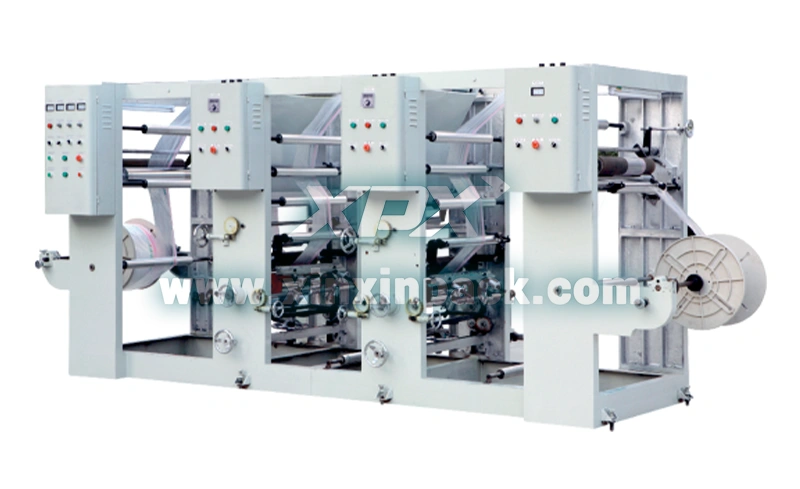
Ask a typical converter and you’ll hear a rule of thumb: below 5,000 linear meters, go digital; above 50,000, go gravure; flexo owns the middle. Like most rules of thumb, it oversimplifies. Several film-specific factors nudge the sweet spot left or right:
Color count and ink coverage – A 7-color extended-gamut flexo job costs more in plates and wash-up than a 3-color line-art job. If the design needs many spot colors, digital’s fixed cost structure becomes more attractive. Conversely, heavy solid ink coverage on digital can become expensive quickly because of ink consumption.
Substrate stretch and gauge – Thin, extensible films (think 12 µm PET or low-gauge PE) punish any process that lacks tight tension control. A well-configured flexographic printing machine with a central impression (CI) drum and servo-driven infeed/outfeed can hold register to ±0.05 mm on these films, a precision that closes the quality gap with gravure on all but the most demanding skin-tone work.
Post-print processing – If the pouch must withstand retort sterilization or aggressive filling lines, ink adhesion and bond strength become non-negotiable quality metrics. Some digital inks are still gaining certification for retort applications, while flexo and gravure have decades of proven performance. That can override pure cost calculations.
When converters map their real-world jobs, many find that the cost-quality equilibrium is not a single process but a hybrid mindset: using the right engine for the right part of the job. Digital printing machines for flexible packaging have evolved from prototyping curiosities into production engines that can handle inline priming and white on film at speeds above 80 m/min. Meanwhile, central impression drum platforms now allow flexo to print photographic-quality art on shrink sleeves and flow wraps that used to go straight to gravure.
Making the choice concrete: a side-by-side lens
| Dimension | Flexo (CI) | Gravure | Digital (Inkjet/Toner) |
|---|---|---|---|
| Ideal run length | 10,000 – 200,000 linear m | >100,000 linear m | <10,000 linear m, multi-SKU |
| Cost structure | Medium plate & setup, low ink cost, sharp decline with volume | High cylinder cost, lowest ink cost, very flat at high volume | No plate cost, high click charge, flat cost curve |
| Quality ceiling on film | 175–200 LPI with HD plates, excellent text & solids | 250+ LPI equivalent, unbeatable smoothness | 1,200 dpi, strong for short-run photo, can show banding on large solids |
| Film compatibility | Broad; works with treated PET, BOPP, PE, PA, shrinks | Broad; excellent for thin films, but high dryer temperature can deform certain substrates | Improving; check for primer needs, heat sensitivity, and retort compliance |
| Setup time & waste | 15–30 min changeover, 200–300 m waste typical | 45–90 min cylinder change, 500–800 m waste | Near-zero setup, <50 m waste |
| Variable data / versioning | Limited, requires plate changes | Not practical | Inherent; every impression can differ |
The table reveals something important: quality is not an absolute number. A crisp 175 LPI flexo job with a matte overprint varnish on BOPP can outshine a muddled gravure job on an ill-prepared substrate. Quality means fitness for the brand’s purpose, on its specific film, under its filling-line conditions. Once that definition is sharp, cost becomes a filter rather than a compromise.
Rather than chasing an abstract “best” process, successful packaging buyers evaluate three gateway questions:
What is the visual task? If the pack’s role is to telegraph “premium” through a photorealistic raspberry on a matte black field, and run lengths will exceed 200,000, gravure remains the benchmark. If the job is a vibrant, block-color frozen vegetable bag with moderate detail, flexo will exceed expectations at a fraction of the cylinder cost.
How flexible is the supply chain? The pandemic-era shift toward smaller, more frequent orders hasn’t reversed. Brands now demand 12 SKU flavors with identical base graphics. This multi-SKU reality shifts the balance toward digital or a flexo-digital hybrid line that prints the static art in flexo and overlays variable elements digitally. Flexible hybrid solutions that combine analog and digital on the same web are becoming a real option for mid-tier converters who want to avoid turning away short-run requests.
What is the true cost of “good enough”? A 2019 FTA (Flexographic Technical Association) study compared consumer perception of the same coffee bag printed on film via flexo and gravure at a standard viewing distance of 60 cm. For non-photographic designs, consumer preference was statistically identical, even though the flexo print showed measurable differences in dot structure under a loupe. That insight can save tens of thousands of dollars in cylinder costs across a brand’s SKU portfolio without hurting sales.
The ISO 12647-6 standard for flexographic printing provides objective metrics — dot gain, solid ink density, and color difference tolerances — that help align buyer expectations with process capability. When a press meets these tolerances consistently, it’s delivering commercial quality, even if a densitometer tells a different story than a gravure proof. Seasoned operators know that on film, stability matters more than a single perfect pull-down. They’ll monitor the web tension, dryer temperature, and corona treatment level relentlessly because a deviation of 0.5 N in tension can introduce misregister that no amount of prepress magic can fix.
No matter which process emerges as the strategic fit, the execution sits on the shoulders of the press. Film handling — the ability to run thin, extensible substrates without wrinkles, static marks, or tension-induced distortion — is not an add-on; it’s the foundation. A press with an undersized dryer or a flimsy unwind will waste the quality potential of the best prepress team and the finest ink set.
This is where brands and converters often find themselves stuck in a false choice between “affordable” and “film-capable.” The market has moved on: servo-driven, modular platforms now allow shops to start with a configuration that matches today’s job mix and extend capabilities later — adding a deck, upgrading the drying, or integrating inline inspection — without scrapping the entire investment. When evaluating such platforms, look for features like chilled impression drums for heat-sensitive films, automatic viscosity control for solvent inks, and web cleaning systems that prevent the “fish eye” defects that plague high-slip films.
If you’re trying to pin down a configuration that fits the films you actually run — not a generic spec sheet — it helps to work with a manufacturer that has deep film expertise built into the platform from day one. Xinxin’s range of film packaging solutions combines web handling technology refined across thousands of film jobs with the flexibility to switch between water-based and solvent inksets without major retrofits. For converters handling tricky laminated films or high-speed single-layer PE, having access to an application-focused engineering team can cut months of trial-and-error out of the ramp-up phase.
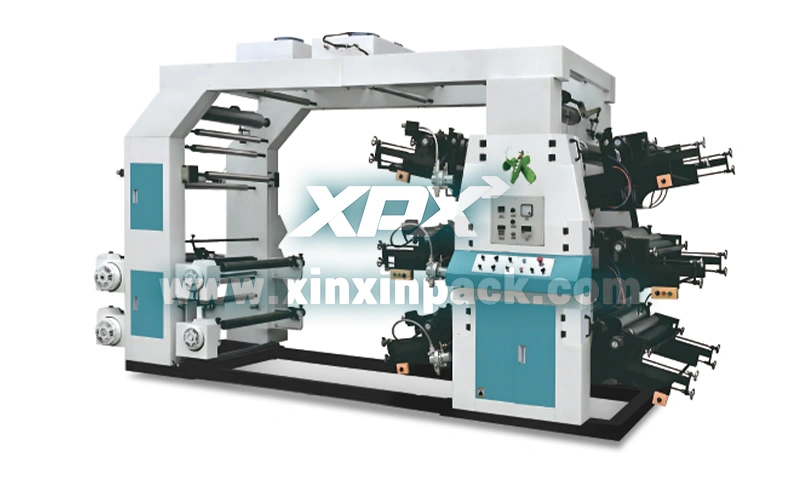
Ultimately, the right printing machine for your film project should be justified by a total cost of ownership lens, not just the upfront purchase price. Calculate the cost over 5 years, including plates or cylinders (or their absence), ink waste, setup time, and the very real expense of rejected reels when film temperature control fails. That calculation often reveals that the process which looks expensive on the price list becomes the most economical across a portfolio of jobs.
The coffee brand at the start of this article landed on flexo with HD plates and an extended gamut ink set, supported by a CI press that held tension on their chosen matte PET laminate. The result: a pouch that, on shelf, was indistinguishable from the gravure reference in a 20-person consumer panel, at a unit cost 23% lower than the gravure quote. Their digital option still serves seasonal limited editions, but flexo became the backbone.
Your cost-quality equilibrium will sit at a different intersection. The key is to stop asking “which process is best” and start mapping your own job mix, film types, and shelf-impact goals onto the real capabilities of today’s film-oriented presses. Run the numbers, request pull-downs on your actual substrate, and watch how the web behaves at full speed — because what looks balanced in a quotation can go out of register on the production floor.
Disclaimer: This article provides general information for educational purposes. Actual process and equipment selection should be based on specific material testing, production conditions, and technical consultation.
Every production manager in the flexible packaging sector knows the sinking feeling. A shipment of zip bags is due by the end of the week, but the blown film line is running wild. The bubble dances like a flame in the wind, thickness varies from edge to edge, and the downstream zipper application keeps jamming because the profile just won’t seal evenly. The result? Spikes in waste, late deliveries, and a frustrated team trying everything from manual air valve tweaks to crossing their fingers.
This scenario isn’t just a random bad day—it’s a symptom of deeper process instability. When you’re trying to produce film for resealable bags, the margin for error is razor-thin. The zipper needs a perfectly consistent landing zone, and any gauge variation translates directly into functional failure. Let’s break down the real reasons behind bubble wobble and thickness deviation, and how to build a process that stays locked in.
Before we dive into fixes, it’s worth quantifying what thickness deviation actually costs you. For standard films, a ±10% gauge variation might be absorbable. But in zip bag production, the film must meet tight tolerances at the precise position where the male and female zipper profiles are inserted. Even a 5% thickness deviation in that band can cause incomplete sealing, crooked zippers, or end-use leaks.
According to ASTM D882 tensile testing guidelines, inconsistent film thickness directly weakens seal integrity under load. I’ve spoken with converters who reported that reducing thickness variation from ±8% to ±4% cut their customer rejection rate by over 60%. The compounding benefits go further: downstream, the bag-making machine runs faster with fewer stops, and your raw material consumption drops because you’re no longer over-engineering the average thickness just to hit minimum specs in the thin spots. That’s real money staying in your pocket.
If you're now thinking about how to systematically dial in that kind of improvement, it's worth taking a closer look at what modern purpose-built blown film equipment for resealable packaging can offer in terms of process control.
Bubble instability isn’t magic—it’s physics. When the extruded tube oscillates, pumps, or breathes irregularly, you can trace it back to a handful of interconnected factors:
Air Ring Performance and Ambient Drafts
The air ring is supposed to deliver a uniform, high-velocity stream of chilled air around the full circumference. A clogged lip, an imbalance in chamber pressure, or simply an old single-lip design struggling with high-output rates creates uneven cooling. This is amplified by ambient air currents. An open bay door across the plant floor can hit one side of the bubble and cause a visible lean. Many operators underestimate this until they install simple bubble enclosures—or upgrade to a dual-lip air ring with fine-pitch adjustment—and watch stability improve dramatically.
Die Geometry and Melt Quality
Gauge variation often starts before the bubble is formed. If your die gap is not perfectly concentric, you’ll get heavy and light bands spiraling down the tube. Worn die lips, imbalanced melt temperature across the adapter, or slight misalignment after maintenance can all imprint themselves on the film. Regular die cleaning using brass tools and checking concentricity with a feeler gauge during startups is non-negotiable.
Internal Bubble Cooling (IBC) and Frost Line Control
For higher-output lines, IBC is a game-changer. By exchanging air inside the bubble through a stationary pipe system, you stabilize the internal pressure and pull the frost line into a razor-sharp, consistent height. An unstable internal bubble volume—often caused by a faulty exhaust valve or poor seal at the nip—makes the bubble breathe in and out. That oscillation directly creates cyclical thick-thin patterns you can measure with an online capacitance gauge.
Melt Temperature Homogeneity
One underrated culprit: temperature stratification in the melt stream. If your extruder barrel profiles are set too aggressively, or the screen pack is partially blinded, you can get a melt that’s 5°C–10°C hotter in the center than at the wall. This hits the die and causes variable draw-down, making it impossible to hold gauge. A melt pump before the die is one of the most cost-effective upgrades for eliminating surge and evening out those thermal variations.
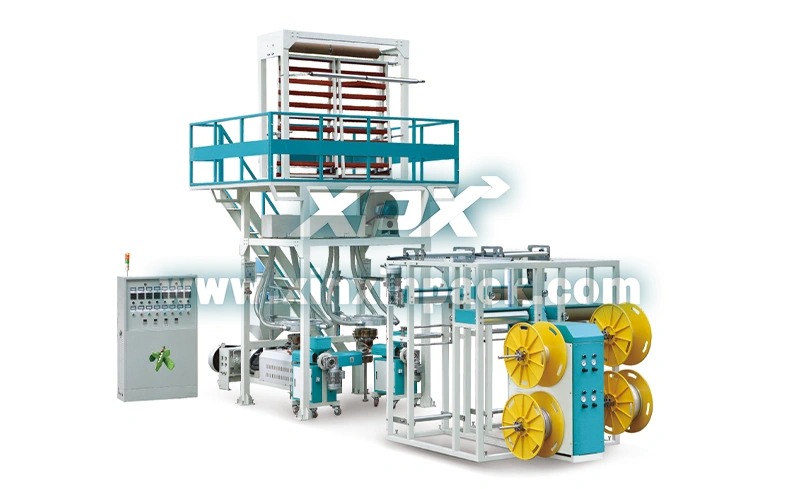
When a line is giving you trouble, resist the urge to chase the bubble. Instead, work through this sequence methodically:
Baseline Your Current Gauge Profile. Use an offline thickness profiler to map the layflat at 12 equidistant points across the web for at least 10 full revolutions. This tells you if the heavy spot rotates (die or air ring issue) or stays fixed (collapse frame or nip alignment issue).
Lock in the Frost Line Height. Adjust IBC pressure and air ring volume to set a crisp, steady frost line at roughly 6–8 times the die diameter up from the air ring. Mark it with a non-contact sensor if available; visually, it should be a distinct shift from hazy to clear that doesn’t wave up or down.
Optimize the Blow-Up Ratio (BUR) for Zip Bag Film. For resealable bag films, a BUR between 2.0:1 and 2.5:1 often provides the right balance of transverse direction strength and bubble stability. Going higher without a very capable stabilizing cage invites sagging.
Fine-Tune the Air Ring. Starting from a locked ring, crack individual adjustment segments no more than 1/8 of a turn at a time, waiting 3–5 minutes to see the effect on gauge mapping. Only adjust the areas corresponding to thin spots—overcorrecting is the enemy.
Validate with Zip Sealing Trials On-Line. Once gauge uniformity is improved, run a short section of film through the zipper applicator and check peel force with a tensile tester. This real-world validation closes the loop, making sure the numbers translate to functional bags.
A plant engineer at a Midwestern packaging company shared with me that after adopting a similar protocol—and pairing it with a machine that featured a digital IBC control and an automatic profile control air ring—they reduced startup scrap from 280 kg to under 90 kg per shift change.
We often fixate on machine settings and forget that the film itself can fight you. The presence of anti-block particles, slip agents, or re-processed trim scrap alters the rheology of the melt. Highly filled masterbatches can create localized viscosity drops, leading to gauge thinning right where the zipper needs maximum toughness.
A practical tip: when running zip bag recipes, aim for a melt index (MI) variability within ±0.2 g/10min across your batch. Pre-drying material, even for non-hygroscopic resins, can help thermal consistency. Also, work with your resin supplier to optimize the slip/anti-block package for stable bubble running. Excessive slip will cause bubble slippage in the collapsing frame, generating wrinkle-induced thickness errors.
If all these variables sound like they demand a well-integrated control philosophy rather than patchwork fixes, you’ve captured the core idea. The transition from reacting to preventing often involves moving to equipment that was conceived as a single, cohesive system. You might want to explore how integrated blown film solutions handle zipper-grade films with closed-loop thickness correction and optimized cooling architecture.
When the time comes to invest in new capacity or retrofit an existing line, here’s what separates machines that hold process capability long-term from those that require constant nursing:
Die Design with Spiral Mandrel Distributor: Ensures multilayer melts arrive at the lip with minimal circumferential temperature variation. Look for low shear stress profiles designed for LLDPE and metallocene-rich blends common in zip bag film.
Automated Air Ring with Capacitance Feedback: A segmented air ring that reads online thickness data and adjusts airflow in real-time takes the operator out of the loop for 90% of running corrections. This directly attacks the root cause of gauge drift.
Vertically Adjustable IBC System: Externally adjustable without stopping the line, enabling quick frost line optimization when switching between resin grades.
Stable, Oscillating Haul-Off with Film Tension Control: The collapsing frame and nip must guide the bubble without inducing variable drag. Tapered rollers that gently transition from a round bubble to flat layflat minimize stretching.
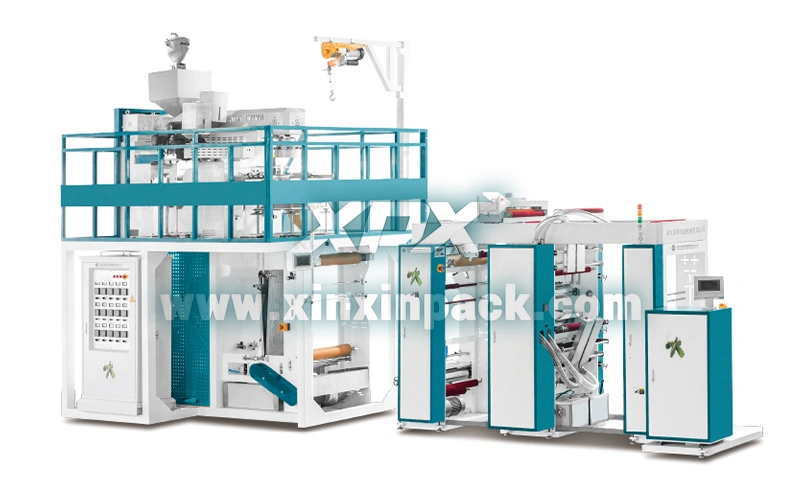
One of my favorite sanity checks comes from an experienced extrusion consultant: “If you can’t consistently hold gauge at the customer’s zipper width, your machine isn’t making saleable product—it’s making test scrap.” That bluntness has saved more capital budgets than any glossy brochure.
Hardware only goes so far. The best-performing blown film operations I’ve visited share a common trait: their operators don’t just run the line, they understand the “why” behind each adjustment. They record frost line height, ambient temperature, die pressure, and layflat width every hour on a simple log sheet. That data creates a trend line that predicts a drift before it becomes a defect.
Train your team to recognize the three types of bubble instability: the slow lean (ambient draft), the regular pump (IBC imbalance), and the high-frequency flutter (air ring turbulence). Each has a distinct corrective path. When everyone speaks the same troubleshooting language, a shift change stops being a risk event and becomes a seamless handoff.
For production environments aiming for ISO 22000 or BRC packaging certification, this level of process documentation and control isn’t optional—it’s auditable. The traceability of every roll back to its production parameters becomes evidence of your commitment to food safety in packaging.
Achieving a rock-steady bubble and tight thickness tolerance in zip bag production is not a one-time adjustment. It’s a discipline that lives at the intersection of sound mechanical design, precise process control, and operator expertise. You can achieve remarkable improvements with the existing equipment on your floor by focusing on air ring symmetry, melt quality, and IBC stability. But if your current machine is fundamentally limited—worn screw, outdated air ring, no IBC capability—the ceiling will always be lower than the market demands.
If you’re ready to shift from firefighting to predictable, low-scrap production, it makes sense to evaluate what’s possible with a system engineered specifically for the challenges of zipper film. You can see how Xinxin approaches stability and precision for blown zipper film and discover whether it aligns with your next production goal. Even if you’re not in the market right now, having a clear benchmark for what “good” looks like helps you push your current setup to its full potential.
For a deeper dive into your current process numbers, download our free gauge variation calculation template from the Xinxin Resource Center—it’s a straightforward spreadsheet that converts your layflat measurement series into Cp and Cpk values, letting you talk the language of capability with your team and suppliers.
The morning shift at a mid-sized flexible packaging plant usually starts with a familiar, sinking feeling. The night supervisor leaves a note: "Registration drift on Line 3 again. 11% waste rate." You look at the stack of misaligned, half-printed pouches destined for regrind, and the cost isn't just the material—it's the lost time, the delayed shipment, and the creeping doubt about your equipment's reliability. In the competitive world of flexible packaging, precision isn't a luxury; it's the thin line between a profitable contract and a costly write-off.
When a machine that once produced flawless stand-up pouches with laser-sharp zipper seals starts to drift, the most common—and costliest—mistake is to treat the symptom, not the system. We jump to adjust the registration settings, tweak a single temperature controller, or, in frustration, slow the entire line down. These are temporary patches on a systemic problem. True, sustainable precision in pouch manufacturing comes from understanding the interconnected dance of film, tension, temperature, and time. Let's break down the root causes of production inaccuracy and build a systematic troubleshooting framework.
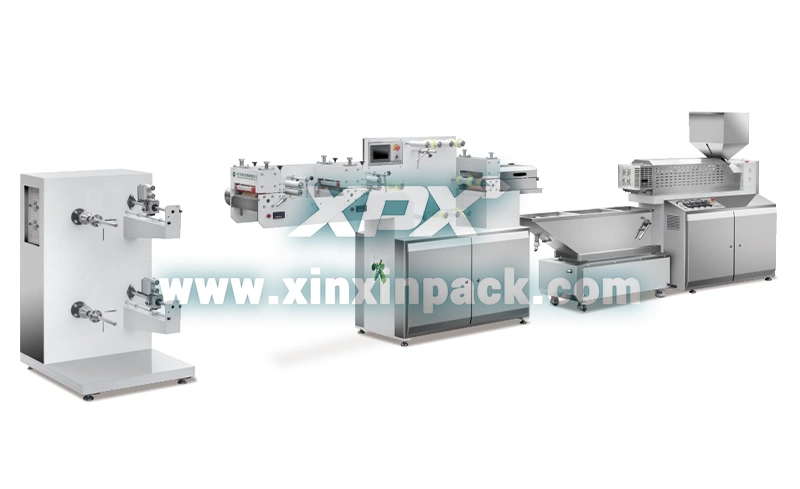
Before touching a single setting, it’s critical to recognize that precision issues rarely stem from one catastrophic failure. They are a conspiracy of micro-variations. We can categorize these root causes into three primary areas:
The journey of a flimsy web of film through dozens of rollers and dancers to the sealing station is a miracle of engineering, but a fragile one. A worn-out nip roller with a slightly eccentric bearing will introduce a rhythmic, maddening registration shift that's almost impossible to tune out with electronic adjustments. Similarly, a dancer arm that doesn't move freely due to mechanical stiction can't absorb tension fluctuations, transmitting every tiny jerk from the unwind directly into the sealing zone.
Sealing a zipper to a pouch body involves a precise heat transfer. The controller might read a steady 145°C, but the actual surface temperature of the sealing bar fluctuates with ambient conditions and line speed. A draft from an open bay door chilling one side of the machine, a failing cartridge heater that's working overtime, or a PID loop that's too aggressive can create a chaotic thermal environment. The result is often seen as "lee-back," where heat shrinks the film unevenly just before the seal point, warping registration marks.
Here is where the invisible becomes painfully visible in the finished pouch. If the zipper applicator and the cross-seal jaw are not in perfect geometric alignment, you are essentially trying to force a three-dimensional plastic bead onto a two-dimensional plane under heat and pressure. This misalignment doesn't just cause wrinkles; it creates a twisting force on the film that pulls it microscopically off-register for the next station. To master this intricate mechanical relationship, engineers often need to look beyond basic adjustments. For operations seeking to eliminate these fundamental mechanical variables, exploring advanced multi-station zipper pouch systems can provide valuable insights into modern design principles that inherently enhance precision.
With the root causes in mind, a methodical approach replaces frantic knob-turning. Follow this sequence to isolate the true culprit.
Before any electronic tuning, conduct a rigid mechanical check. Lock out the machine. Use a dial indicator to check all critical nip rollers for runout—anything over 0.05mm is suspect. Manually cycle the machine and feel for rough spots in linear bearings and seal jaw linkages. Verify all idler rollers spin freely and aren't polished into glassy slickness by years of film passing over them. A roller with no traction is a source of intermittent slippage.
Don't just trust the display; verify the web's behavior. At threading speed, observe how the film tracks into the forming shoulder. Does it wander? Does it flutter right before a critical processing point, like the zipper insertion guide? Use a hand-held tension meter to map the actual tension at various points and compare it to the setpoint. This "stress map" of your web path often reveals the exact location of tension spikes or drops that the main load cell doesn't see.
Run a test without film, but with the heaters on. Use a fast-response surface probe thermometer (not just an infrared gun, which can be fooled by shiny surfaces) to map the exact temperature profile across the entire length of the sealing bar. Is there a 2-3°C cold spot at the edge, exactly where your corner seal wrinkles appear? This pinpoint thermal mapping is far more valuable than the single-point reading from the thermocouple inside the bar. When you have confirmed your mechanical and thermal baseline is stable, evaluating high-performance pouch conversion equipment that offers refined control over these variables can be a logical next step for long-term capability enhancement.
A major pitfall is "over-calibration." An operator repeatedly "teaches" the registration sensor a new mark position to chase a drift caused by, say, a wobbling unwind roll. This just shifts the error elsewhere. Instead of teaching the machine to chase a ghost, fix the ghost.
Modern systems offer advanced process control to combat this. Features like automatic tension compensation linked to roll diameter calculation ensure the film isn't stressed more as the roll gets smaller. Precise zipper tension closed-loop control, which uses a dancer feedback to apply just enough tension to the zipper bead without pre-stretching it, is critical. This prevents the common defect where the zipper section of the pouch ends up shorter than the body after cooling.
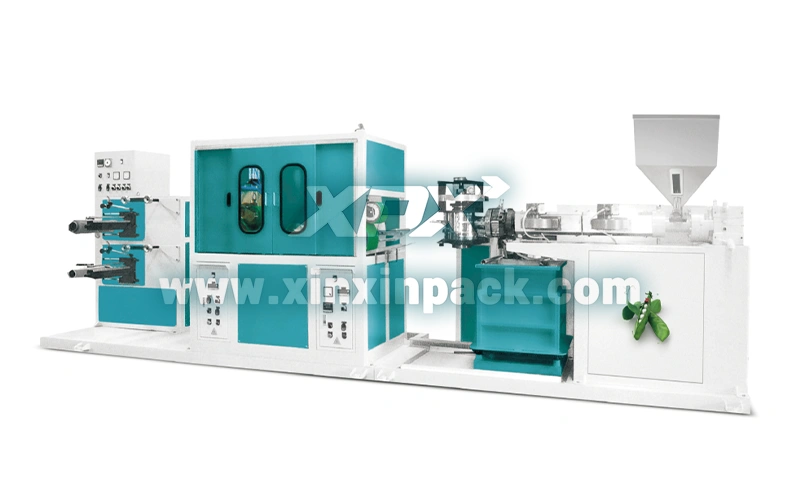
Ultimately, achieving world-class consistency—where every single pouch in a run of 500,000 has the zipper seal within 0.2mm of the same position relative to the edge—is a function of the machine's core architecture. The stiffness of the frames, the resolution of the motion control system, and the thermal uniformity of the sealing tools are built-in characteristics that no amount of retrofitting can fully replicate.
If you find your team perpetually fighting the same precision battles, it may be time to move beyond component-level fixes. Xinxin's range of flexible packaging solutions is engineered with a systemic focus on precision, from high-rigidity frames to advanced multi-axis motion control, designed to make consistent, high-quality output the default state, not a daily fight.
References & Further Reading:
The Society of the Plastics Industry (SPI), Guidelines for Process Control in Flexible Packaging
ISO 12647-7:2016, *Graphic technology — Process control for the production of half-tone colour separations, proof and production prints — Part 7: Proofing processes from flexible packaging (referenced for color registration standards)*
Disclaimer: This guide offers general troubleshooting principles. Always consult your specific equipment's manual and manufacturer's safety protocols before performing any maintenance.
It’s a sound that haunts every flexible packaging production manager: the rhythmic, high-speed whir of the line, punctuated by the sickening crunch of rejected pouches piling up in the scrap bin. You’re running a high-demand order for stand-up reclosable pouches, your film costs have never been higher, and yet, your yield report at the end of the shift tells a brutal story of thousands of feet of wasted material.
The gut reaction is almost always the same: “We need to run faster to make up for the loss.” But this is precisely the trap that turns a minor inefficiency into a margin-destroying crisis. Speeding up a fundamentally unstable process doesn't just produce more waste; it amplifies every micro-error until your entire operation is throttled by chaos. The real solution is counterintuitive: you don’t need more raw material, you need complete control over every millimeter of the film you already have. If you are consistently fighting material registration drift and inconsistent sealing, it’s time to shift focus from the cost of film to the real-time precision of your conversion process.
The journey from a 5% scrap rate to a sub-1% one isn’t a magic trick; it’s a systematic dismantling of the seven silent profit-killers on your production floor. Let’s walk through them, from root cause to systemic fix.
Before we blame the operator or the film supplier, let’s look at the physics. When you’re converting a multi-layer laminate into a zipper pouch, you’re asking fundamentally different materials—PET, PE, aluminum foil—to behave as one. As the web accelerates from zero to high velocity, micro-tension variations, often invisible to the naked eye, create a “bungee effect.”
This stretching and contracting happens in milliseconds. Your registration sensor catches it, but a reactive system is always playing catch-up. By the time the correction is made, you’ve already produced a dozen pouches with a misaligned zipper or a skewed bottom gusset. The fix isn’t just a tighter dancer arm; it’s a shift from reactive tension control to closed-loop, anticipatory tension algorithms. Modern direct-drive motors, when decoupled from gearbox inertia, can achieve a velocity loop response time that absorbs these spikes rather than transmitting them to the sealing area.
Here’s a scenario we see on countless plant visits: an operator, frustrated with registration drift, over-compensates by increasing the dwell time on the sealing bars, hoping to "lock in" the alignment. The result? Burnt inner layers, weakened seal integrity at the corners, and a pouch that looks perfect coming off the line but bursts in the customer’s hands during a drop test.
This is the classic trade-off error. High-precision registration and strong hermetic seals should not be mutually exclusive. The key is thermal decoupling. You need a system where the registration cameras communicate directly with the servo drives to make sub-millimeter adjustments between sealing stations, not at the sealing station. This means the material’s dwell time under heat remains constant and optimized for the laminate structure, while positional accuracy is handled upstream.
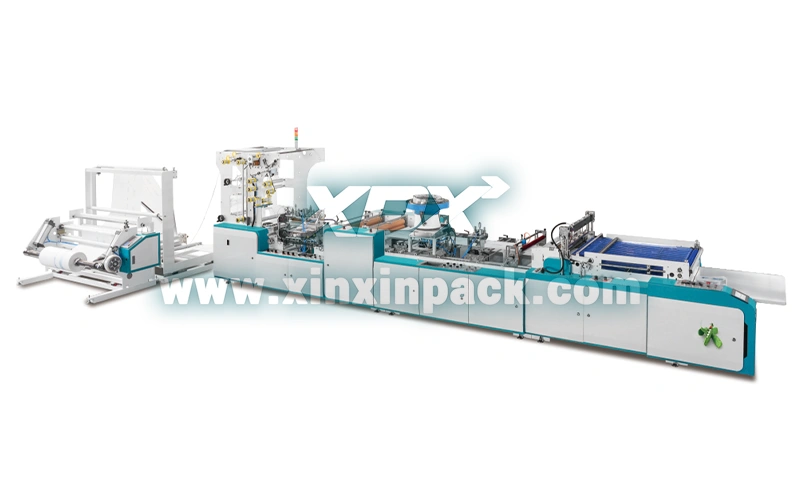
A recent study on flexible packaging waste streams by Smithers noted that converting inefficiencies, not just film supply issues, remain the single largest controllable contributor to landfill-destined waste in the industry. We can do better. By integrating these processes, many processors have successfully discovered methodologies to slash material waste without compromising the cycle speed necessary to fulfill tight delivery windows.
The reclosable zipper is the most expensive component of your pouch and, maddeningly, the most frequent point of failure. The problem usually isn’t the zipper profile itself, but how it’s being fed and aligned.
Most scrap in this area comes from two sources: zipper drift, where the profile begins to wander laterally, and “smiling,” where a slight curve in the application creates a crescent-shaped stress point. Traditional mechanical guides introduce friction and are painfully slow to adjust. The shift to laser-guided, ultrasonic-assisted zipper applicators has proven to be a watershed moment. Ultrasonic energy seals the zipper to the film without melting through the outer layer, a common defect when using simple thermal conduction. It’s a cooler, faster, and infinitely more precise method that allows you to use a lighter-gauge film—directly cutting raw material costs.
You don’t necessarily need to overhaul an entire line to see a 10-15% improvement. Here is a three-step diagnostic you can run on any existing system:
The Start-Stop Wail Test: Listen to your machine during a batch change or splice stop. Loud mechanical clunking indicates hard stops that shock the film tension. Smooth, silent deceleration suggests a servo system that’s preserving registration.
Map Your Static vs. Dynamic Waste: Keep a sharpie in your pocket. Draw an ‘X’ on the film just before a roll change. Run it until the new film is spliced in. Count how many pouches are wasted just from the splice cycle. Then, compare that to the random rejects during a steady run. Often, poor splice algorithms are the hidden culprit, generating consistent, catastrophic spikes of waste that go unmeasured.
The 20-Minute Seal Audit: Pull 20 consecutive pouches off the line, fill them with water, and turn them upside down on a paper towel. Micro-leakers at the zipper-seal interface will reveal themselves within minutes. If you see more than one failure, your process control, not your film, is failing.
These diagnostics often reveal that the bottleneck isn’t the operator's skill, but the machine's inability to translate their intent into precise physical action. When you start seeing your production line as a data stream of positions, pressures, and temperatures rather than a purely mechanical beast, the waste problem becomes solvable.
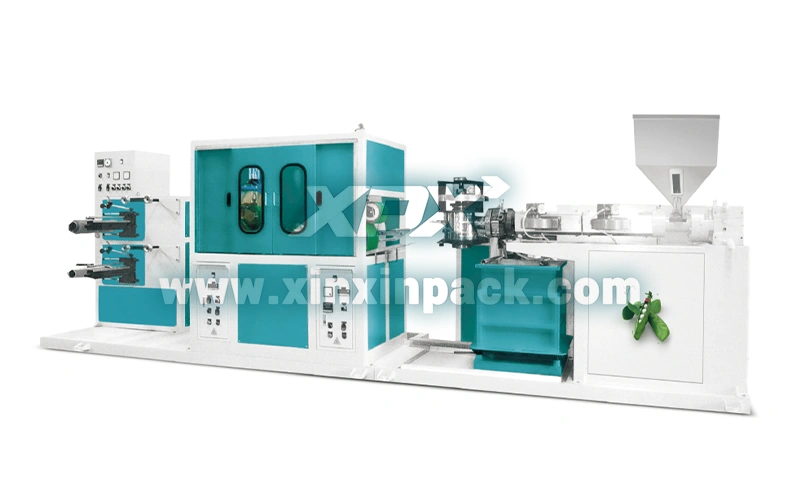
The final piece of the puzzle is not collecting data, but making it actionable. A dashboard that screams "Fault: Seal Temp Low" is helpful; a system that automatically culls the affected pouches and provides an audit trail of the temperature deviation with a micro-second timestamp is transformative. This level of track-and-trace isn't just for pharma anymore. It’s how you shield your brand from a catastrophic recall and build bulletproof trust with major retailers.
Ultimately, boosting output while cutting waste is a single objective, not two competing ones. They are both downstream results of motion control fidelity. The less the film moves in an uncontrolled way, the faster you can run it, and the less of it you throw away. If you’d like to explore the specific technical configuration that aligns with your current laminate structures and volume targets, Xinxin’s engineering team offers a no-commitment consultation to provide a detailed and personalized yield optimization proposal.
Disclaimer: The process optimization techniques discussed here are based on general flexible packaging engineering principles. Results can vary based on specific material combinations, machine conditions, and environmental factors. Always consult your equipment and material suppliers before making significant process changes.
It’s 3:00 PM on a Tuesday, and your shift supervisor reports that the latest run of zipper pouches has a 12% reject rate—wrinkled seals, misaligned zippers, and random film tears. You’re bleeding thousands of dollars a week, and your biggest customer is losing patience. You’ve slowed the line, swapped film suppliers, and even changed sealing temperatures half a dozen times. Still, the problem keeps coming back.
What’s really happening on your production floor isn’t a single fault. It’s a tangle of interconnected variables: mechanical setup, material behavior, process control, and operator habits. In this article, we’ll break down the real-world steps that packaging technicians and plant managers use to get lines back under control—without guesswork. Along the way, we’ll point to modern equipment designs that turn many of these fixes from manual firefighting into automated consistency. If you’re already considering a hardware refresh, Xinxin’s advanced bag making technology has been built from the ground up to address exactly these pain points.
Before you change another setting, it’s worth understanding why zipper pouch production drifts out of spec. In my visits to dozens of flexible packaging plants, the same three culprits surface again and again:
Film tension instability – Fluctuating unwind tension causes registration drift, seal misalignment, and even film stretching that deforms the final pouch dimensions.
Heat sealing inconsistency – Operators often compensate for worn heater cartridges or thermocouple drift by cranking up the temperature setpoint, which burns thin films or creates weak cold seals.
Zipper insertion misalignment – Even a 0.5 mm deviation in zipper placement can lead to rework, leakers, or complete rejection by automated filling lines downstream.
The good news is that you can address most of these with methodical, practical adjustments—no engineering degree required. And when the hardware itself is the bottleneck, there are smart upgrade paths that don’t force you to reinvent your entire line.
Tension control isn’t just “tight enough so it doesn’t wrinkle.” In polyethylene and laminated structures, your target window depends on film modulus, web width, and line speed. A common field guideline: for LDPE-based films around 50–80 microns, unwind tension should sit between 0.5 and 1.5 N per 100 mm of web width. Run a quick check with a hand-held tension meter at splice points and just before the forming section. If the reading swings more than ±15%, your dancer arm or load cell feedback needs recalibration.
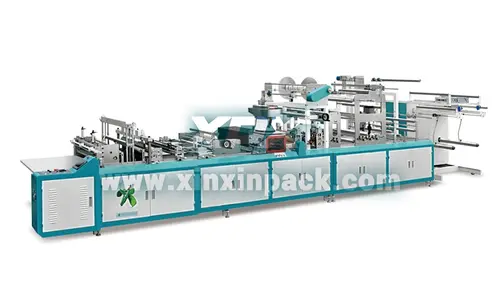
Another often-overlooked detail: idler roller alignment. A single misaligned roller can create baggy edges that telegraph all the way into the zipper insertion station. Use a straightedge across at least three rollers at a time during monthly preventive checks.
Sealing problems are responsible for more than 40% of pouch quality complaints, according to a survey by the Flexible Packaging Association. Yet many lines still run on “feel.” Instead, establish a seal strength testing protocol. Pull samples every 30 minutes and use a tensile tester following ASTM F88/F88M to record peak seal force. Track the data on a simple SPC chart. When seal strength drops below your internal limit—typically 80% of the maximum achievable strength for that film structure—it’s time to inspect the sealing bars, not just raise the temperature.
A common trap: relying on a single thermocouple reading. Infrared thermal imaging of the sealing bar surface often reveals cold spots caused by uneven cartridge heating or Teflon tape wear. Replace Teflon covers on a fixed schedule, not just when they look burned. And if your machine allows independent dwell time adjustment for longitudinal and cross seals, use it—laminate structures with nylon or EVOH barrier layers often need 20–30% longer dwell on the cross seal to achieve equivalent bond strength.
Zipper alignment errors rarely start at the zipper station itself. They usually trace back to film guiding just upstream. Make sure the film enters the forming collar or folding section with no more than 1 mm lateral deviation. After that, check the zipper preheating temperature. In many plants, bringing the zipper flange to within 15–20°C of the seal initiation temperature before it enters the sealing nip reduces reject rates by half or more. This is especially critical when running at speeds above 60 meters per minute, where residence time under the sealing bar is fractions of a second.
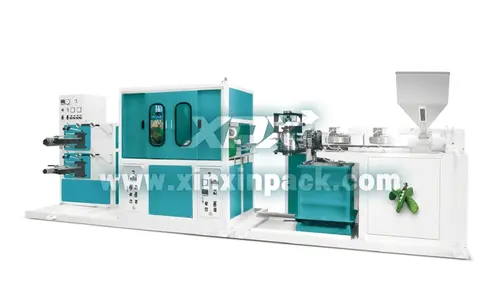
For converters who regularly switch between zipper profiles—press-to-close, slider, or double-track—consider that high-speed pouch-making systems with servo-driven zipper insertion can store recipe settings for each profile, slashing changeover time and reducing alignment errors.
A 2023 PMMI Business Intelligence report noted that unplanned downtime in packaging operations costs an average of $15,000 per hour. Yet most mid-size plants still operate on a reactive model. Shift to a tiered approach:
Daily: Wipe photoelectric sensors, inspect air filters, listen for unusual bearing noise.
Weekly: Check sealing bar parallelism with carbon paper, clean air cylinders, verify emergency stops.
Monthly: Replace Teflon covers, calibrate temperature controllers, flush chill rolls on water-cooled sealing stations.
Quarterly: Full geometric inspection of zipper guides, film path rollers, and forming shoulders.
Document everything. When a persistent defect appears, your maintenance logs will tell you whether it correlates with a recent part replacement or a skipped calibration—often cutting troubleshooting time in half. If you’re in the market for equipment that embeds maintenance tracking and predictive alerts, take a look at Xinxin’s smart diagnostics approach, which automates many of these checks.
The best SOP in the world won’t help if operators override it at 2:00 AM to hit shift targets. Create one-page visual guides for each product setup—including target tension range, seal temperatures, and acceptable quality sample photos—and post them at the machine. Pair new operators with experienced mentors for at least 40 hours of supervised running. Every time a defect batch is caught, turn it into a five-minute team huddle: what happened, what was the root cause, what will we do differently tomorrow.
These practices sound simple, but they compound. One midwestern converter I worked with reduced its complaint rate by 62% in four months using nothing more than structured training, daily tension checks, and a seal strength log—no new machinery at all.
At a certain point, even the best-run legacy line hits a ceiling. You might be running a well-maintained machine that simply lacks the servo precision to hold tolerances at modern production speeds, or you can’t justify a third shift because changeovers consume 90 minutes each. That’s when a high-performance zipper bag making machine with integrated automatic tension control, multi-zone sealing, and recipe-driven zipper setup can transform your operation from reactive to predictable. It’s not about buying technology for its own sake—it’s about matching the platform to your growth and quality demands.
For producers ready to explore a system that bundles these capabilities into a single, cohesive platform, Xinxin’s zipper pouch production solutions are worth a serious look. Their design directly targets the common failure points we’ve discussed: unstable tension, inconsistent sealing, and tedious zipper changeovers.
Take the time to evaluate whether your current line can realistically deliver the output and quality you need over the next three years. If the answer is no, start a conversation with a supplier who understands both the mechanical and operational sides of the equation. The right partner will talk specifics, not just specs—and help you build a line that makes every Tuesday afternoon a little less stressful.
Disclaimer: This article provides general technical guidance based on industry best practices. Specific adjustments should be validated with your film and equipment suppliers. Production data and case studies are anonymized to protect client confidentiality.
Walk into any flexible packaging plant and you’ll see it: shimmering rolls of laminated film quietly turning into skeletons—trimmed edges, misaligned zipper offcuts, and entire pouch runs scrapped because of a 2-millimeter sealing drift. We often obsess over line speed, but the quiet profit killer is waste. On an average zipper pouch line running at scale, even a 3% material loss can translate to tens of thousands of dollars slipping through your fingers every year. The question isn’t if you can afford to deal with waste; it’s whether you can afford not to.
The real culprit? In most cases, it isn’t the operator, nor the resin. It’s a chain of micro-failures—uncontrolled tension, poor thermal profiling, and manual adjustments that can’t keep up with real-time deviations. The good news is that a significant portion of this waste is preventable with a structured approach. Let’s break down how you can shrink that scrap bin while simultaneously improving overall equipment effectiveness (OEE).
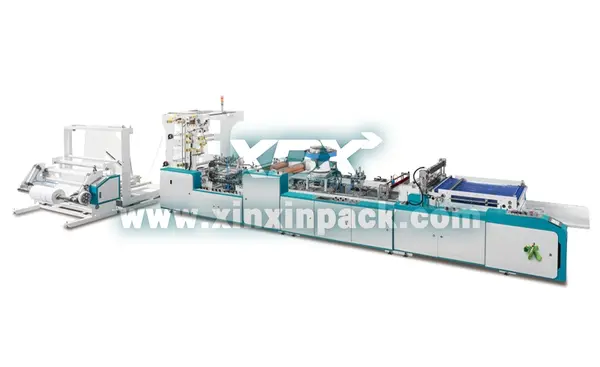
We fixate on steady-state production, yet 40-60% of film waste is generated during acceleration, deceleration, and splice events (per TAPPI PEERS conference data on flexible packaging waste streams). Every time the line stops and restarts, the sealing dies either overheat or undershoot, the registration marks drift, and the zipper tape tension oscillates. This “transient scrap” is rarely visible in daily output reports, because it’s ground up and recycled immediately—but it’s very visible in your raw material variance report.
Immediate action: Start logging waste not by shift, but by event. Assign a dollar value to every stop-start sequence. You’ll quickly discover that a line with just three unplanned stops per shift can hemorrhage material equivalent to 5-8% of its daily output.
Zipper scrap doesn’t come only from the edges. When the zipper tape enters the cross-seal area with a fractional position error, it accumulates over hundreds of cycles, shifting the chain pitch. The result is crushed zipper segments, leakers, and a cascade of rejects that often forces operators to increase the sealing temperature as a quick fix—which distorts the film and generates even more waste.
A common workaround is widening the seal band, but this is a concession, not a solution. A more surgical approach involves characterizing the “draw ratio” of your zipper tape versus the base film under actual dwell time and temperature. Without this understanding, you’re effectively running blind.
Here’s where the numbers start turning in your favor. These four tactics don’t necessarily require a capital purchase; they demand a shift in how you set up and monitor your process.
1. Separate Tension Zones with Accumulator Feedback
Most zipper pouch lines have a single dancer arm trying to manage both the main film web and the zipper tape. When the zipper unwind inertia spikes, it tugs the entire web, causing micro-slippage. By installing a dedicated ultrasonic loop sensor and a simple motorized let-off specifically for the zipper station, you decouple the two tension domains. One converter we studied reduced zipper-related registration scrap by 62% within two weeks of implementing this.
2. Replace Static Dwell with Dynamic Profiling
A fixed dwell time setting for your cross-seal station means you’re over-sealing thin sections of the pouch and under-sealing the thick zipper flange zone. Switch to a multi-step pressure profile: a fast initial approach, a high-pressure short pulse exactly when the seal bar meets the zipper area, and a controlled cooldown hold. This profile can be achieved even on a basic PLC if you’ve got proportional valve control. The result? Stronger seals, zero distortion, and no more “cooked” laminate edges.
3. Registration Mark Strategy for Zipper Pitch
Rather than using only the print registration mark to position the film, integrate a secondary sensing point—an optical contrast sensor reading the zipper profile itself. You’re moving from a print-to-print alignment to a print-to-zipper alignment, which corrects the fundamental pitch error. This shift alone often reduces the reject pile at the delivery conveyor by half.
4. Data-Driven Changeover Sequencing
When switching between a 6-inch-wide pouch and an 8-inch-wide zipper bag, operators often follow a trial-and-error sequence that generates a mountain of setup film. Instead, create a standardized changeover matrix that pre-calculates forming shoulder position, cross-seal timing offset, and zipper tape advance for each SKU. Enter the parameters, jog one bag through, measure the four critical dimensions, and fine-tune from there. A growing number of operations are now linking this sequence directly to recipe-driven automated zipper pouch manufacturing systems that pull pre-validated settings from a digital library, eliminating the guesswork entirely.
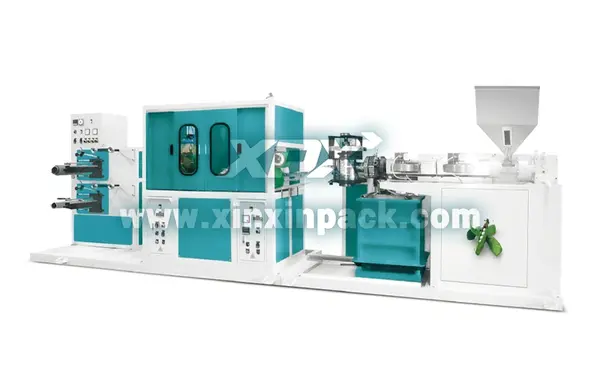
So far, these tactics stay within the realm of retrofitting and operational discipline. But there’s a threshold where the mechanical backbone of your line becomes the limiting factor—typically when you’re chasing a scrap rate below 1.5% on a 200-plus bags-per-minute line. At that stage, incremental fixes can’t compensate for frame flex under high cyclic forces, limited servo interpolation resolution, or heating platens that fluctuate by ±3°C at the edge.
This is where the concept of closed-loop material management comes in. It’s not about a single machine specification; it’s about an architecture where the film registration, zipper advance, seal temperature, and knife actuation all speak the same digital language in microsecond synchronization. When a infrared thermography array detects a 2°C cold spot on the longitudinal seal bar, the motion controller instantaneously adjusts the film feed rate to keep the seal integrity identical, rather than letting the line run until a bad bag appears 40 cycles later.
One recent trend pushing this forward is the adoption of servo-driven zipper sealing carriages with real-time torque feedback. Instead of guessing that a seal is good, the drive measures the precise force-displacement curve of the sealing jaws and flags anomalies at the exact cycle. This turns the sealing station into a process verification instrument, not just an actuator. Some reference designs, including those from high-speed pouch converting equipment manufacturers, now integrate this feature natively, making it feasible to certify every single bag’s zipper seal integrity without slowing down the line.
Technology is half the equation. The other half is the human response to waste signals. When operators are trained to interpret real-time waste dashboards—not as a stick, but as a diagnostic tool—their reaction time to an emerging defect shortens from minutes to seconds. Pair this with a simple “defect taxonomy”: is it a recurring registration fault, a random zipper crush, or a contaminated seal? Each category has its own drill, and the quick reference card by the HMI makes the correct response muscle memory.
This cultural layer is what separates a line that consumes 12 kilograms of film per 1,000 bags from one that consumes 9.5 kilograms for the same output.
When you combine these control strategies, the impact cascades through your P&L:
Raw material savings: Typically 3-6% of total film spend, with a payback period measured in months, not years.
Higher salable output: Every bag that never enters the scrap grinder is a bag that ships. OEE climbs, and unplanned downtime from jammed zipper sections drops sharply.
Sustainability credibility: Downstream brands are increasingly auditing their packaging suppliers’ material efficiency. A documented waste reduction program gives you a tangible edge in RFQs.
Reducing production waste on a complete zipper bags line isn’t about buying a magic machine; it’s about understanding the physics of what causes a micrometer-level error to become a meter of wasted laminate. Start with event-based waste tracking. Isolate your zipper tension zone. Profile your seals. And when you’re ready to push the scrap rate toward the theoretical minimum, align yourself with equipment philosophies that treat every cycle as a measurement opportunity.
If you’re evaluating how to translate these principles into a tangible roadmap for your facility, it may be worth exploring how a platform built around integrated waste prevention can operate in practice. Xinxin’s approach to zipper pouch production with real-time waste monitoring is designed to turn the exact tactics described here—from tension decoupling to closed-loop thermal mapping—into standard, repeatable modules. You can find detailed specification walkthroughs that show how these features map to specific waste reduction metrics on their product page.
Disclaimer: This article is for educational purposes and reflects general industry practices. Specific results may vary based on material, product design, and existing equipment condition. Always consult a qualified engineer when modifying production equipment.
A co-extruded zipper film line running at 85% of its rated speed might seem acceptable—until you count the cost. A packaging converter I spoke with recently was losing roughly 210 kilograms of prime film every week to off-spec zipper alignment and gauge bands. That’s a quiet drain on material margin that rarely shows up in daily shift reports. When every percentage point of scrap reduction flows straight to gross profit, an “okay” line is the most expensive machine on the floor.
The pursuit of higher efficiency in zipper film extrusion isn’t about rushing the screw RPM. It’s about eliminating the tiny, repetitive losses that compound over thousands of linear meters: the start-up transition film that lands in the regrind bin, the hard-to-trim edges caused by wandering zipper inserts, and the sudden drops in line speed when a wrinkle threatens to tear at the collapsing frame.
Before adjusting any dial, it pays to understand the physics working against you. Zipper film combines two demanding processes: blown film extrusion and in-line zipper profile insertion. Any instability in the bubble—caused by fluctuating melt temperature, uneven air ring cooling, or inconsistent nip pressure—displaces the zipper position. Once the zipper wanders more than ±1.5 mm from the centerline, downstream converting becomes problematic. The film may still be usable, but the slitting yield drops sharply.
A 2023 benchmarking study by AMI Consulting found that the top quartile of zipper film producers achieve a film thickness variation of less than ±4% (2-sigma), while average performers fluctuate between ±7% and ±10%. The gap isn't just about better raw materials; it’s about how well the extrusion line controls the three critical process zones: the melt delivery system, the bubble formation and cooling, and the collapsing/take-off geometry. When any of these zones drifts, the machine direction orientation shifts, and the zipper seal integrity becomes inconsistent—a hidden cause of leaker complaints downstream at a zipper bag making machine.
Improving efficiency requires working through each zone systematically. Here’s a roadmap that plant engineers and production managers can adapt to their specific line.
The extruder is not just a pump; it’s a mixing and heating device. A worn screw or barrel creates melt temperature gradients that cause localized viscosity changes, leading to gauge bands. Switching to a barrier screw with a Maddock-style mixing section can reduce melt temperature variation from ±8°C to under ±3°C, a change that translates into a more stable bubble and less scrapped film during acceleration. Pair this with fine-mesh screen packs and change them based on back-pressure trending, not just a schedule. A data-driven screen change can prevent a 2-3% output drop that operators often accept as normal.
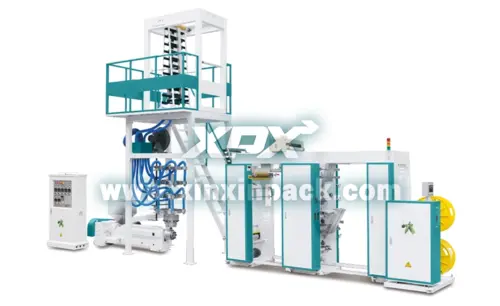
The bubble is your gauge control stage. Upgrading to a dual-lip air ring with internal bubble cooling (IBC) can lift output by 15-25% on the same die size while simultaneously reducing frost line height variation. IBC systems use ultrasonic sensors to measure bubble diameter and adjust exhaust air in real time. A stable bubble diameter—held within ±2 mm on a 350 mm bubble—keeps the zipper insertion point steady, which directly improves the usable width of the finished roll. If a full IBC retrofit isn’t feasible, even manually tuning the air ring damper settings while using a laser thickness gauge can help operators map the air ring profile and eliminate individual gauge spikes.
The collapsing frame and nip section determine whether the zipper stays put. Many older lines use fixed-profile collapsing frames that don’t accommodate different film thicknesses well. Replacing them with adjustable, roller-based collapsing frames reduces drag-induced tension spikes that can pull the zipper off-center. Equally important is the zipper insertion guide itself—a precision-machined track that pre-aligns the zipper profile before it enters the nip. If this guide has worn edges or lacks fine adjustment in the transverse direction, zipper wander becomes inevitable. Facilities that switched to hardened, precision-ground insertion guides reported a 40% reduction in edge trim waste, according to technical notes from several blown film equipment makers. Systems that integrate these refinements into a single, repeatable platform are worth exploring when existing hardware can't hold the target tolerances. To see how modern extrusion lines incorporate these principles, you can review zipper film line configurations that focus on tight process control.
Efficiency doesn’t end at the nip. Inconsistent winding tension creates telescoped rolls that jam at the customer’s unwinding station or cause intermittent web breaks during converting. A closed-loop tension control system that measures actual web tension via load cells, rather than just motor current, can maintain tension within ±2% of setpoint across the entire roll diameter. This is especially critical for thin-gauge zipper films where even slight stretching changes the film’s elastic memory. Pre-programming tension taper profiles for different film thicknesses eliminates the trial-and-error adjustments operators make during shift changes, saving both time and material.
Capital investment in hardware is only half the story. Process discipline locks in the gains. Three routines stand out:
Daily nip roll durometer check. A worn or hardened nip roll changes pressure distribution, causing zipper displacement that is invisible until slitting. Use a shore hardness meter; replace rolls that deviate more than 5% from original spec.
Weekly air ring and IBC cartridge cleaning. Dust and polymer fines accumulate rapidly, distorting airflow patterns. A 15-minute clean with a soft brush and solvent can restore output that has crept down unnoticed.
Monthly zipper alignment verification. Run a 10-minute trial without any transverse adjustments; measure zipper position every 50 meters. A trend chart will show whether a guide component is wearing before scrap numbers spike.
These practices align with the ISO 23559 standard guidelines for blown film extrusion, which emphasize validated process control over final inspection. Many plants that adopt them begin to see output stability improve within the first quarter.
When a zipper film line moves from reactive firefighting to predictable, repeatable output, the benefits cascade beyond the extrusion hall. Downstream, a zipper bag making machine runs with fewer jam-related stoppages because the film profile is consistent. Customers receive rolls that unwind smoothly on high-speed form-fill-seal lines, reducing their own downtime. In an industry where standard zipper film margins face constant pressure, being the supplier whose film “just runs” is a defensible differentiator.
For producers ready to move beyond incremental tweaks, Xinxin’s integrated zipper film blowing systems are engineered to combine precise zipper guiding, stable bubble control, and automated winding into a cohesive line. If you are planning an upgrade or a new line, it makes sense to start with a detailed process audit to identify where your current constraints really are, and then match hardware capabilities to those specific gaps. While a comprehensive zipper bag making machine is often the next step in the converting chain, the quality and efficiency of the film blowing stage directly determine how productive that downstream machine can be. Getting the film right is where it all begins.
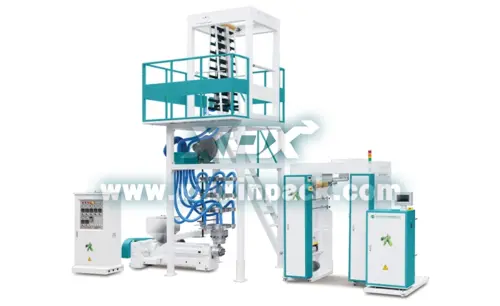
Disclaimer: This article is for informational purposes and does not replace a professional engineering assessment of your specific production line. Always consult equipment manufacturers and follow applicable safety standards when making modifications.
Every production manager running a blown film line for zipper bags knows the sinking feeling of opening the monthly utility bill. Extruders, heaters, air rings, and motors – they all work hard, but a surprising share of that energy is simply wasted. In fact, extruding and melting polymer can account for 60–70% of total power consumption in a typical film blowing process. With electricity prices volatile and margins tight, reducing energy use isn’t just green – it’s survival.
But here’s the good news: you don’t need to replace your entire production line to see substantial savings. Through targeted improvements in thermal management, drive systems, and operating practices, many plants cut energy costs by 15–25% within six months. Let’s break down where the waste hides and how to eliminate it.
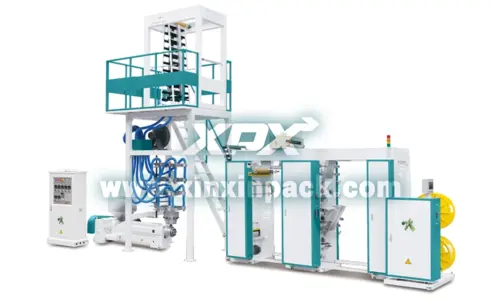
Before fixing anything, understand the three main energy drains in a zipper film extrusion line:
Barrel & die heating (~55-65% of total energy) – Maintaining melt temperature demands continuous electrical input, especially if heaters are old or poorly insulated.
Drive motors (~20-30%) – Screw rotation, haul-off, and winder motors consume power; fixed-speed motors often run inefficiently at partial load.
Auxiliary systems (10-15%) – Air ring blowers, cooling fans, and vacuum pumps for zipper profile shaping.
Most plants overlook two critical facts: (1) standard resistive heaters lose 30–40% of their heat to ambient air, and (2) oversized motors running at 60% load can be 15% less efficient than properly sized variable-frequency drive (VFD) units.
If you want to see how modern equipment addresses these exact points, check engineered heating configurations that integrate ceramic bands and multi-zone PID control – they typically reduce heat loss by half compared to conventional designs.
Start with the lowest-hanging fruit – heat containment and control.
Action steps:
Apply 1-inch ceramic fiber insulation blankets around barrel heaters (payback period often <3 months).
Retrofit standard on/off controllers with PID or self-tuning regulators – they smooth temperature cycling, reducing peak current draw by 12-18%.
Use infrared heaters for the die head; they transfer heat directly to the metal surface, wasting almost nothing to air.
Many operators worry that better insulation might overheat components. That’s a myth. Properly installed insulation actually stabilizes temperature profiles, leading to more consistent film gauge – and less scrap. One Midwest converter reported a 22% drop in extrusion energy after adding insulation and upgrading to PID on their two existing lines.
For new equipment, many suppliers now include modular ceramic heater bands with independent zone control. Explore how zone-separated heating works in contemporary machinery – it allows you to target heat exactly where needed, avoiding energy bleed into non-critical areas.
Fixed-speed AC motors are energy vampires when the line runs below full capacity. A VFD matches motor speed to actual torque demand, slashing electricity use.
Where VFDs deliver the biggest ROI:
Extruder screw drive – during ramp-up, grade changes, or reduced output hours, a VFD can cut consumption by 30%.
Haul-off & winder – tension control via VFD eliminates wasteful braking resistors.
Air ring blower – many lines run blowers at 100% even when thinner films or slower speeds need less air.
Data from a 2023 plant audit (source: Plastics Energy Efficiency Guide) showed that retrofitting three motors with VFDs saved 48,000 kWh annually – roughly $6,000 at average U.S. industrial rates. Payback: 8-14 months.
When evaluating a new zipper film extrusion system, look for integrated VFD packages with energy recovery modules. See typical drive configurations that include regenerative braking – they feed deceleration energy back into the plant grid, not into resistor heat.
Screw geometry directly affects energy per kilogram of melt. A poorly designed screw creates excessive shear heating, forcing the barrel cooling fans to run constantly – that’s double waste: too much electrical input for the drive, plus fan power to remove the excess heat.
Signs your screw may be inefficient:
Barrel cooling fans operate >70% of the time
Melt temperature is 15-20°C above setpoint despite normal output
You see surging or inconsistent pressure
The solution is a barrier screw with mixing section designed for the specific resin blend used in zipper film (often LDPE/LLDPE blends). Barrier screws reduce shear heating by 10-15% while improving melt homogeneity. That means fewer cooling cycles and lower base energy demand.
Additionally, consider air vs. water cooling – water-cooled barrels are roughly 20% more energy efficient because water’s thermal conductivity removes heat quickly without constant fan re-starts. However, water cooling requires closed-loop systems to avoid corrosion.
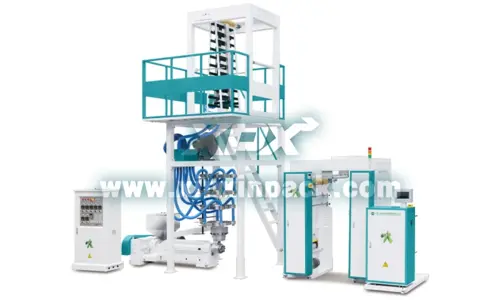
Extruders reject enormous quantities of heat through barrel cooling and die radiation. Instead of venting that 50-70°C air outside (or conditioning against it in summer), redirect it.
Effective recovery methods:
Duct cooling fan exhaust into warehouse heating zones during winter – one 200-hp extruder can provide 150,000 BTU/hr of free heat.
Use heat exchanger on die head enclosure to pre-heat incoming resin (reduces barrel heating load by 8-12%).
For air ring exhaust (warm, dry air), redirect to drying hoppers – you’ll save on electric dryer usage.
A case study from a Canadian film converter (published in Energy Manager Today, 2022) showed that simple ducting modifications recovered 38% of cooling system waste, cutting total plant gas heating bills by 17% over winter months.
Technology alone isn’t enough. The most efficient machine operated poorly will still waste energy.
Three habits to embed:
Daily leak checks – compressed air for collapsing guide plates or zipper alignment often leaks silently; a 3mm hole costs ~$600/year.
Scheduled infrared thermography on electrical cabinets – loose connections increase resistance and heat, wasting energy before failure.
Operator incentives – tie a small bonus to kWh per ton of film produced. When operators understand that lower barrel temperature setpoints (within melt range) save without hurting quality, they’ll adjust.
If you prefer a turnkey solution that builds these practices into the control system, review predictive maintenance features included in some newer lines – they alert operators when energy consumption deviates from baseline.
You don’t need a multi-million dollar overhaul to tame energy costs in zipper film production. Start with insulation and PID retrofits – they’re low-risk, high-return. Then layer in VFDs and heat recovery as capital permits. The cumulative effect: 20-30% lower electricity bills, plus extended component life from reduced thermal stress.
And when your existing machine reaches the end of its economic life, consider how new designs have rethought energy from the ground up. Modern lines integrate everything discussed here – ceramic heating, VFDs on all motors, barrier screws, and waste heat capture – into a single intelligent platform.
For a closer look at equipment engineered specifically for low energy consumption without compromising output or film quality, explore XinXin’s energy-saving lineup. Their approach combines industrial IoT monitoring with proven thermal efficiencies – many users report breaking even on the upgrade within 18 months through power savings alone.
What’s your biggest energy challenge on the extrusion floor? Have you tried any of these methods? Share your experience – let’s learn from real plant data.
The UAE’s decision to leave OPEC has raised new questions about global oil supply, feedstock costs, and petrochemical competitiveness.
For the plastics industry, the key question is not simply:
“Will oil become cheaper?”
The better question is:
“How should plastics manufacturers plan when feedstock and resin prices become more volatile?”
According to Reuters, the UAE said it would leave OPEC effective May 1, 2026. Analysts also noted that this move may raise medium-term upside risk to global oil supply, because the UAE could have more freedom to increase production outside OPEC limits.
In the short term, oil prices may still be affected by regional tension, shipping risks, and supply uncertainty. OPIS reported that Brent crude was near $110.93 per barrel around the time of the announcement.
But for plastics manufacturers, this is not only about the oil price number.
It is about the whole chain behind it.
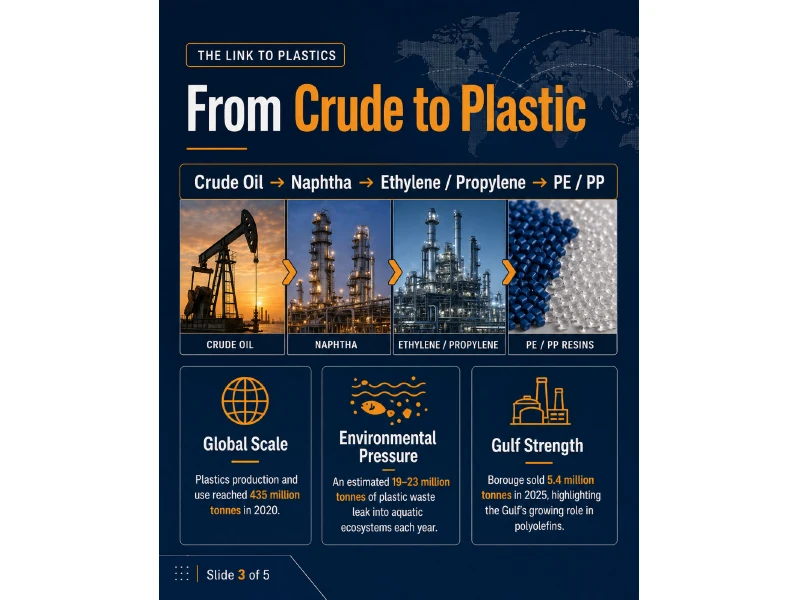
Many plastics manufacturers do not buy crude oil directly. But crude oil can still affect the industry through a longer chain: Crude Oil → Naphtha → Ethylene / Propylene → PE / PP
When crude oil and naphtha prices move, petrochemical costs can shift. When ethylene, propylene, PE, and PP prices move, downstream manufacturers may feel pressure in quotations, order timing, inventory planning, and margins.
This matters because plastics are still a large global industry. OECD data shows that plastics production and use reached 435 million tonnes in 2020, up from 234 million tonnes in 2000.
At the same time, the industry is under growing environmental pressure. UNEP estimates that 19–23 million tonnes of plastic waste leak into aquatic ecosystems every year.
Cost pressure from energy and feedstock markets.
Sustainability pressure from customers, regulators, and society.
Some people may think:
“If the UAE produces more oil, oil prices may go down. That should be good for plastics.”
In theory, yes.
Lower oil prices may help reduce feedstock pressure over time. But in practice, many plastics manufacturers suffer more from volatility than from high prices alone.
Customers delay orders because they expect prices to fall.
Factories hesitate to hold inventory because prices may change again.
Margins become harder to control.
Sales teams need to adjust quotations more frequently.
Production planning becomes less stable.
That is why, in plastics, stability can sometimes be more valuable than cheap oil. Another point is also important: integrated Middle East producers may become even more competitive in export markets. The Gulf region already plays a major role in polyolefins. For example, Borouge reported 5.4 million tonnes of sales volume in 2025, the highest annual sales volume in its history. If Gulf producers gain more flexibility in energy, feedstock, and petrochemical strategy, downstream manufacturers in other regions may face stronger competition.
In my view, the next advantage in plastics will not come only from capacity. It will come from flexibility.
1. Price smarter
When resin prices are unstable, long quotation validity can become risky. Manufacturers may need to shorten quote validity, review resin exposure more frequently, and communicate price changes more clearly with customers.
2. Operate the learner
Volatility makes waste more expensive. Reducing scrap, improving yield, and lowering manual handling can help factories protect margins even when material prices move quickly.
This is where automation becomes more important. Automation is not only about speed. It is also about reducing labor dependence, improving workflow stability, and making the whole factory easier to manage.
3. Build resilience
Companies should avoid relying on only one supply option. More resilient manufacturers will pay closer attention to supplier diversification, inventory strategy, circular feedstocks, and production flexibility. Final thought: The UAE’s OPEC exit is a major energy-market story.
Can manufacturers become flexible enough to handle a more volatile world?
For flexible packaging companies, zipper bag manufacturers, and plastic converting factories, the answer may depend on how quickly they can improve pricing discipline, production efficiency, automation, and supply-chain resilience.
In the next stage of the plastics industry, flexibility may matter more than size. And stability may matter more than cheap oil.
After 15 years in the plastic extrusion industry, I've seen countless manufacturers struggle with the critical decision between cooling technologies for their zipper film production lines. The water cooling zipper film blowing machine offers unique advantages for specific applications, but air cooling systems remain the workhorse for most standard operations. This comprehensive comparison will help you make an informed choice based on your actual production requirements, not just marketing hype.
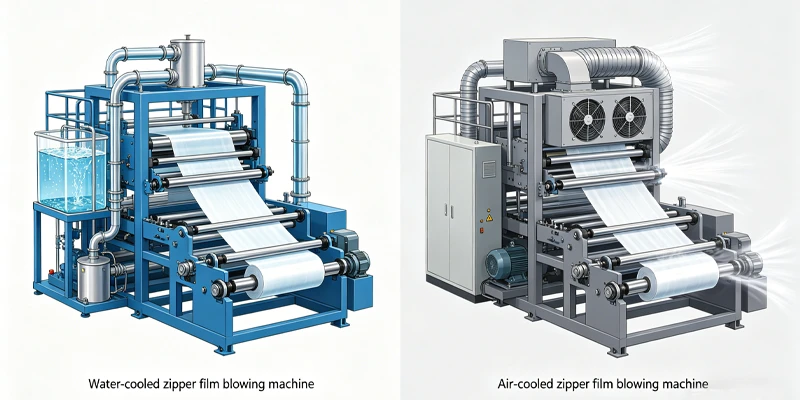
At their core, both cooling methods serve the same purpose: rapidly solidifying the molten plastic as it exits the die to form a consistent film. However, the mechanisms and resulting properties differ dramatically.
Air cooling systems use high-velocity air rings to circulate ambient or conditioned air around the extruded film bubble. This is the traditional approach that has been refined over decades. Water cooling systems, by contrast, immerse or spray the film with temperature-controlled water immediately after extrusion, providing much faster heat transfer rates.
The key distinction lies in the cooling rate. Water conducts heat approximately 25 times more efficiently than air, according to thermal engineering principles. This fundamental physical difference creates cascading effects on film quality, production speed, and equipment design.
This is where the two technologies diverge most significantly. Faster cooling rates in water-based systems result in smaller crystal formation in the polymer structure. This translates to exceptional film transparency and superior dimensional accuracy—critical factors for high-end packaging applications.
In my experience, water-cooled films consistently show 30-40% better haze values compared to air-cooled equivalents using the same LDPE or PP materials. The rapid quenching also minimizes shrinkage during subsequent converting processes, which is essential for precise zipper alignment in automatic bag-making lines.
Air-cooled systems, while producing slightly less transparent films, offer excellent versatility across a wider range of material thicknesses and melt indexes. They perform admirably for standard zipper bags where absolute clarity isn't the top priority.
When it comes to raw output, both technologies have their strengths. Modern air-cooled systems from reputable manufacturers can achieve stable production speeds of 18-20 meters per minute, with outputs ranging from 35-70 kg/h depending on the model.
Water-cooled systems typically operate at slightly lower line speeds but compensate with more consistent quality at higher thicknesses. The trade-off is often worth it for manufacturers producing premium films where rejects due to poor clarity or dimensional issues eat into profits.
Energy efficiency is a top concern for every production manager. Air-cooled systems generally have lower initial energy requirements since they don't need to chill and circulate water. However, water-cooled systems can offer better overall energy efficiency in warm climates or for continuous 24/7 operations, as they maintain more consistent cooling temperatures regardless of ambient conditions.
Xinxin's latest generation of equipment incorporates servo control technology and high-efficiency screw designs that reduce energy consumption by 20% across both cooling technologies, according to independent testing. This is a significant improvement over older models that often wasted substantial energy through inefficient motors and poor insulation.
Air-cooled systems have fewer moving parts related to cooling, which translates to lower maintenance requirements for that subsystem. However, they are more susceptible to dust and debris buildup in the air rings, which can cause uneven cooling and film defects if not cleaned regularly.
Water-cooled systems require more maintenance to prevent scale buildup in the cooling channels and ensure proper water circulation. However, modern designs with closed-loop systems and automatic water treatment have significantly reduced these maintenance burdens.
The answer depends almost entirely on your specific application and quality requirements. Let's break down the ideal scenarios for each technology.
Air cooling excels in these situations:
Air-cooled systems offer faster changeover times and greater flexibility, making them ideal for contract manufacturers or facilities with diverse product lines.
Water cooling is the clear winner for:
In these scenarios, the improved film quality and reduced reject rates more than justify the slightly higher initial investment and operating costs.
After evaluating dozens of manufacturers worldwide, I've found that Xinxin offers one of the most comprehensive ranges of zipper film blowing equipment on the market. Their engineering team has spent years refining both air and water cooling technologies to address the specific pain points of packaging manufacturers.
Their standard LDPE zipper film blowing machines feature robust 12mm thick steel frames—far exceeding the industry standard of 8mm channel steel—resulting in exceptionally stable operation even at maximum production speeds. The direct-drive reducer design eliminates belt wear issues, extending equipment lifespan and reducing maintenance downtime.
For manufacturers requiring the highest quality films, the water cooling zipper film blowing machine combines water and air cooling systems to deliver unmatched transparency and dimensional stability. This hybrid approach leverages the strengths of both technologies, providing the rapid quenching of water cooling with the surface finish benefits of air cooling.
What truly sets Xinxin apart is their commitment to customization. They understand that every production facility has unique requirements, and they offer tailored solutions for film width, color groups, compatible substrates, and even special zipper profiles. Their technical team works closely with customers to design systems that integrate seamlessly with existing production lines and meet specific quality standards.
I've seen Xinxin's equipment transform operations for numerous clients. One notable example is a European manufacturer of eco-friendly urine bags that was struggling with inconsistent film quality and high reject rates. After installing a customized water-cooled system, they saw a 45% reduction in defects and a 30% increase in overall production efficiency.
Another client, a major food packaging company, switched to Xinxin's dual-die head air-cooled machines and doubled their output while maintaining consistent quality. The equipment's high-speed winding system and precise tension control allowed them to run three shifts continuously with minimal downtime.
Xinxin has provided equipment and services to well-known companies including SVP India, Ziplock USA GLAD, IKEA, Heng'an Group, and Camellia, demonstrating their ability to meet the rigorous standards of global brands.
Choosing between water and air cooling for your zipper film blowing operation is not a matter of one being universally better than the other. It's about matching the technology to your specific needs.
If you produce standard zipper bags for general use and prioritize maximum output and flexibility, a high-quality air-cooled system will serve you well. If you manufacture food packaging, medical products, or high-end retail packaging where clarity and dimensional accuracy are critical, the water cooling zipper film blowing machine is the superior choice.
Regardless of which technology you select, investing in equipment from a reputable manufacturer like Xinxin will pay dividends in terms of reliability, efficiency, and product quality. Their commitment to innovation and customer support ensures that you'll have a partner for the long term, not just a supplier.
If you’re searching for Which Features Matter in High Speed Zipper Bag Making Machine, the short answer is this: focus on production speed stability, zipper sealing precision, and automation flexibility. These three factors directly impact your output consistency, defect rate, and long-term ROI. According to industry reports from organizations like PMMI (Packaging Machinery Manufacturers Institute), efficiency improvements of even 10–15% in high-speed packaging lines can significantly reduce operational costs over time.
In real production environments—whether you’re running food-grade resealable packaging or e-commerce flexible packaging solutions—the difference between a good machine and a costly mistake often lies in details that are easy to overlook at first glance.
Many buyers are drawn to machines boasting impressive numbers like “200 bags per minute.” But in practice, high-speed bag making equipment must maintain consistent performance over long production cycles. A machine that frequently stops for adjustments can erase any theoretical speed advantage.
Look for:
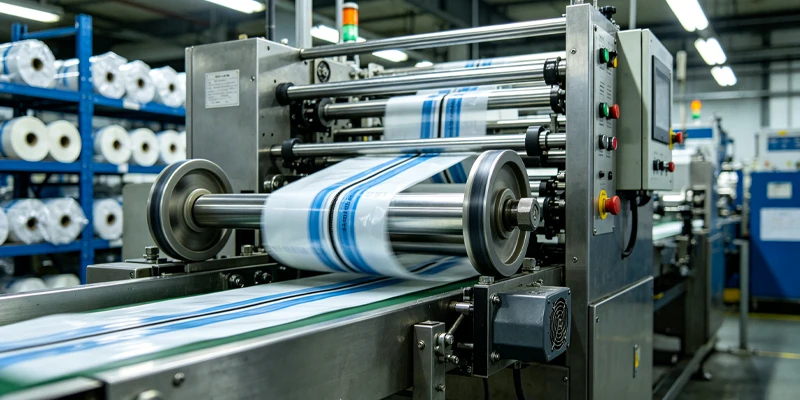
If you're evaluating options, you can explore technical specifications here to see how modern systems handle speed without sacrificing consistency.
In industries like snacks, frozen food, or pet packaging, zipper alignment accuracy is non-negotiable. Poor sealing leads to leakage, customer complaints, and brand damage.
Key indicators of quality include:
From my experience working with manufacturers transitioning from manual to automated systems, zipper inconsistency is the #1 hidden cost driver—often discovered only after mass production begins.
Modern packaging demands are shifting fast. Today it's stand-up pouches with zippers, tomorrow it might be custom printed resealable bags. Machines that lack flexibility quickly become obsolete.
What to prioritize:
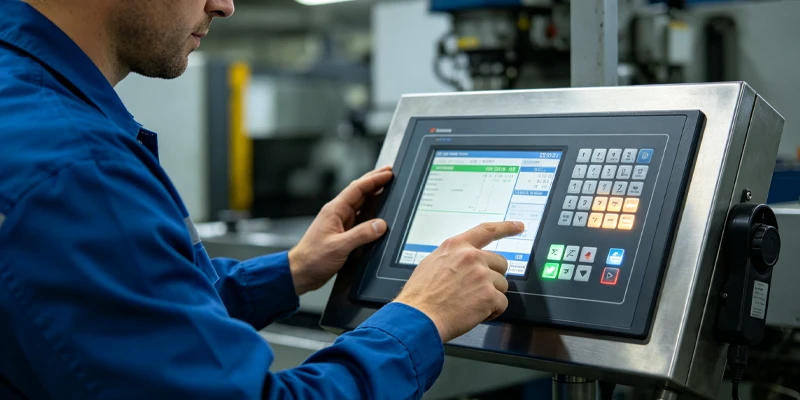
For businesses handling diverse SKUs, the ability to adapt quickly is often more valuable than raw speed. You can get configuration insights to understand how modular designs support this flexibility.
Imagine a mid-sized food company launching a new product line. They need:
In such cases, industrial zipper bag production machines with integrated automation outperform basic models. Not because they’re faster on paper—but because they reduce human error and downtime.
This is where solutions like XPX’s advanced systems come into play. Compared to conventional machines, they offer better film feeding precision and intelligent diagnostics.
When evaluating options, many buyers eventually revisit the question: Which Features Matter in a high-speed zipper bag-making machine. The answer becomes clearer when comparing entry-level machines with high-end solutions.
For businesses aiming at scalability, investing in a more advanced system often leads to better long-term savings—even if the initial cost is higher. You can discover application scenarios to see how different industries benefit.
One aspect often ignored in technical discussions is customization. Not all production lines are the same. Factors like:
require tailored solutions. XPX, for instance, provides adaptable configurations based on specific production needs—something generic machines rarely offer.
If you're still unsure which direction to take, it’s worth revisiting Which Features Matter in High Speed Zipper Bag Making Machine from a practical standpoint: not just what looks good on paper, but what actually performs under pressure.
Choosing the right machine isn’t about chasing the highest speed or the lowest price. It’s about identifying the features that directly affect your production efficiency, product quality, and scalability.
In today’s competitive packaging landscape, machines that combine precision engineering, automation intelligence, and custom adaptability are no longer optional—they’re essential.

Recently, Zhang Xue has been everywhere in Chinese news and social media.
For many people outside China, his name may still be unfamiliar. But in China, his story has captured attention far beyond the motorcycle world. He has become a symbol of something many people here immediately understand: the determination to enter a field long dominated by others, and to prove that a Chinese company can stand there with confidence.
What touched me most about Zhang Xue was not only his success.
It was the younger version of him.
The story that stayed with me was not about trophies, headlines, or recognition. It was the image of a young man chasing opportunity before the world thought he belonged. A teenager riding through rain, trying to catch a television crew, wanting just one chance to be seen. It was bold, a little reckless, maybe even a little embarrassing — but deeply sincere.
And that is exactly why it moved me.
I am the third generation of Zhejiang Xinxin Packing Machinery Co., Ltd. And Zhang Xue’s story made me think about my grandfather and my father — not because they worked in the same industry, but because the spirit behind their journey feels so similar.
They also belonged to a generation that had to build under the shadow of stronger names.
Our company began in 1988. In those years, in the field of ziplock / self-sealing / zipper bag machinery, many people in China naturally believed that the key technology belonged elsewhere — especially to Japan and Taiwan. If you wanted advanced machines, people assumed you had to look outward. If you wanted serious technology, people assumed China was still following.
My grandfather and my father chose not to accept that assumption.
Instead of waiting, depending, or simply copying, they chose to develop our own machines. In our company’s history, the successful launch of the first generation of Xinxin’s self-developed zipper film blowing machine in 1995 was a turning point. But when I look back at it now, I think its meaning was bigger than one machine.
It was part of a generation of Chinese manufacturers proving something important:
That is what my grandfather and father spent years doing.
They did not only make one machine. They kept going — from zipper film blowing machines, to zipper bag making machines, to complete zipper bag production lines, to specialized equipment such as garment zipper bag making machines and press-lock zipper bag making machines. Over time, they helped build Zhejiang Xinxin into a recognized name in this field, with more than 35 years of industry focus, 100+ patents, and service to 500+ customers in 30+ countries.
But the part that means the most to me is this:
their success is no longer just something written in company history. It has already been recognized by the market.
I felt that very clearly at PLASTINDIA.
Because of visa uncertainty, we made a cautious decision and booked only a 12-square-meter booth. It was small, practical, and honestly a little modest for what we were capable of showing. But during the exhibition, one customer smiled and said to me:
I still remember that sentence.
Not because it was flattering, but because it made something very clear to me:
my grandfather and father had already done the hard work of building recognition.
Customers did not only see our booth. They saw our reputation. They saw our history. They saw the technical trust behind the name Xinxin.
And that is exactly why Zhang Xue’s story hit me so deeply.
Because what I saw in his story was not only one man becoming successful. I saw a familiar pattern in Chinese manufacturing:
one generation spends years proving that we can enter the field at all. The next generation is given the responsibility of deciding how to move further.
That is where I find myself now.
I am already standing on the shoulders of giants.
My grandfather’s and father’s generation had to answer one question:
They answered that question with years of persistence, technical trial and error, and work that was probably much harder than my generation can fully imagine.
So my task cannot simply be to repeat what they already proved.
My generation needs to answer a different question:
For me, that is the next chapter of Zhejiang Xinxin.
My vision is not only to continue making reliable machines. It is to push further into:
Because customers today are no longer only asking whether a machine can produce a bag.
They are asking:
That is why I believe the mission of my generation is different from the mission of the one before us.
Their mission was to break dependence. Our mission is to create a stronger system on top of that independence.
And this, to me, is the deeper meaning of Chinese manufacturing across three generations.
The first generation fights to enter. The second generation fights to establish. The third generation must learn how to upgrade.
That is why Zhang Xue’s story stayed with me.
Not because he became famous. Not because he won. But because his story reminded me that industrial progress is always a relay.
One person hands something forward. Another person must carry it further.
My grandfather and my father helped prove that Chinese manufacturing did not have to remain under the dominance of other countries’ technology.
What I want to do in my generation is build on that foundation — and help move Zhejiang Xinxin toward a future that is more automated, more integrated, and more system-driven.
So when I think about Zhang Xue, I do not only see his story.
I see a question being passed from one generation to the next:
For me, that is the question worth dedicating a generation to.
A gravure printing machine is a high-precision device that transfers ink from engraved cells on a cylinder. The working principle: the engraved cylinder is partially immersed in an ink fountain, a doctor blade removes excess ink, leaving only the cells filled; under pressure from the impression roller, the ink transfers onto substrates such as film, paper, or aluminum foil, producing full, sharp images. This type of high-speed gravure printing machine for flexible packaging is especially suited for long runs, high speeds, and applications demanding excellent color consistency.
Understanding these components helps you evaluate whether a given automatic gravure printing machine for sale truly meets your plant’s continuous production needs.
Thanks to outstanding color consistency and cost-effectiveness for long runs, gravure printing machines play an irreplaceable role in multiple industries. Below are the core application areas:
Food bags, beverage packaging, pet food bags, detergent pouches, etc. A gravure printing machine for paper and film can handle various substrates such as BOPP, PET, NYLON, and PE, achieving multi-color registration accuracy with batch-to-batch color difference ΔE < 2.
Furniture laminates, floor coverings, and wallpaper. For long-run orders, gravure’s unit cost is far lower than flexo or digital printing, making it ideal for custom gravure printing machines for labels and decorative paper applications.
Magazines, catalogs, stamps, banknotes – products requiring fine gradations and anti-counterfeiting features. Many choose an industrial rotogravure printing press for its ability to produce subtle gradients and micro-text.
When selecting a gravure printing machine for your production line, price should not be the only factor. The following five core features directly impact efficiency and print quality:
Though the fully automatic gravure printing machine price is slightly higher than semi-automatic models, features like automatic registration, automatic splicing, and automatic viscosity control dramatically reduce downtime and waste. For example, a machine running at 300 m/min can produce tens of thousands of extra meters of qualified prints per day.
For 8-color or 10-color printing, registration error must be controlled within ±0.1mm. High-end machines equipped with PLC and servo-driven register systems maintain stability even after 72 hours of continuous operation. When searching among high-speed gravure printing machine manufacturers, always review actual registration test data.
Gravure uses solvent‑based or water‑based inks. Heat recovery design in the drying ovens and LEL (Lower Explosion Limit) monitoring are critical. Choose an energy-saving gravure printing machine with low VOC emission to meet environmental regulations and cut operating costs by more than 20%.
For short-to-medium runs, the ability to change cylinders and doctor blades quickly is essential. Some models support a quick-change sleeve system, reducing changeover time from 2 hours to just 20 minutes – ideal for printers handling both long and short runs.
When purchasing a heavy-duty gravure printing press for corrugated board or a film printing machine, prioritize manufacturers that offer local technical support, ample spare parts inventory, and proven case studies with your specific materials.
Faced with different brands and models of gravure printing machines, you can follow these four steps to identify the most suitable equipment:
Do you mainly print film or paper? Are your orders predominantly long runs (>50,000 meters) or do they include a mix of medium/short runs? Gravure is highly cost-effective for long runs; if you have a significant proportion of medium/short runs, consider a combination press or a used gravure printing machine for sale as a lower-cost entry point.
Don’t just look at the surface automatic gravure printing machine price. Calculate: ink+solvent cost per square meter; waste rate (old machines 5%-8%, new machines ≤2%); energy and labor cost differences. Typically, a new machine pays back its premium within 18 months.
Ask the supplier to run actual tests with your materials – examine registration, color variation, and solid ink coverage. Also enquire about an eco-friendly gravure printing machine for food packaging option, which supports water-based inks and low-migration systems to comply with food safety regulations.
For export to the EU or North America, the machine must meet CE and UL standards, and be equipped with exhaust treatment. Searching for “gravure printing machine for flexible packaging with solvent recovery” can lead to greener production solutions.
Although a brand‑new high‑end gravure printing machine requires a significant initial investment (typically between $100,000 and $500,000, depending on number of color stations and width), the long‑term returns are clear:
If you are planning a new workshop or upgrading an existing line, compare configuration lists from several high-speed gravure printing machine manufacturers and ask for a one‑year consumables cost simulation – that will provide far more decision value than a simple price quotation.
Contact a professional supplier today to request sample testing and a return‑on‑investment analysis, and take your printing business to a faster, more economical, and more stable stage.
If you’re a flexible packaging manufacturer targeting high-end food, cosmetics, or cold chain industries, you know the core pain point holding back your business: standard air-cooled zipper bag making machines cannot deliver the high bag transparency, smooth finish, and consistent sealing performance that premium brands demand. Missing out on high-margin orders because your equipment can’t meet strict appearance and quality requirements? The Xinxinpack ZIP-600PP water cooling zipper bag making machine is built to solve this exact challenge. As a patented, purpose-built solution for high-transparency resealable bag production, this machine delivers industry-leading bag finish, ultra-fast production speeds, and flexible customization to help you capture high-value orders and outperform competitors.
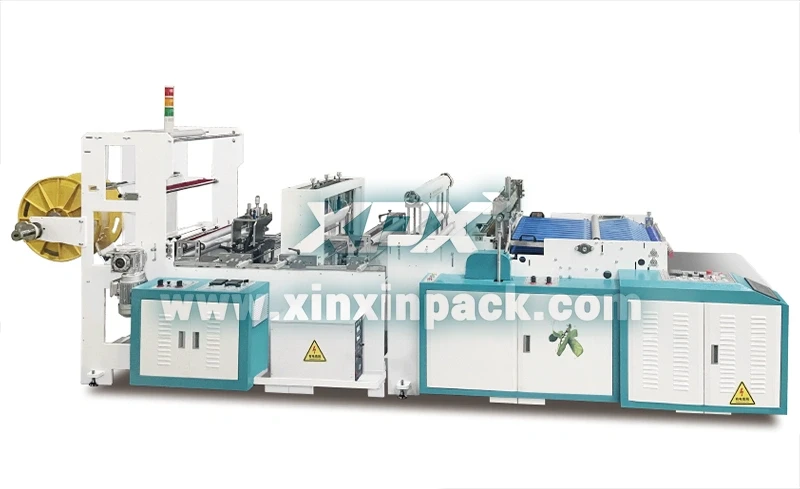
The ZIP-600PP water cooling zipper bag making machine is a specialized bag production equipment developed by Xinxinpack, protected by official invention patent (Patent No. 201420678116.6), designed exclusively for manufacturing high-quality, high-transparency resealable zipper bags. Unlike traditional air-cooled bag making machines, this model uses an innovative water-cooled shaping system to produce bags with a smoother, more transparent surface, making it the ideal choice for packaging with strict appearance requirements.
Compatible with PP and LDPE materials, the machine supports a maximum bag width of 580mm, and can be fully customized to your production needs. It can be equipped with a wide range of functional accessories to achieve multi-purpose use with a single machine, eliminating the need for multiple specialized devices and adapting to diverse bag type production requirements.
The core differentiator of this machine is its proprietary water-cooled shaping system, the patented design that addresses the biggest limitation of standard air-cooled bag making equipment: poor bag clarity and surface finish.
The water-cooled system delivers uniform, consistent temperature control during the bag forming process, resulting in a significantly smoother, more transparent bag surface with minimal haze. This premium finish is non-negotiable for high-end brands that require their packaging to showcase products clearly and convey a premium brand image, setting your finished bags apart from generic, low-clarity alternatives on the market.
The ZIP-600PP delivers an industry-leading production speed range of 30 to 230 pieces per minute, giving you full flexibility to match your production needs. Whether you’re running small-batch, high-customization premium orders or high-volume mass production runs, this machine maintains consistent forming and sealing quality at every speed level.
This wide speed range drastically improves your production efficiency, shortens order lead times, and reduces per-unit production costs. With a maximum output of 230 bags per minute, you can take on large bulk orders that your competitors with slower equipment cannot fulfill, while still having the precision to handle small, high-margin custom runs.
This water cooling zipper bag making machine is equipped with a full set of intelligent control systems, including automatic deviation correction and automatic tension control. These features ensure continuous, stable bag making operation even during long, uninterrupted production runs, eliminating bag misalignment, uneven sealing, and material waste caused by film drift.
The machine also delivers exceptional mechanical temperature control performance, perfectly adapting to the material requirements of cold chain and high-transparency packaging. This precise temperature regulation ensures consistent, secure sealing for every bag, eliminating common defects like weak seals, film burning, or zipper deformation, and minimizing your overall defect rate.
We understand that packaging manufacturers need flexible equipment to adapt to changing client demands. That’s why the ZIP-600PP supports full customization according to your specific production needs, and can be fitted with a wide range of functional accessories to handle diverse bag types.
This one-machine multi-purpose design eliminates the need to invest in multiple specialized pieces of equipment, saving you valuable factory floor space and capital expenditure. Whether you need to produce standard food sealing bags, specialized fruit preservation bags, or high-end cosmetic zipper bags, this single machine can adapt to your requirements with minimal setup changes.
| Parameter | Specification Details |
|---|---|
| Model | ZIP-600PP |
| Production Speed | 30-230pcs/min |
| Maximum Bag Width | 580mm |
| Compatible Materials | PP / LDPE |
| Overall Dimension | 4500×1500×1800mm |
| Rated Voltage | AC220V 50Hz |
| Rated Power | 8KW |
| Machine Weight | 1.5T |
This water cooling zipper bag making machine is purpose-built for industries that require high bag transparency and reliable sealing performance. Its core end-user industries include:
It is optimized for manufacturing all types of high-transparency resealable bags, including food sealing bags, fruit preservation bags, cosmetic packaging bags, and other custom zipper bag styles with strict appearance requirements.
At Xinxinpack, we’ve designed this machine around the real-world needs of flexible packaging manufacturers who want to break into the high-end zipper bag market. Our patented water-cooled technology solves the core limitation of standard bag making equipment, giving you a clear competitive edge in a crowded market.
Unlike generic bag making machines that try to do everything but excel at nothing, the ZIP-600PP is specialized for high-transparency zipper bag production, with every component optimized to deliver consistent premium bag quality, high production efficiency, and long-term stable operation. Its customizable configuration also ensures it can grow with your business, adapting to new bag types and client demands as your production needs evolve.
Ready to upgrade your production line to capture high-margin, high-end zipper bag orders? Contact our team today to learn more about the ZIP-600PP water cooling zipper bag making machine, request a detailed customization quote, or discuss your specific production requirements. We’re here to help you find the perfect bag making solution for your business.
In today’s competitive flexible packaging market, manufacturers across food, pharmaceutical, pet care, and retail industries face persistent pain points: high defect rates from poor zipper lamination, rising labor costs from multi-step manual production, limited flexibility to handle diverse bag orders, and the need to meet strict safety and quality standards for consumer-facing packaging. Many generic bag making machines force you to choose between speed, precision, and versatility — leading to wasted materials, missed order deadlines, and unnecessary extra equipment investments.
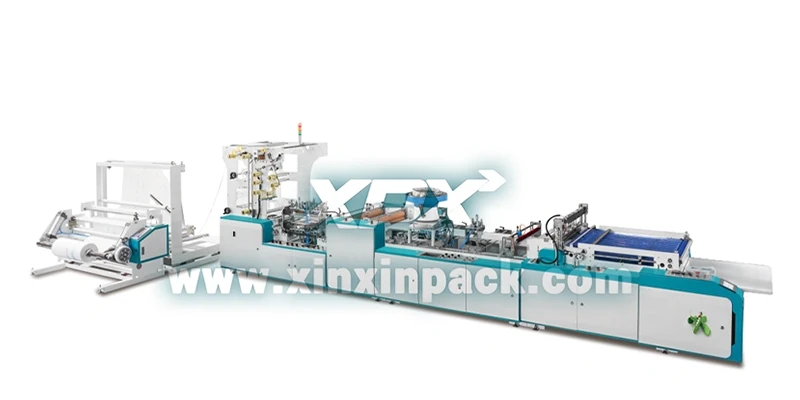
Xinxin Packaging Machinery’s TPM-800INS PE/PP Zipper Attachment Bag Making Machine is purpose-built to solve these industry-wide challenges. Backed by an exclusive invention patent (Patent No. 2020214600312), this all-in-one machine delivers fully automated zipper attachment, Attach, sealing, and cutting in a single seamless process, making it the ideal solution for producing reliable, high-quality PE and PP zipper bags for a wide range of end uses.
Manual zipper placement, multi-step Attach, and separate cutting processes eat into your profits and slow down production. Our machine eliminates these inefficiencies by automating the entire zipper bag production workflow: it attaches zippers to PE or PP film, completes Attach, heat sealing, and cutting in one continuous run, with a stable mechanical speed of 30-120 pieces per minute. This fully automated design cuts down on manual labor requirements, reduces human error, and lets you meet tight bulk order deadlines with consistent output.
For food, pharmaceutical and electronic anti-static packaging, uncompromising waterproof sealing performance and minimal defect rate are critical to product integrity and brand reputation. Even minor leaks can trigger product spoilage, customer claims and costly product returns.
Our zipper attachment bag making machine addresses this with industry-leading lamination accuracy. Its precision automatic alignment and lamination structure delivers consistent, wrinkle-free, zero-misalignment zipper attachment, ensuring exceptional waterproof sealing performance, drastically reduced production defects, and full compliance with strict global industry sealing standards for every bag produced.
Losing orders because your current machine can’t handle different bag types, materials, or custom features? The TPM-800INS is built for maximum versatility. It is compatible with widely used LDPE and PET composite film zipper bags, laminated zipper bags, and printed composite packaging bags. We also offer customizable functional accessories, including optional slider zipper attachments, so you can produce a wide range of bag styles for diverse end markets with a single machine. This flexibility eliminates the need to invest in multiple specialized machines, lowers your capital expenditure, and lets you quickly adapt to changing customer demands.
the hot knives available on the market are vertical, while ours is horizontal. A horizontal hot knife makes maintenance easier for technicians.
Our machine is trusted by manufacturers across high-demand sectors, including food packaging, pet food production, pharmaceutical packaging, cosmetics and toiletries, electronic anti-static bags, and stationery packaging. With a maximum bag width of 720mm, it can handle both small-format item packaging and larger retail bags, making it suitable for both bulk long-run production and small-batch custom orders. The machine’s mature, patent-backed design ensures stable, consistent operation over long production runs, minimizing unplanned downtime and maintenance costs.
At Xinxin Packaging Machinery, we don’t just offer standard equipment — we provide fully customized solutions tailored to your unique production needs. Our team of professional engineers will work with you to configure the perfect machine setup for your bag specifications, material choices, and production volume requirements.
Ready to cut your defect rate, boost your production efficiency, and expand your order capabilities with a reliable, versatile zipper attachment bag making machine? Contact our expert team today for a free consultation and custom quote.
If you're a buyer looking for answers to why eco-friendly materials are reshaping zipper bag production lines, the truth is: it's not just about being "green"—it's about a company's survival, profitability, and future. Having worked in the packaging machinery industry for 15 years, I've witnessed brands fail by ignoring this shift and others thrive by embracing it. Innova Market Insights data shows that 85% of global consumers are willing to pay a 10-20% premium for certified sustainable packaging, and the EU's PPWR regulation will ban non-recyclable zipper bags from the market, with violators facing fines of up to 6% of their annual turnover. For you, this means avoiding hefty fines, tapping into high-growth markets, and building a brand that resonates with modern consumers.
I've spoken with far too many buyers who see sustainability regulations as a burden, not an opportunity for innovation. But this is not the case: the EU's Packaging Materials and Waste Regulation is not a suggestion, but a mandatory regulation that will revolutionize the entire industry. Unlike previous fragmented directives, PPWR has direct legal force in all 27 EU member states, covering every stage of the packaging lifecycle, from material selection to recycling. By 2030, all zipper bags must be 100% recyclable or compostable, and production lines unable to handle single or recycled materials will be phased out.Last year, Xinxin conducted a comparative test with a European snack brand: their original production line incurred an Extended Producer Responsibility (EPR) fee of €820 per tonne, while our customized eco-friendly zipper bag production line reduced these fees by 72% and recovered 15% of the initial production line cost within 18 months. We didn't just make simple adjustments to the machines; we redesigned the entire production process to meet the most stringent PPWR requirements, including PFAS limits and recyclability ratings. For buyers, this is not just about compliance, but about turning regulatory pressure into a competitive advantage.
One of my least favorite things is the claim that eco-friendly materials are "inferior" to traditional plastics—that's pure nonsense. Having tested PLA/PBAT blends, recycled rPET, and sugarcane-based films for years, I've found that modern eco-friendly materials outperform virgin plastics in key areas, provided your production line can handle them. Traditional production lines struggle with eco-friendly materials due to their heat sensitivity and biodegradability, but Xinxin's R&D team has solved this problem by redesigning core components: precise temperature control, an anti-static extrusion system, and modular molds that allow material switching within 20 minutes.Our internal testing confirms this: Xinxin's high-speed eco-friendly zipper bag production line processes PLA/PBAT film at 160 bags per minute with a 99.8% seal consistency—far exceeding the 97.2% of traditional lines. One US organic food customer went a step further: after adopting our production line, their compostable zipper bags obtained ASTM D6400 and EN 13432 certifications, successfully entering the EU market and increasing sales by 42%. Eco-friendly materials are not just "green byproducts"; they are the key to making production lines faster, more efficient, and more flexible.
Sustainable development is not just about using environmentally friendly materials, but about building a zero-waste system. The traditional linear "production-use-discard" model is outdated, and zipper bag production lines must adapt to the concept of a circular economy. I've seen some brands waste 40% of their materials during production; Xinxin's circular and environmentally friendly zipper bag production line solves this problem through online recycling. It can recycle 98% of waste, crushing it and sending it back to the extruder, thus reducing waste and lowering material costs.Take our Chinese e-commerce client as an example. They needed a production line to produce zipper bags from recycled materials. We customized a line for them, using 30% recycled resin and equipped with real-time carbon emission tracking for ESG reporting. The result? Their packaging carbon footprint decreased by 65%, and they received B Corp certification—a 29% increase in consumer trust. For buyers, this means aligning with global brands like IKEA and P&G, which now require 100% recyclable packaging.
The harsh reality is that in the era of environmental protection, one-size-fits-all production lines are no longer suitable. Every industry has its unique needs. Food brands need high-barrier biofilms to extend shelf life, fashion brands need compostable clothing zipper bags that meet EU textile standards, and industrial clients need durable, recyclable zipper bags for logistics. Xinxin doesn't sell machines; we work with our clients to create solutions.A Southeast Asian snack manufacturer approached us, hoping we could provide them with a sugarcane-based bio-zipper bag production line. Our engineers worked on-site for three weeks, optimizing material ratios and calibrating the line, ultimately achieving a zero-breakage rate of 180 bags per minute—20% higher than their target. We even trained their team to adjust parameters for different types of snacks, ensuring product consistency. This wasn't "customer service," it was a partnership. We understand that your success depends on a production line that fits your unique workflow, and that's what we were created for.
The innovation driven by environmentally friendly materials in zipper bag production lines is no accident. It's the result of a combination of market demand for higher-quality products, the planet's desire for higher-quality products, and the mandatory requirements of regulatory requirements for higher-quality products. After 15 years in this industry, I firmly believe that brands that thrive will no longer consider sustainability an optional extra, but rather a cornerstone of their production.Xinxin boasts over 20 years of professional experience, global certifications, and a proven track record of translating environmental material challenges into production success. We don't just build production lines; we're committed to building the future for your business.If you're ready to avoid PPWR fines, reduce costs, and seize a share of the environmentally friendly packaging market, act now. Contact our team for free material compatibility testing and customized production line design solutions.
In the fast-growing flexible packaging industry, efficient, high-precision, and stable printing equipment is the core driver for manufacturers to enhance product competitiveness and optimize production efficiency. XinXin, a professional provider of intelligent packaging printing solutions, has launched a full series of printing machines tailored for flexible packaging production lines, integrating advanced flexographic and gravure printing technologies to help global customers achieve fully automated, inline production from film blowing, printing to bag making. Whether you are engaged in food packaging, daily chemical product bags, medical packaging, or express delivery bags, XinXin printing machines can provide you with customized, labor-saving, and high-efficiency printing solutions that exceed expectations.
XinXin has developed two core printing machine series, flexographic printing machine and gravure printing machine, to meet different production scenarios, printing quality requirements, and substrate compatibility needs.
As the star product of XinXin's flexo printing series, the XX-EP-600 Flexo Printing Machine adopts flexible resin plates as the printing medium, featuring simple structure, easy operation, and ultra-high printing speed up to 600 m/min. It supports 2-6 color continuous printing on a wide range of substrates including plastic film, paper, and non-woven fabric, delivering clear and vibrant printed images. This model is widely used in the production of food packaging bags, diaper bags, shopping bags, labels and other products, and is the most cost-effective and efficient choice for the packaging and printing industry.
For customers with high requirements for printing detail and image quality, XinXin's XX-GG series gravure printing machines are the ideal choice, with two mainstream models to meet different production scales:
XX-GG-600/800 Gravure Printing Machine
.webp)
With a stable printing speed of 120 m/min, this model uses high-precision engraved metal cylinders as the printing medium to achieve high-definition printing of patterns with rich details. It has excellent equipment stability, is suitable for long-term high-speed operation, and is compatible with BOPP, PET, CPP, nylon and other composite film materials. The finished product has a smooth and glossy printing effect, and is widely used in food packaging films, composite films, pharmaceutical packaging, and daily chemical product bags.
XX-GG-1000 Gravure Printing Machine
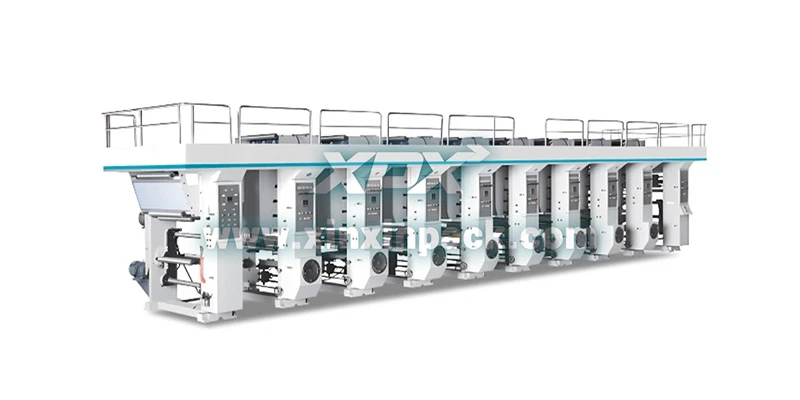
Designed for high-speed continuous mass production of high-end packaging, this model is equipped with automatic roll changing, electronic shaft synchronization control, and a constant tension closed-loop control system. It maintains high-precision registration and stable printing quality during high-speed continuous operation, and is energy-efficient. It can be used in conjunction with bag-making and laminating equipment, and is the preferred equipment for high-end packaging and printing plants.
What makes XinXin printing machines stand out in the global market is our in-depth insight into flexible packaging production scenarios and the industry-leading performance advantages of our equipment:
Seamless Inline Production for Higher Efficiency
XinXin printing presses can be directly connected to zip-lock bag blown film machines or flatbed blown film machines, and used synchronously with bag-making machines, realizing fully integrated production of blown film, printing, and bag making. It eliminates intermediate winding and handling steps, increasing overall production efficiency by more than 20%.
Ultra-High Precision Multi-Color Printing
Supporting 2-6 color printing configurations, the equipment adopts high-precision color mark photocells and a constant tension control system, achieving a printing registration accuracy of ±0.1mm, ensuring stable pattern registration and vibrant colors, perfectly meeting the printing needs of complex brand logos and multi-pattern packaging.
Wide Compatibility & Broad Application Scenarios
Our printing machines are compatible with PP, PE, BOPP, PET, CPP, nylon, non-woven fabric and other flexible packaging materials, fully covering the flexible packaging needs of food, daily chemicals, electronics, medical, apparel and other industries.
Simple Operation & Easy Maintenance
Equipped with a PLC touch control system, the equipment realizes intuitive operation, automatic tension and drying control, greatly reducing manual intervention. The scientific structural design also facilitates quick daily maintenance, reducing the difficulty of equipment operation and maintenance for enterprises.
Energy-Saving & Environmentally Friendly Design
XinXin printing machines adopt a hot air circulation drying system and energy-saving motor configuration, which realizes fast ink drying while greatly reducing energy consumption, helping enterprises reduce production costs and achieve green production.
Super High Stability & Consistency
The whole machine adopts a thickened steel frame structure and a precision transmission system, which can maintain stable operation of the equipment and consistent quality of finished products even under long-term high-speed printing conditions, effectively reducing the defective rate.
In addition to standard equipment, XinXin focuses on providing personalized customization services for printing machines to meet the differentiated needs of different customers. We support customized adjustments including equipment width, number of color groups, compatible substrates, drying system configuration, etc. Our professional technical team will provide you with a one-stop intelligent printing solution according to your actual production scenarios and specific needs. No matter what special customization needs you have for flexible packaging printing equipment, our industry experts can provide you with targeted professional solutions.
With excellent product performance and professional customized services, XinXin has provided high-quality printing equipment and supporting services for many well-known domestic and foreign enterprises, including SVP India, Ziplock USA GLAD, IKEA, Heng'an Group, Camellia and other industry leaders. We have successfully delivered a number of benchmark projects, including BOPP Casing Tape Project, Non-woven Composite Film Zipper Project (European Eco-friendly Urine Bag Solution), Automated Snap-on Bag Fitting Project, helping customers achieve innovative upgrades from manual to automated production, and gain a stronger competitive advantage in the market.
Yes. We support global export of all accessories and spare parts. With extensive experience shipping to over 80 countries, we ensure efficient logistics to get the required parts to your production line promptly.
Replacement intervals depend on usage, but items like Teflon/Silicon belts or punching blades are typical consumables. We provide maintenance guidelines and these genuine parts are readily available for quick replacement to minimize downtime.
We use high-grade materials: high-temperature resistant Teflon for sealing belts, durable engineering plastics for reels, and precision-hardened steel for punching tools to ensure durability and consistent performance.
Absolutely. Our accessories, from punching units to film width controllers, are precision-engineered to match our machinery models, guaranteeing seamless integration and maintaining original equipment specifications.
Yes. Using our genuine accessories like Teflon belts and silicone belts ensures perfect fit, optimal performance, and long-term reliability for your zipper bag production line, protecting your investment.
Zippers are typically attached to non-woven fabric using ultrasonic welding or heat sealing, creating a strong, clean bond without the need for stitches or glue.
Many non-woven fabrics are washable, enhancing their reusability. The zipper closure also allows the bag to be sealed to keep contents clean.
Yes. They are ideal for high-quality silk-screen or digital printing, allowing for full-color, detailed brand logos and graphics for marketing purposes.
Non-woven fabric is durable, reusable, breathable, and offers excellent printability, making it a popular sustainable alternative to single-use plastic bags.
After-sales issues
Pre sales issues
Customized issues

Environmentally friendly materials
Integrated production lines
Maximising your return on investment