


 中文
 English
 Español

The right choice between flexographic and rotogravure printing for custom zipper bags depends less on which method prints “better” and more on your annual buying pattern, how often artwork changes, and the specific film and zipper construction of the bag. Flexo usually keeps upfront tooling manageable for short-to-mid runs and design revisions; rotogravure becomes economically rational when a stable design runs at very high volume. Overpaying happens when buyers choose a method based on first-order unit price without modeling how tooling amortizes across reorders—or when they overlook zipper-area constraints that force reprints or sealing failures.
Flexo and rotogravure are not premium-versus-budget versions of the same process. They carry images to film in fundamentally different ways, and that difference drives every cost and quality trade-off that matters after the first purchase order. Flexographic printing uses flexible photopolymer plates wrapped around cylinders; ink is metered through an anilox roller to the raised image areas and pressed onto the film. Rotogravure uses engraved metal cylinders—typically copper plated with chrome—where the image is etched into the cylinder surface and ink fills the engraved cells.
For a zipper bag, the practical consequence is not just image fidelity. It is how much money is locked into tooling before a single bag is made, how long it takes to change a design, and how flexibly the printing step can be scheduled around bag-making and zipper attachment. A brand that treats the decision as a simple quality ranking often ends up with either unnecessary cylinder investment or a flexo setup that cannot reproduce the artwork it approved.
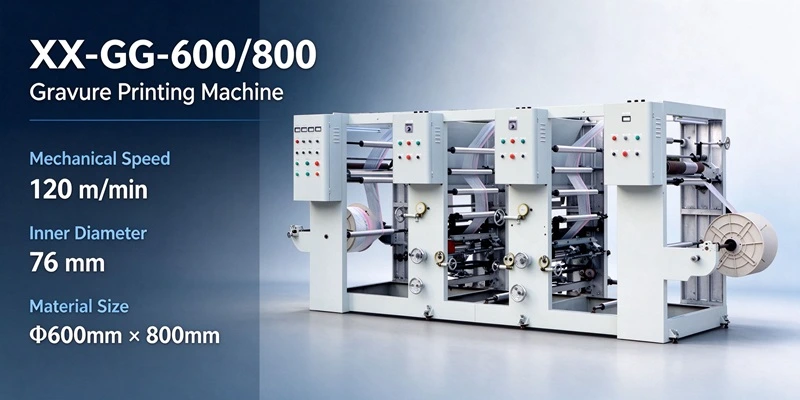
Three cost components separate flexo and rotogravure more than any other factor: image-carrier cost, run length, and changeover behavior.
Flexo photopolymer plates are priced in the range of roughly USD 80–300 per square meter, and a multi-color plate set for a zipper bag job typically costs hundreds to low thousands of dollars depending on print width and color count. Gravure cylinders are engraved individually per color station; a single cylinder commonly runs USD 800–2,500 or more, and a six- to eight-color set can require several thousand dollars in tooling before any film is printed. Industry tooling comparisons place a 6-color gravure set at roughly USD 3,500–7,000 versus USD 600–1,400 for a comparable flexo plate set.
These figures are useful as orientation, not as a quote. What matters for your zipper bag program is how the tooling cost is distributed across the number of bags you will actually order. A cylinder set that looks expensive per unit at 30,000 bags may become the lower-cost path at 800,000 bags—provided the design does not change. Conversely, a flexo plate set that is cheap on the first order may lose its advantage if the design is revised twice before the volume reaches the level where gravure would have been justified.
For a deeper breakdown of how plate and cylinder costs amortize across production runs, Flexo vs Gravure Film Printing: Cost Differences Explained covers the underlying cost components in more detail.
The break-even between flexo and gravure is not a fixed number. It shifts with color count, film structure, print coverage, and how often artwork changes. General industry ranges place flexo's economic sweet spot from roughly 5,000 up to several hundred thousand linear meters, while gravure typically becomes compelling at 500,000 linear meters and above. One practitioner-oriented comparison places the practical break-even range between 80,000 and 200,000 linear meters for many film jobs, noting that the exact crossover varies significantly by complexity and color count.
For custom printed zipper bags, two zipper-specific factors widen or narrow that range. First, a zipper bag often uses a film structure that must accept both printing and a zipper profile or attachment; if the film surface requires corona treatment and the print area must avoid the zipper bonding zone, effective printable width is reduced, and makeready waste can be higher than on a plain flat bag. Second, brands that use zipper bags across multiple product variants may have more SKUs than a comparable flat-bag program, which raises the value of fast plate changes and lowers the appeal of cylinder tooling per design.
| Decision Factor | Flexographic Printing | Rotogravure Printing |
|---|---|---|
| Tooling cost per design | Lower upfront; photopolymer plates typically hundreds to low thousands per multi-color set | Higher upfront; engraved cylinders commonly several thousand per multi-color set |
| Plate/cylinder lead time | Hours to days for plate making | Days to weeks for cylinder engraving and proofing |
| Economic run range | Short-to-mid runs; design changes are practical | Very high-volume, stable designs; tooling amortizes over large output |
| Design change penalty | Lower; new plates can be produced relatively quickly | Higher; new cylinders required per changed color station |
| Typical strength on zipper film | Solid spot colors, readable type, efficient repeat-order production once plates are made | Fine detail, smooth gradients, run-to-run color consistency on long runs |
| Fit for zipper bag program | Brands with multiple SKUs, uncertain demand, or artwork likely to evolve | Brands with one or few stable designs and confirmed high annual volume |
The table above is a decision aid, not a universal ranking. A zipper bag with simple two-color branding and a design that may be refreshed after the first season belongs in the left column almost regardless of total annual volume. A private-label zipper pouch with photographic graphics and a committed three-year volume forecast may justify the right column—but only after the cylinder cost has been tested against the downside scenario of a design change or volume shortfall.
A custom printed zipper bag is not a printed flat film with a zipper added afterward. The printing decision interacts with the zipper through film surface condition, print-area clearance, and sealing compatibility.
PE and PP films have relatively low surface energy in their untreated state; corona treatment is commonly used to raise the dyne level so ink can anchor properly. For zipper bag films, the print-side surface tension is often checked against a dyne level in the range of 38–42 dynes/cm, and the zipper-area substrate may require a separate check because the film in that zone can be handled or treated differently. If the surface tension is not verified, the symptom may not appear until after bag making: ink that looked acceptable on a press proof can scuff, flake, or fail adhesion near the zipper seam during filling and handling.
A common practical requirement is to keep printed ink away from the zipper attachment edge by roughly 5–10 mm, so that ink does not interfere with the adhesive or heat-seal bond between the zipper and the film. This is a design constraint as much as a printing constraint. If the artwork is laid out without accounting for the zipper track position, the printer may have to reduce print coverage, shift the layout, or reject the file—all of which add cost or delay. The exact clearance should be confirmed with the bag-making and zipper-attachment process, not assumed from a generic pouch specification.
A zipper bag may use a monolayer PE film, a PP film, or a laminated/composite structure. Flexo is compatible with water-based, UV, and solvent inks and can be configured for a broad range of plastic films. Gravure is predominantly solvent-based in flexible packaging, which brings high print quality but also requires solvent handling and recovery provisions in some jurisdictions. For food-contact or sensitive-product zipper bags, the ink system and any required migration testing should be confirmed before tooling is ordered—changing ink chemistry after plates or cylinders are engraved is an expensive correction.
The most common overpayment pattern in custom zipper bag printing is not choosing the “wrong” method in isolation. It is choosing a method whose tooling structure does not match the actual order pattern.
A brand that orders 40,000 zipper bags once, then changes the design for a seasonal variant, then orders another 60,000 with the revised artwork, will usually destroy the economic case for gravure cylinders—even if each individual order looks “large enough” for gravure when compared in isolation. Conversely, a brand that commits to a stable design and places repeat orders totaling several hundred thousand bags per year may find that flexo plate changes, repeated makeready, and the per-unit economics of shorter runs cost more than the cylinder investment would have.
The decision sequence that avoids both errors is:
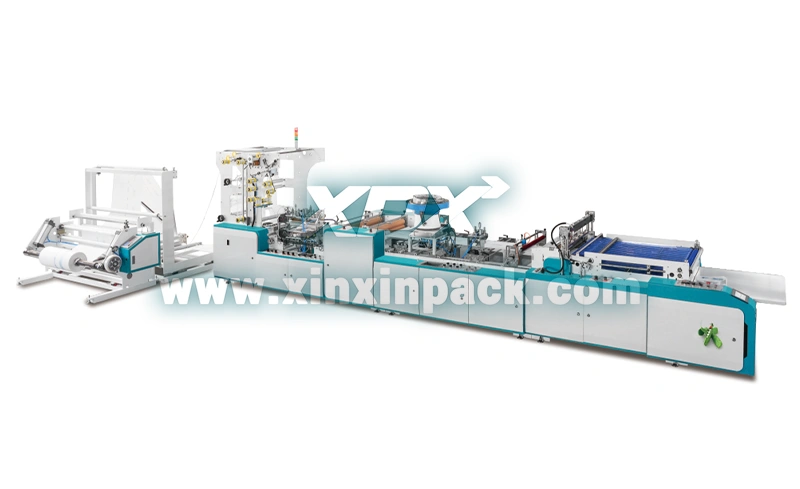
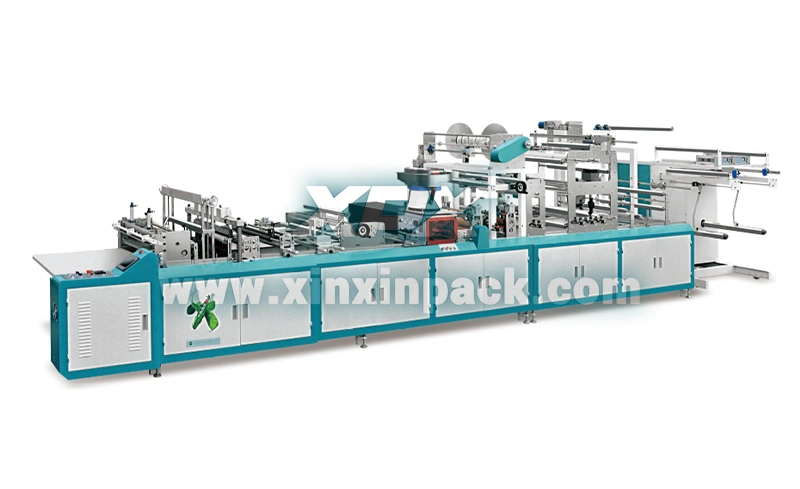
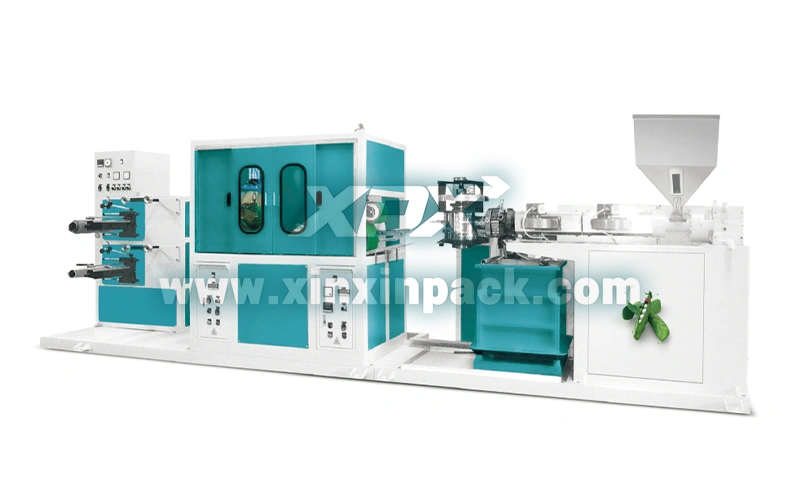
For buyers who want to see how the printing press fits into a continuous blown-film-printing-bag-making flow, the available configurations of the printing stage can be reviewed in the context of the full line rather than as a standalone machine choice. The equipment can be configured for 2–6 color flexographic or gravure printing with registration accuracy intended to support stable pattern alignment on plastic film.
Not inherently. Modern CI flexo can produce commercially strong results for spot colors, type, and many brand graphics, especially on film. Gravure’s advantage becomes most relevant with fine gradients, photographic imagery, and very long runs where run-to-run consistency is critical. For a zipper bag with simple brand colors and a clear logo, flexo is often sufficient.
There is no universal minimum. Flexo’s lower plate cost makes shorter runs more feasible, while gravure cylinders require a larger volume to amortize. Industry sources place flexo’s practical range from a few thousand linear meters upward, with gravure becoming economically compelling typically in the hundreds of thousands of linear meters or more, depending on the job. The relevant number for your program is the break-even for your specific design and film, not an industry headline.
In principle yes, but the switch is not seamless. The artwork may need to be re-separated for gravure cylinder engraving, and proofing will be required. If a later switch is a realistic possibility, it is worth asking the printer whether the flexo artwork can be prepared in a way that reduces rework at the gravure stage—and whether the film specification is compatible with both processes.
The margin exists because ink in the zipper bonding zone can interfere with the adhesive or heat-seal bond between the zipper and the film. A commonly referenced practical range is 5–10 mm, but the correct clearance for a specific zipper profile and sealing process should be confirmed with the bag-making and zipper-attachment equipment supplier. This is a specification item, not a design preference.
Yes, primarily through tooling. Flexo plates can typically be produced in hours to days, while gravure cylinders require engraving and proofing that may take days to weeks. If your zipper bag program depends on fast design refreshes or short reorder cycles, plate-based tooling usually provides more scheduling flexibility.
The total tooling cost divided by the realistic annual bag output for that specific design—not the quoted unit price on the first purchase order. This ratio, combined with the probability of a design change before the tooling cost is recovered, gives a more reliable indication of which method will cost less over the life of the design.
The right printing method for a custom zipper bag is the one whose tooling structure matches how you actually buy the bag: how many designs, how often they change, and how much volume you can commit before the next revision. Flexo keeps upfront tooling manageable and preserves flexibility for multi-SKU or evolving artwork; rotogravure becomes rational when a stable design can absorb cylinder cost across genuinely high repeat volume. The most avoidable mistake is comparing methods on first-order unit price while ignoring zipper-area print clearance, surface-tension readiness, and the probability of a design change. If your annual volume sits in the gray zone or the zipper specification is still being finalized, confirm the film structure, print-side treatment requirement, and zipper bonding clearance with the printing and bag-making process before ordering tooling. For buyers evaluating how the printing stage integrates with film blowing and bag making, the available line arrangements provide a practical starting point for a technical discussion.
Environmentally friendly materials
Integrated production lines
Maximising your return on investment