


 中文
中文 English
 Español
The cost difference between flexographic and gravure film printing is primarily determined by three factors: tooling investment, run length, and operating efficiency. Flexo requires lower upfront tooling costs (photopolymer plates) but has higher per-unit costs at very high volumes, while gravure demands substantial cylinder engraving investment but delivers lower long-run costs. The break-even point typically depends on order volume, design change frequency, and substrate compatibility.
Choosing between flexographic and gravure printing for flexible film packaging is not simply a matter of picking the "better" technology. It is a cost-structure decision that depends on your production volume, design change frequency, material requirements, and quality expectations. This article breaks down the actual cost components, explains where each process has economic advantages, and provides a practical framework for evaluating your specific situation.
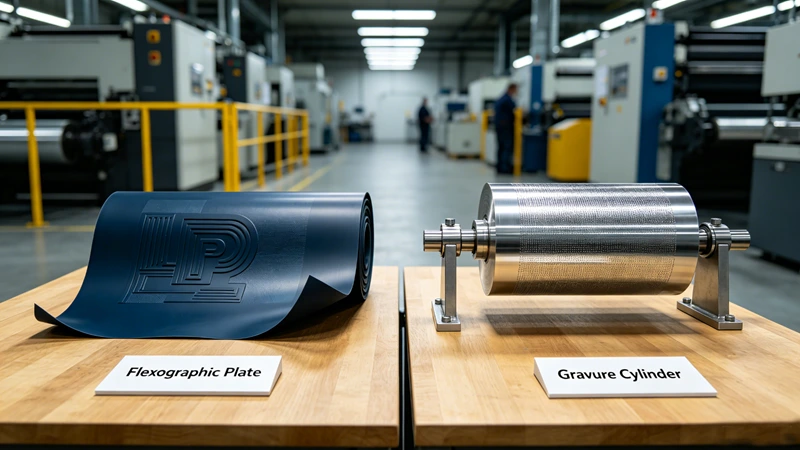
Before comparing costs, it helps to understand what makes each process different at the mechanical level.
Flexographic printing uses flexible photopolymer plates mounted on plate cylinders. Ink is transferred from an anilox roller to the raised image areas on the plate, then pressed onto the film substrate. Modern flexo presses can handle 2-6 colors and are widely used for plastic film, paper, and non-woven materials.
Gravure printing uses engraved metal cylinders — typically copper plated with chrome — where the image is etched into the cylinder surface. Ink fills the engraved cells, and a doctor blade wipes the non-image areas clean before transfer to the substrate. This process is known for high-resolution reproduction and consistent long-run quality.
The fundamental difference in how images are carried to the substrate drives almost every cost difference between the two methods.
To compare costs fairly, you need to look beyond the sticker price of the printing press itself. The total cost structure breaks down into four categories:
| Cost Category | Flexographic Printing | Gravure Printing |
| Image carrier cost | Photopolymer plates: lower per-unit cost | Engraved cylinders: higher per-unit cost |
| Setup/changeover cost | Faster plate mounting and makeready | Longer cylinder changeover and registration |
| Run cost per unit | Higher at very high volumes | Lower at very high volumes |
| Substrate flexibility | Broad — plastic film, paper, non-woven | Primarily film, paper, and composites |
The image carrier is the most dramatic cost difference. A set of photopolymer flexo plates for a multi-color job can cost hundreds to low thousands of dollars depending on size and complexity, while a set of engraved gravure cylinders for the same job can run several thousand dollars due to the precision engraving process.
However, this comparison is incomplete without considering how these costs amortize over the production run.
The cost per printed unit is what ultimately matters for production planning. Here is how the economics shift across different run lengths:
Short to medium runs (roughly under 200,000 linear meters): Flexo typically has a cost advantage. Lower plate costs and faster makeready mean the tooling investment is recovered more quickly. The per-unit cost gap narrows or disappears at these volumes.
High-volume runs (roughly 500,000 linear meters and above): Gravure becomes increasingly cost-effective. The higher cylinder cost is spread across a much larger output, and gravure's consistent quality and faster running speeds reduce per-unit costs. Industry analysis suggests that the break-even point where gravure becomes more economical than flexo can fall in the 80,000–200,000 linear meter range for many job profiles, though this varies significantly by job complexity and color count.
Frequent design changes: Flexo is almost always more economical. Replacing photopolymer plates is faster and cheaper than engraving new cylinders. If your production schedule involves multiple SKUs or seasonal artwork changes, the tooling replacement cost alone can make gravure impractical for anything other than very long, stable runs.
The cost comparison cannot stop at tooling and run length. Several operational factors significantly affect the true cost of ownership:
Makeready time is a major cost driver, especially for shorter runs. Flexo plate mounting and registration typically take less time than gravure cylinder changeover. Industry data indicates that press makeready operations average around 21 minutes for some flexo configurations, with estimates suggesting roughly 9 minutes of that time can represent recoverable waste per setup. Gravure changeover generally takes longer due to the weight and precision requirements of cylinder handling.
Material waste during setup is another cost that accumulates across many small jobs. Every changeover generates some film waste before registration and color are optimized. Flexo's faster makeready tends to produce less setup waste per changeover, which matters more as run lengths shrink.
Cylinder and plate wear affects long-term maintenance costs. Gravure cylinders have a substantially longer life than flexo plates. Chrome-plated gravure cylinders can be re-chromed and re-engraved multiple times, and research has explored coatings that extend cylinder life further. Flexo plates, by contrast, have a finite impression life and must be replaced more frequently, though their lower replacement cost partially offsets this disadvantage.
Cost is not the only factor, and quality requirements can override pure economics.
Gravure is traditionally associated with higher resolution and more consistent print quality across the web, particularly for photographic images and fine text. Flexo has made substantial progress in narrowing the quality gap, with modern plate technology and press automation enabling resolutions that are competitive for most packaging applications.
For film substrates specifically — LDPE, PP, PET, and composite films — both processes are viable, but the optimal choice depends on the specific film and ink system. Water-based and UV-curable ink systems are increasingly used in flexo, which can affect both cost and regulatory compliance. Gravure typically uses solvent-based inks, though energy-saving UV gravure systems are also available.
Use the following checklist when evaluating which printing process fits your production profile:
Choose flexo when:
Your typical run length is under 200,000 linear meters
You have multiple SKUs or frequent artwork changes
Upfront tooling investment needs to be minimized
You want broader substrate flexibility (film, paper, non-woven)
Faster changeover is a production priority
Choose gravure when:
Your runs consistently exceed 500,000 linear meters
Print quality and long-run consistency are critical
Design changes are infrequent
You are printing high-color-count, detailed graphics
The cylinder investment can be amortized across substantial repeat demand
Evaluate both when:
Your run lengths fall in the 200,000–500,000 linear meter range
You have a mix of long and short jobs
Quality requirements are moderate to high
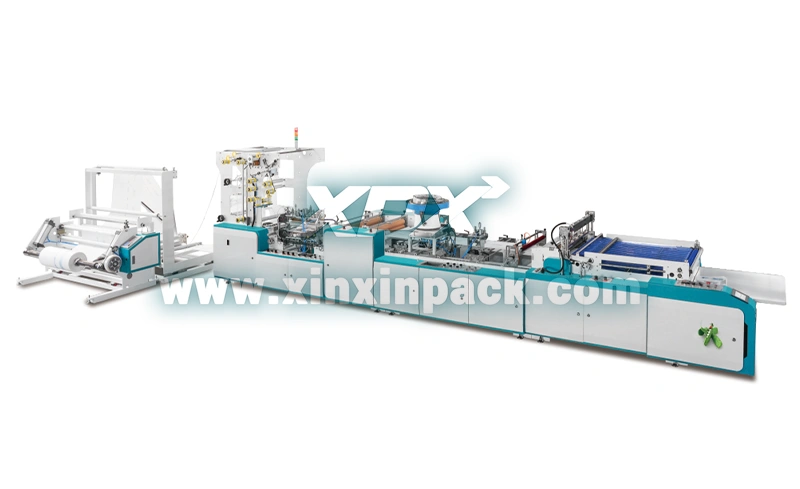
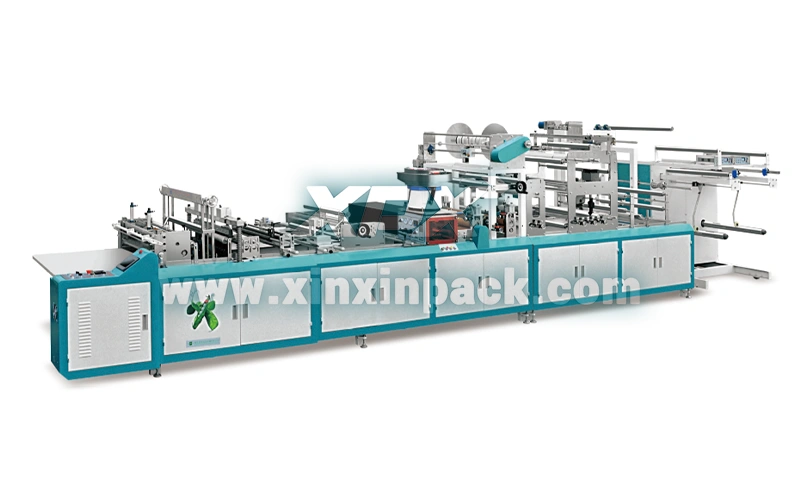
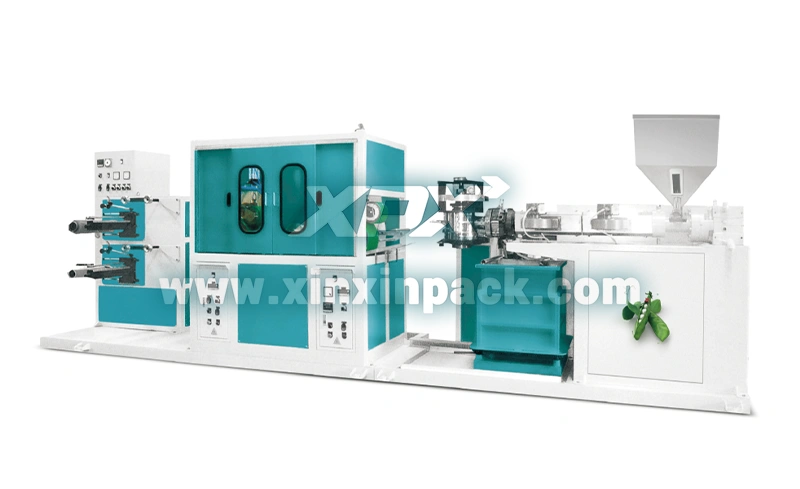
The printing press itself is only one part of the investment equation. For flexible film producers considering an integrated production setup, the ability to connect printing equipment directly with blown film and bag-making lines can affect overall operational costs through reduced handling and intermediate winding steps.
Xinxin's printing press series is designed for integration with blown film production lines, supporting 2-6 color flexographic or gravure configurations with high registration accuracy. For operations evaluating printing equipment as part of a larger production line, reviewing the available configurations and discussing material and production requirements with a technical team can help clarify which setup aligns with specific cost and quality targets.
Q: How much does a flexo printing plate cost compared to a gravure cylinder?
Flexo photopolymer plates are generally less expensive than gravure cylinders. Published industry ranges suggest flexo plates may cost a fraction of the price of engraved gravure cylinders per color, though actual costs depend on plate size, imaging area, and resolution requirements. Buyers should request specific quotes based on their artwork and job specifications.
Q: At what production volume does gravure become more economical than flexo?
The break-even point varies widely based on job complexity, color count, and operating conditions. Industry analyses often cite a range of approximately 80,000 to 200,000 linear meters, but this should be verified with actual production data for each specific job.
Q: Can the same printing press handle both flexo and gravure?
Most presses are designed for one process or the other. Some equipment configurations support both flexographic and gravure printing modules, but this is not universal. The printing machine product page provides an overview of available configurations.
Q: How does cylinder life compare between the two processes?
Gravure cylinders are designed for extended life, with chrome plating providing wear resistance that allows re-use and re-engraving. Flexo plates have a finite impression life and are replaced more frequently. The total cost impact depends on run volume and plate replacement frequency.
Q: Does film material affect the cost comparison between flexo and gravure?
Yes. Substrate compatibility varies between processes. Flexo handles a broader range of materials including plastic film, paper, and non-woven. Gravure is primarily used for film and composite substrates. The specific film and ink system can affect both setup time and running costs.
Q: What about digital printing as an alternative?
Digital printing is increasingly used for very short runs and variable data applications. However, for the production volumes typically relevant to flexible film packaging manufacturers, flexo and gravure remain the primary industrial options. Digital is generally not competitive at the volumes discussed in this article.
The cost difference between flexo and gravure film printing is not a fixed number — it is a function of your specific production profile. Tooling costs favor flexo, long-run efficiency favors gravure, and the break-even point sits somewhere between 80,000 and 200,000 linear meters for many typical jobs.
Before making a decision, gather real data for your intended jobs: artwork complexity, run lengths, material specifications, and changeover frequency. A printing technology that looks cheaper on paper may not be the most economical in practice if it does not match your production pattern.
For operations evaluating flexo or gravure printing equipment, reviewing the technical specifications and discussing production requirements with a supplier is a practical next step. The printing machine section provides an overview of available flexo and gravure configurations designed for flexible film production.
Environmentally friendly materials
Integrated production lines
Maximising your return on investment