


 中文
中文 English
 Español
If you are running a small production line and considering non-woven zipper bag manufacturing, the equipment selection process can feel overwhelming. The short answer: a mid-speed non-woven zipper bag making machine with ultrasonic sealing, moderate output capacity (30–80 bags per minute), compact footprint, and flexible bag-type support is typically the best fit for small production lines. The most critical factor is matching the machine‘s output capacity to your actual order volume—over-investing in high-speed equipment that runs below capacity wastes capital, while under-investing creates production bottlenecks.
This guide walks through the key decision factors for small-scale producers, helping you evaluate what matters most when choosing a non-woven zipper bag making machine.
Before comparing machines, it helps to define what “small production line” means in this context. For non-woven zipper bag production, a small line typically has these characteristics:
Daily output requirements range from a few thousand to 10,000–15,000 bags per day
Floor space is limited—often under 50–80 square meters for the bag-making section
Operator availability is constrained—usually 1–2 operators per shift
Product variety is moderate—the line may need to switch between different bag sizes and styles
Capital budget is more tightly controlled compared to large-scale industrial operations
Understanding these constraints helps narrow down which machine specifications actually matter.
For small production lines, output speed requires careful calibration. The WBL-800INS non-woven zipper bag making machine, for example, operates at a mechanical speed of 30–120 bags per minute. For a small line, running at the lower end of this range (30–60 bags per minute) may be entirely sufficient for daily needs while consuming less energy and placing less wear on components.
What to consider:
Calculate your actual daily bag requirement
Factor in setup time, material changes, and quality checks
Choose a machine that can meet peak demand without forcing you to run at maximum speed continuously
A machine that runs comfortably at 70% of its maximum capacity typically offers better stability and longer component life than one pushed to 100% every shift.
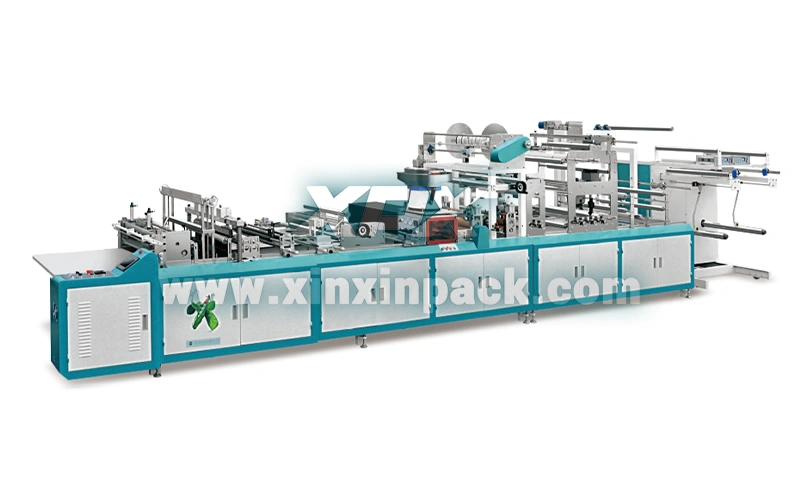
Small production facilities cannot afford sprawling equipment layouts. The WBL-800INS has a dimension of 8500×1800×1800 mm—roughly 8.5 meters in length. For a small line, you need to consider not just the machine footprint but also:
Material feeding area (upstream)
Finished bag collection and packaging area (downstream)
Maintenance access space around the machine
Operator workstations
Practical tip: Map out your available floor space before contacting suppliers. Know exactly how much length and width you can dedicate to the bag-making machine, and confirm these dimensions early in the conversation.
Non-woven fabrics behave differently from plastic films like PE or PP. The machine must be specifically designed to handle non-woven materials. Key material-related considerations include:
Sealing method: Non-woven zipper bag making machines typically use ultrasonic sealing or heat sealing. Ultrasonic sealing is generally preferred for non-woven fabrics because it creates strong bonds without excessive heat that can distort the material.
Feed mechanism: Non-woven fabrics have different tension characteristics compared to films—the machine should have adjustable tension control.
Zipper attachment: The zipper must be securely bonded to the non-woven fabric. Machines with dedicated zipper feeding and positioning systems produce more consistent results.
The WBL-800INS supports both PP and non-woven materials, making it suitable for producers who may want to work with multiple material types.For detailed specifications, review the non-woven zipper bag making machine specifications.
Small production lines often serve multiple customers or product lines, requiring the ability to produce different bag types. The non-woven zipper bag making machine should support a variety of bag configurations:
| Bag Type | Typical Application |
| Non-woven document bags | Office supplies, file storage |
| Non-woven garment bags | Clothing retail, dry cleaning |
| Non-woven promotional bags | Trade shows, corporate gifts |
| Eco-friendly bags | Retail shopping, grocery |
The ability to switch between these bag types with minimal downtime is a significant advantage for small lines. Machines that support modular tooling or quick-change systems reduce the time lost during product changeovers.
Small production lines face a trade-off: higher automation reduces labor requirements but increases initial investment and may require more skilled operators for troubleshooting.
For small lines, consider:
Semi-automated machines may be more practical if you have 1–2 operators who can handle multiple tasks
Fully automated feeding and stacking can reduce labor but adds cost—evaluate whether the labor savings justify the investment
User-friendly controls (touchscreen interfaces, clear diagnostics) reduce training time and minimize errors
The WBL-800INS supports customization with multiple functional accessories to achieve multi-purpose use of one machine, meeting the needs of different bag types. This flexibility is particularly valuable for small lines that cannot afford separate machines for each bag style.
For small production lines, operating costs matter as much as the purchase price. Key cost factors include:
Power rating: The WBL-800INS has a power rating of 16KW—understand what this means for your hourly electricity cost
Maintenance frequency: Machines with robust construction and quality components typically require less frequent maintenance
Consumables: Sealing elements, cutting blades, and other wear parts should be readily available and reasonably priced
Ask suppliers about typical maintenance intervals and the cost of common replacement parts before making a decision.
| Factor | Small Production Line Priority | Large Production Line Priority |
| Output speed | Moderate (30–60 bags/min) | High (100+ bags/min) |
| Floor space | Compact footprint | Extended layout acceptable |
| Automation | Semi-automated to moderate | Fully automated |
| Bag type flexibility | High (frequent changeovers) | Moderate (longer runs) |
| Operator requirement | 1–2 operators | 3–4+ operators |
| Initial investment | Cost-sensitive | ROI-driven over longer term |
| Maintenance | Easy access, simple procedures | Scheduled, specialized teams |
This comparison highlights why a machine suitable for a large factory may be entirely wrong for a small producer—and vice versa.
Before contacting suppliers or requesting quotes, work through this checklist:
Once you have this information, review the available zipper bag making machine configurations to see which models align with your requirements.
Mistake 1: Buying too much machine. A high-speed machine running at 30% capacity wastes capital and may actually produce more defects due to sub-optimal operating conditions.
Mistake 2: Ignoring changeover time. If your machine takes 2 hours to switch between bag types and you change over twice daily, that‘s 4 hours of lost production—a significant cost for a small line.
Mistake 3: Underestimating floor space requirements. The machine itself is only part of the equation—material rolls, finished bag storage, and maintenance access all require space.
Mistake 4: Focusing only on purchase price. Operating costs (energy, maintenance, consumables, labor) often exceed the purchase price within the first 2–3 years of operation.
What is the typical output of a small non-woven zipper bag making machine?
For small production lines, operating speeds of 30–60 bags per minute are common and sufficient for most needs. The WBL-800INS has a mechanical speed range of 30–120 bags per minute, giving small producers flexibility to run at lower speeds while having capacity for growth.
Can a small line produce different bag types on the same machine?
Yes. The non-woven zipper bag making machine supports multiple bag types including document bags, garment bags, promotional bags, and eco-friendly bags. Machines with modular accessories can switch between bag styles with reasonable changeover time.
Is ultrasonic sealing necessary for non-woven bags?
Ultrasonic sealing is the preferred method for non-woven materials because it creates strong, clean bonds without excessive heat that can damage or distort the fabric. While heat sealing is possible, ultrasonic sealing typically produces more consistent results for non-woven applications.
How much floor space does a non-woven bag making machine require?
The WBL-800INS has a dimension of 8500×1800×1800 mm (approximately 8.5m × 1.8m). However, you should also plan for material feeding area upstream and finished bag collection downstream, plus maintenance access around the machine. Total space requirement is typically 15–25 square meters depending on layout.
What materials can a non-woven zipper bag making machine process?
These machines are designed for non-woven fabrics and PP materials. Some models may also support other materials—confirm compatibility with your specific material type before purchasing.
How do I know if a machine is right for my production volume?
Calculate your peak daily bag requirement and compare it to the machine‘s output at a comfortable operating speed (not maximum). Choose a machine that can meet your peak demand while running at 60–80% of its maximum capacity—this leaves room for growth and reduces wear on components.
Selecting a non-woven zipper bag making machine for a small production line comes down to matching equipment capabilities to your actual operating constraints. The right machine is one that fits your floor space, meets your output requirements at a comfortable operating speed, supports the bag types you need, and aligns with your operator skill level and budget.
Avoid the temptation to over-invest in high-speed equipment designed for large-scale operations. Instead, focus on machines that offer flexibility, reliable performance at moderate speeds, and practical features that make daily operation straightforward.
Before making a final decision, review the available configurations for non-woven zipper bag making machines and compare models based on your specific production requirements. Discuss your material and production needs with the supplier to confirm that the machine specifications match your actual operating conditions.
Ready to explore equipment options? Browse the zipper bag making machine collection to compare models and configurations.

Environmentally friendly materials
Integrated production lines
Maximising your return on investment