


 中文
中文 English
 Español
If you are evaluating film blowing equipment for self-sealing zipper bag production, one question often comes up early in the decision process: does the machine need co-extrusion capability? The short answer is that co-extrusion technology allows you to combine multiple materials with different properties into a single film structure, which directly affects seal strength, barrier performance, and the overall quality of the finished zipper bag. This article explains what co-extrusion is, why it matters for self-sealing packaging film, and what buyers should consider when evaluating co-extrusion film blowing equipment.
Co-extrusion is a film blowing process that uses multiple extruders to feed different polymer materials into a single die, where they are joined together to form a multi-layer film. Unlike single-layer extrusion—which produces film from one material—co-extrusion creates a film structure with distinct layers, each contributing specific properties.
In the context of self-sealing packaging film production, co-extrusion typically involves combining materials such as LDPE, LLDPE, and PP to achieve a balance of mechanical strength, sealing performance, and optical clarity.
Xinxin Packaging offers multi-layer co-extrusion zipper film blowing machines that can process different materials simultaneously through a multi-screw extrusion system. The equipment supports flexible material combinations and is designed to improve film performance through layer integration.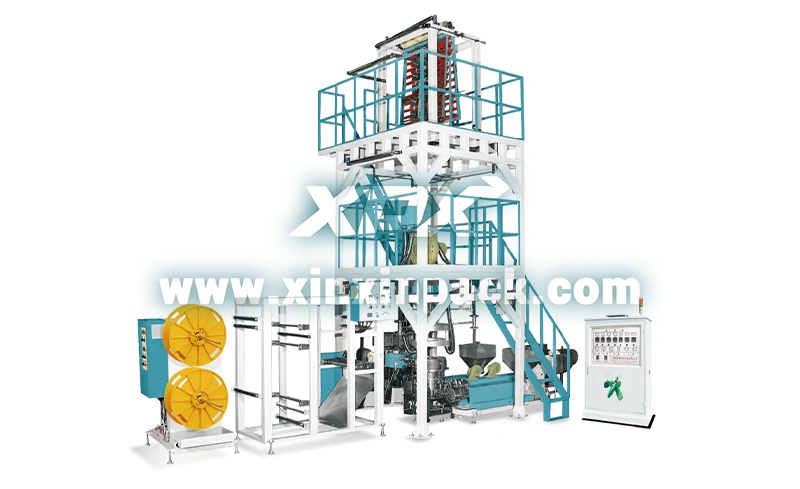
One of the primary reasons packaging manufacturers choose co-extrusion is to enhance barrier performance. Different polymers have different resistance to oxygen, moisture, and other environmental factors. By combining materials in a multi-layer structure, manufacturers can create films that offer superior protection for packaged products.
For self-sealing bags used in food packaging, this means longer shelf life and better product freshness. The barrier layer can be tailored to the specific requirements of the application—whether that means high moisture resistance for dry goods or oxygen barrier for sensitive products.
The self-sealing feature of zipper bags depends on the quality and consistency of the seal. Co-extrusion allows manufacturers to use a sealing layer material that is optimized for heat sealing, while other layers provide strength and structural support. This separation of functions often results in more reliable seals with fewer defects.
Not all layers in a multi-layer film need to be made from expensive, high-performance materials. Co-extrusion enables manufacturers to place costly functional materials only where they are needed—typically in thin functional layers—while using more economical materials for structural layers. This approach can reduce overall material costs while maintaining or improving film performance.
Multi-layer film structures can be engineered to deliver better tensile strength, puncture resistance, and tear resistance than single-layer films of the same thickness. This is particularly important for self-sealing bags that must withstand handling, filling, and transportation without failing.
As sustainability becomes an increasing concern in packaging, co-extrusion offers a pathway to using recyclable material combinations. Some co-extrusion systems are designed with recyclable material compatibility in mind, allowing manufacturers to produce films that meet both performance and environmental requirements.
| Feature | Single-Layer Extrusion | Multi-Layer Co-Extrusion |
|---|---|---|
| Material layers | One material | Two or more materials combined |
| Barrier performance | Limited to the properties of one polymer | Can be tailored by combining different polymers |
| Seal quality | Dependent on single material's sealing properties | Sealing layer can be optimized independently |
| Material cost efficiency | All material must meet highest performance requirement | Functional materials used only where needed |
| Film strength | Limited by single material properties | Can combine strength layers with other functional layers |
| Application flexibility | Suitable for basic packaging needs | Required for high-performance, specialty packaging |
Co-extrusion film blowing equipment for self-sealing packaging typically supports a range of materials. At Xinxin, the zipper film blowing machine series is widely applicable to raw materials such as LDPE, LLDPE, and PP. The multi-layer co-extrusion configuration allows different materials to be fused together through a multi-screw extrusion system, enabling combinations that are not possible with single-layer extrusion.
Common material combinations for self-sealing packaging film include:
LDPE/LLDPE blends for general-purpose zipper bags with good flexibility and sealability
PP-based structures for applications requiring higher heat resistance and clarity
Multi-layer combinations that incorporate barrier materials for extended shelf life
The choice of material combination depends on the specific requirements of the end-use application, including the type of product being packaged, storage conditions, and handling requirements.
Co-extrusion systems are available in various configurations with different output capacities. For example, some multi-layer co-extrusion zipper film blowing machines can achieve outputs of 40 kg/h or higher, depending on the material and configuration. Buyers should evaluate their production volume requirements and select equipment that can meet current and anticipated future demand.
Not all co-extrusion systems offer the same level of flexibility. Some machines are designed for specific layer counts (e.g., two-layer or three-layer), while others can accommodate more complex structures. Xinxin provides custom multi-layer co-extrusion zipper film blowing machines for producing high-barrier, functional films tailored to specific packaging needs.
Energy consumption is a significant operating cost in film blowing. Co-extrusion systems with advanced screw design and servo control technology can achieve measurable energy savings. Xinxin's equipment, for example, is designed to reduce energy consumption by 20% while increasing production capacity by 30%–50%.
Buyers should confirm that the co-extrusion system can process the specific materials they plan to use. Different polymers have different processing temperature requirements and flow characteristics, which affect the design of the extruder screws and the die.
Multi-layer co-extrusion systems are generally more complex than single-layer systems, which may affect maintenance requirements and operating costs. Buyers should consider the availability of spare parts, technical support, and training when evaluating equipment options.
Co-extruded film is used across a wide range of self-sealing packaging applications, including:
Food packaging: Zipper bags for snacks, coffee, pet food, and dry goods
Clothing packaging: Garment bags requiring clarity and tear resistance
Daily necessities packaging: Reclosable bags for household items
Industrial packaging: Bags requiring specific barrier or strength properties
The ability to tailor film properties through co-extrusion makes it suitable for applications with diverse requirements, from basic storage bags to high-end food packaging.
What is the main advantage of co-extrusion over single-layer extrusion for zipper film?
The main advantage is the ability to combine different materials in a single film structure, allowing manufacturers to optimize each layer for a specific function—such as sealability, barrier performance, or mechanical strength. This results in better overall film performance than can be achieved with a single material.
Is co-extrusion more expensive than single-layer extrusion?
Co-extrusion equipment typically has a higher initial capital cost due to the additional extruders and more complex die design. However, the ability to use lower-cost materials in structural layers while reserving expensive functional materials for thin layers can reduce overall material costs. The total cost comparison depends on production volume, material selection, and specific application requirements.
What materials can be used in co-extrusion for self-sealing bags?
Common materials include LDPE, LLDPE, and PP. Multi-layer co-extrusion also enables combinations of different polymers to achieve specific properties such as improved barrier performance. The specific material combination depends on the application and performance requirements.
How does co-extrusion improve the seal quality of zipper bags?
Co-extrusion allows manufacturers to use a sealing layer material that is specifically optimized for heat sealing, while other layers provide strength, barrier, and other properties. This separation of functions typically results in more consistent, reliable seals with fewer defects compared to single-layer films where the same material must perform all functions.
What should I look for when choosing a co-extrusion film blowing machine?
Key factors include the required layer count, material compatibility, production output capacity, energy efficiency, layer configuration flexibility, and the supplier's technical support capabilities. Buyers should also verify that the equipment can process the specific materials they plan to use and confirm the availability of spare parts and maintenance support.
Can co-extruded film be recycled?
The recyclability of co-extruded film depends on the specific materials used and the availability of recycling infrastructure for those material combinations. Some co-extrusion systems are designed with recyclable material compatibility in mind. Buyers should discuss recyclability requirements with their equipment supplier and confirm that the proposed material combination can be processed through available recycling channels.
Co-extrusion technology is not a one-size-fits-all solution, but for manufacturers producing self-sealing packaging film, it offers meaningful advantages in barrier performance, seal quality, material efficiency, and application flexibility. The decision to invest in co-extrusion equipment should be based on a careful evaluation of your specific production requirements, target materials, and quality standards.
Before making a purchasing decision, review the available configurations of co-extrusion zipper film blowing machines and compare the specifications against your production needs. Discuss your material and production requirements with the equipment supplier to confirm that the proposed solution can deliver the performance you expect.
Review the available zipper film blowing machine configurations to understand the options and technical specifications that match your production requirements.

Environmentally friendly materials
Integrated production lines
Maximising your return on investment