


 中文
中文 English
 Español
The ideal haul‑off speed for a zipper film blowing line is the speed at which the film is pulled away from the bubble after cooling — and it is determined by the balance between extrusion output rate, target film thickness, material rheology, cooling efficiency, and downstream bag‑making requirements. There is no single “correct” speed; the optimal setting varies by material, die size, and production goals. This article explains the key factors that influence haul‑off speed selection and how to approach setting it correctly for your zipper film line.
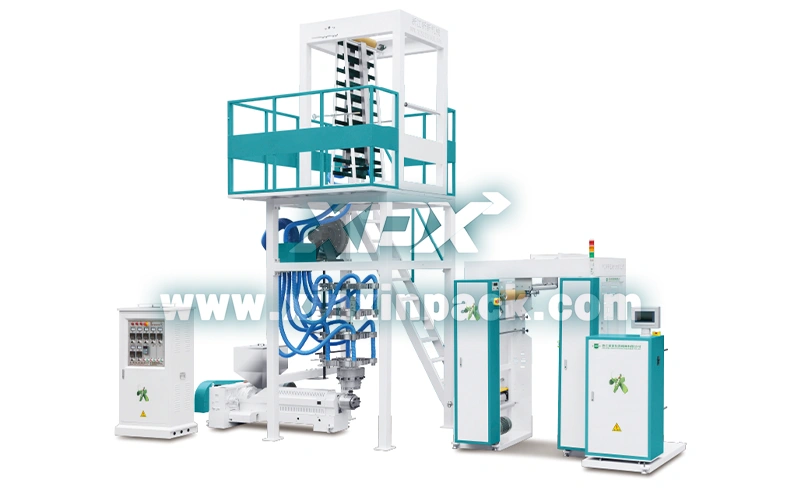
Haul‑off speed — also referred to as take‑up speed or line speed — is the rate at which the collapsed film tube is pulled through the nip rollers after exiting the die and passing through the cooling zone. Together with the extrusion rate (determined by screw RPM), the haul‑off speed directly controls the final film thickness.
For a given output rate, increasing the haul‑off speed stretches the film more in the machine direction, reducing thickness. Conversely, decreasing the haul‑off speed allows the film to emerge thicker. This inverse relationship is the most fundamental principle in blown film extrusion: haul‑off speed × film thickness × film width = constant output rate (at steady state).
For zipper film lines specifically — where the film must accommodate a zipper profile either during extrusion or in a subsequent lamination step — haul‑off speed also affects zipper alignment, sealing zone integrity, and overall film flatness.
The most direct factor in haul‑off speed selection is the required finished film thickness.
Thinner films require higher haul‑off speeds to stretch the melt more before solidification
Thicker films require lower haul‑off speeds to allow more material to accumulate per unit length
In practice, a film blowing line running at a fixed screw speed will produce thinner film when the haul‑off speed is increased, and thicker film when it is reduced. This means that when switching between bag types with different thickness requirements, the haul‑off speed must be adjusted accordingly.
For zipper bags, typical film thicknesses range from 30 to 120 microns depending on the application — food packaging often uses thinner films, while industrial or heavy‑duty bags require thicker gauges.
The haul‑off speed must be matched to the extrusion output rate. If the screw turns faster and pushes more melt through the die, the haul‑off speed must increase proportionally to maintain the same film thickness.
The relationship can be expressed as:
Haul‑off speed ≈ Extrusion output rate ÷ (Film thickness × Film width × material density)
In practice, this means that when production output is increased (by raising screw RPM), the haul‑off speed must also be increased to avoid producing film that is too thick. Many modern zipper film blowing lines use synchronized drive systems that automatically adjust haul‑off speed in response to screw speed changes.
Different polymers behave differently under stretching, and this affects how haul‑off speed should be set.
| Material | Characteristics | Haul‑off Speed Consideration |
|---|---|---|
| LDPE | High melt strength, easy to stretch | Can run at higher speeds; stable bubble |
| LLDPE | Lower melt strength, requires more cooling | May need slower speeds to avoid bubble instability |
| PP | Stiffer, higher melting point | Often requires tighter speed control; water cooling may be needed |
| Blends / Co‑extrusions | Variable behavior | Speed must be tuned to the dominant material characteristics |
LDPE is the most common material for zipper film production due to its excellent processability and sealing performance. However, when running LLDPE blends or multi‑layer co‑extruded films, the haul‑off speed may need to be reduced to maintain bubble stability and avoid film breakage.
The position of the frost line — where the molten film transitions to solid state — is critical for determining maximum haul‑off speed.
If the haul‑off speed is too high, the film may be pulled before it has fully cooled, leading to:
Poor dimensional stability
Inconsistent thickness
Surface defects
Zipper profile distortion
If the haul‑off speed is too low, the film cools excessively before being drawn, which can cause:
Reduced production efficiency
Increased thickness variation
Air‑cooled systems typically operate at stable speeds of 18–20 meters per minute, with outputs ranging from 35 to 70 kg/h depending on the model. Water‑cooled systems may operate at slightly different speed ranges due to faster heat removal.
The blow‑up ratio — the ratio of the final bubble diameter to the die diameter — affects the transverse orientation of the film. The haul‑off speed, together with the BUR, determines the overall draw ratio and final film properties.
For a given die size and BUR, the haul‑off speed must be set to achieve the desired film thickness while maintaining bubble stability. A larger BUR generally requires more careful haul‑off speed control, as the bubble is more sensitive to variations in take‑up rate.
For integrated zipper bag production lines, the haul‑off speed of the film blowing section must be coordinated with the speed of downstream processes — printing, slitting, and bag making.
If the film blowing line runs too fast, downstream equipment may not keep up, causing film accumulation and waste
If it runs too slow, production capacity is underutilized
In fully automated lines, the haul‑off speed is often integrated into a master control system that synchronizes all sections from film blowing to bag packing.
Zipper film lines differ from standard film blowing lines because the zipper profile must be formed or attached during the process.
The haul‑off speed affects:
Zipper alignment — if the speed fluctuates, the zipper may shift off‑center
Zipper seal integrity — the sealing zone must cool properly at the right speed
Film flatness — uneven haul‑off can cause wrinkles that interfere with zipper attachment
For this reason, zipper film lines typically require more precise haul‑off speed control than standard film lines. Servo‑driven haul‑off systems are increasingly common for this application.
When setting or adjusting the haul‑off speed on a zipper film blowing line, consider the following:
| Mistake | Consequence | Prevention |
|---|---|---|
| Setting haul‑off speed too high | Thin spots, film breaks, bubble instability | Increase speed gradually; monitor thickness |
| Setting haul‑off speed too low | Oversized thickness, material waste, low output | Match speed to screw output; use synchronized control |
| Ignoring material changes | Inconsistent film properties | Re‑calibrate speed when switching materials |
| Neglecting cooling adjustments | Frost line shift, poor film quality | Adjust air flow when changing speed |
What is the relationship between haul‑off speed and film thickness?
Haul‑off speed and film thickness are inversely related. For a fixed extrusion output rate, increasing the haul‑off speed reduces film thickness, and decreasing it increases film thickness. This is because the same amount of melt is being stretched over a longer or shorter length.
Can I run a zipper film line at the same haul‑off speed for all materials?
No. Different materials have different melt strengths and cooling requirements. LDPE can typically run at higher speeds, while LLDPE and PP may require slower speeds to maintain bubble stability. When changing materials, the haul‑off speed should be re‑evaluated.
How do I know if my haul‑off speed is too high?
Signs of excessive haul‑off speed include: film breaks, bubble instability, uneven thickness (thin spots), surface defects, and zipper profile misalignment. If the frost line moves too close to the die, the speed is likely too high.
Does haul‑off speed affect zipper quality?
Yes. Fluctuations or incorrect haul‑off speed can cause the zipper to shift off‑center, create wrinkles in the sealing zone, or result in poor zipper seal integrity. Consistent haul‑off speed is essential for consistent zipper quality.
What is a typical haul‑off speed range for zipper film blowing?
Stable production speeds for air‑cooled systems typically range from 18–20 meters per minute, with outputs of 35–70 kg/h depending on the model and material. Actual speeds vary significantly by equipment configuration and production requirements.
The ideal haul‑off speed for a zipper film blowing line is not a fixed number — it is a dynamic parameter that must be determined based on target film thickness, extrusion output rate, material type, cooling efficiency, die geometry, downstream requirements, and zipper integration needs.
The most important principle to remember is the inverse relationship between haul‑off speed and film thickness: faster speed = thinner film, slower speed = thicker film. Beyond this, the key to success is maintaining stable, consistent speed control — which is why modern zipper film lines increasingly rely on servo‑driven haul‑off systems and synchronized production controls.
Before committing to a specific speed setting, always run test samples and measure thickness consistency across the full film width. When in doubt, consult your equipment supplier for configuration‑specific recommendations.
To explore available zipper film blowing machine configurations and technical specifications, review the product lineup or discuss your material and production requirements with the technical team.

Environmentally friendly materials
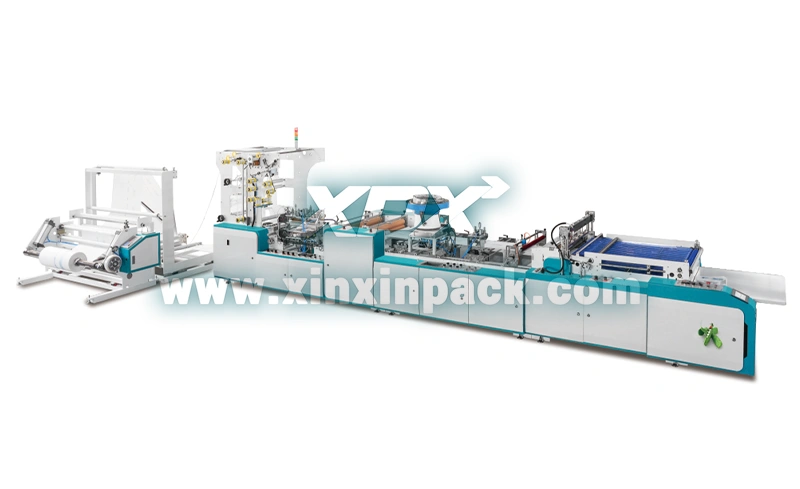
Integrated production lines
Maximising your return on investment