


 中文
中文 English
 Español
It’s 3:00 PM on a Tuesday, and your shift supervisor reports that the latest run of zipper pouches has a 12% reject rate—wrinkled seals, misaligned zippers, and random film tears. You’re bleeding thousands of dollars a week, and your biggest customer is losing patience. You’ve slowed the line, swapped film suppliers, and even changed sealing temperatures half a dozen times. Still, the problem keeps coming back.
What’s really happening on your production floor isn’t a single fault. It’s a tangle of interconnected variables: mechanical setup, material behavior, process control, and operator habits. In this article, we’ll break down the real-world steps that packaging technicians and plant managers use to get lines back under control—without guesswork. Along the way, we’ll point to modern equipment designs that turn many of these fixes from manual firefighting into automated consistency. If you’re already considering a hardware refresh, Xinxin’s advanced bag making technology has been built from the ground up to address exactly these pain points.
Before you change another setting, it’s worth understanding why zipper pouch production drifts out of spec. In my visits to dozens of flexible packaging plants, the same three culprits surface again and again:
Film tension instability – Fluctuating unwind tension causes registration drift, seal misalignment, and even film stretching that deforms the final pouch dimensions.
Heat sealing inconsistency – Operators often compensate for worn heater cartridges or thermocouple drift by cranking up the temperature setpoint, which burns thin films or creates weak cold seals.
Zipper insertion misalignment – Even a 0.5 mm deviation in zipper placement can lead to rework, leakers, or complete rejection by automated filling lines downstream.
The good news is that you can address most of these with methodical, practical adjustments—no engineering degree required. And when the hardware itself is the bottleneck, there are smart upgrade paths that don’t force you to reinvent your entire line.
Tension control isn’t just “tight enough so it doesn’t wrinkle.” In polyethylene and laminated structures, your target window depends on film modulus, web width, and line speed. A common field guideline: for LDPE-based films around 50–80 microns, unwind tension should sit between 0.5 and 1.5 N per 100 mm of web width. Run a quick check with a hand-held tension meter at splice points and just before the forming section. If the reading swings more than ±15%, your dancer arm or load cell feedback needs recalibration.
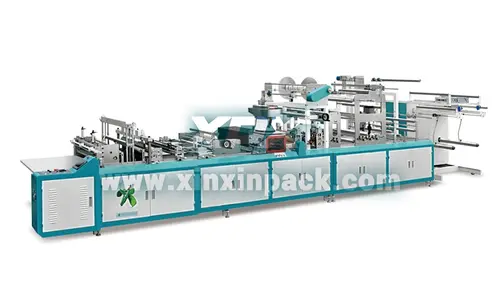
Another often-overlooked detail: idler roller alignment. A single misaligned roller can create baggy edges that telegraph all the way into the zipper insertion station. Use a straightedge across at least three rollers at a time during monthly preventive checks.
Sealing problems are responsible for more than 40% of pouch quality complaints, according to a survey by the Flexible Packaging Association. Yet many lines still run on “feel.” Instead, establish a seal strength testing protocol. Pull samples every 30 minutes and use a tensile tester following ASTM F88/F88M to record peak seal force. Track the data on a simple SPC chart. When seal strength drops below your internal limit—typically 80% of the maximum achievable strength for that film structure—it’s time to inspect the sealing bars, not just raise the temperature.
A common trap: relying on a single thermocouple reading. Infrared thermal imaging of the sealing bar surface often reveals cold spots caused by uneven cartridge heating or Teflon tape wear. Replace Teflon covers on a fixed schedule, not just when they look burned. And if your machine allows independent dwell time adjustment for longitudinal and cross seals, use it—laminate structures with nylon or EVOH barrier layers often need 20–30% longer dwell on the cross seal to achieve equivalent bond strength.
Zipper alignment errors rarely start at the zipper station itself. They usually trace back to film guiding just upstream. Make sure the film enters the forming collar or folding section with no more than 1 mm lateral deviation. After that, check the zipper preheating temperature. In many plants, bringing the zipper flange to within 15–20°C of the seal initiation temperature before it enters the sealing nip reduces reject rates by half or more. This is especially critical when running at speeds above 60 meters per minute, where residence time under the sealing bar is fractions of a second.
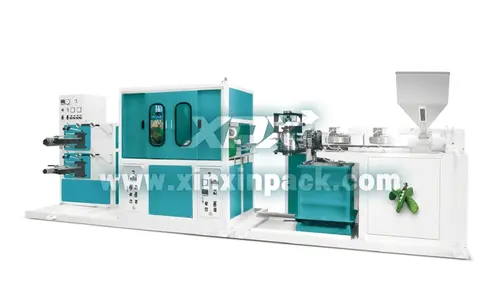
For converters who regularly switch between zipper profiles—press-to-close, slider, or double-track—consider that high-speed pouch-making systems with servo-driven zipper insertion can store recipe settings for each profile, slashing changeover time and reducing alignment errors.
A 2023 PMMI Business Intelligence report noted that unplanned downtime in packaging operations costs an average of $15,000 per hour. Yet most mid-size plants still operate on a reactive model. Shift to a tiered approach:
Daily: Wipe photoelectric sensors, inspect air filters, listen for unusual bearing noise.
Weekly: Check sealing bar parallelism with carbon paper, clean air cylinders, verify emergency stops.
Monthly: Replace Teflon covers, calibrate temperature controllers, flush chill rolls on water-cooled sealing stations.
Quarterly: Full geometric inspection of zipper guides, film path rollers, and forming shoulders.
Document everything. When a persistent defect appears, your maintenance logs will tell you whether it correlates with a recent part replacement or a skipped calibration—often cutting troubleshooting time in half. If you’re in the market for equipment that embeds maintenance tracking and predictive alerts, take a look at Xinxin’s smart diagnostics approach, which automates many of these checks.
The best SOP in the world won’t help if operators override it at 2:00 AM to hit shift targets. Create one-page visual guides for each product setup—including target tension range, seal temperatures, and acceptable quality sample photos—and post them at the machine. Pair new operators with experienced mentors for at least 40 hours of supervised running. Every time a defect batch is caught, turn it into a five-minute team huddle: what happened, what was the root cause, what will we do differently tomorrow.
These practices sound simple, but they compound. One midwestern converter I worked with reduced its complaint rate by 62% in four months using nothing more than structured training, daily tension checks, and a seal strength log—no new machinery at all.
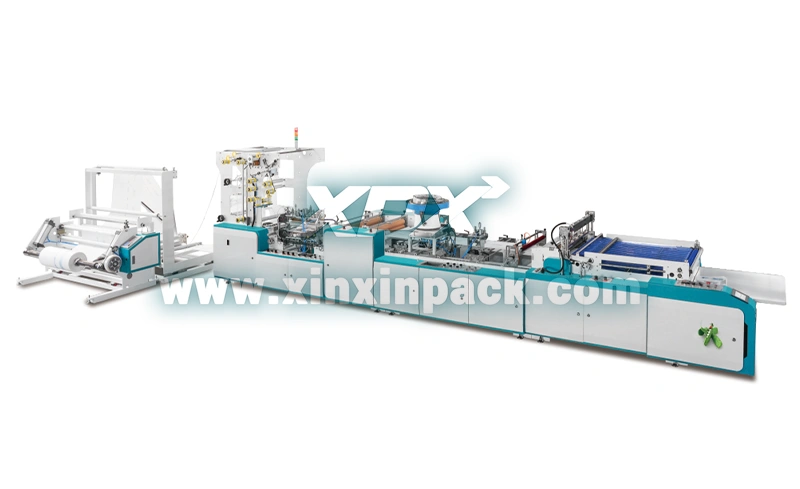
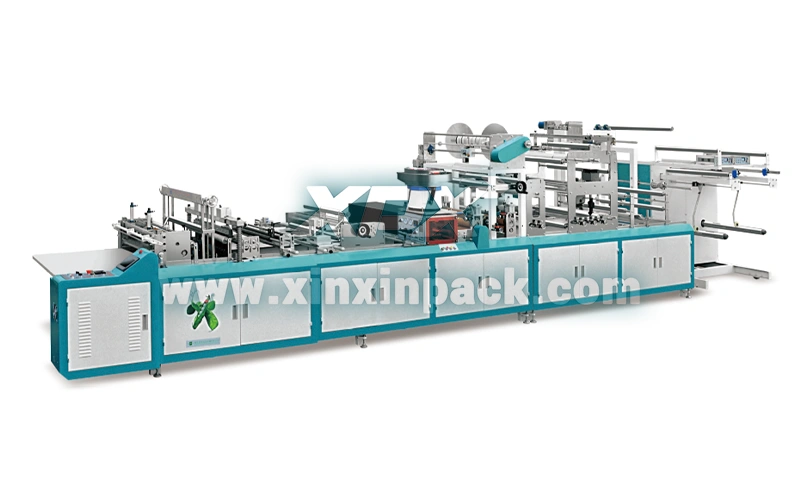
At a certain point, even the best-run legacy line hits a ceiling. You might be running a well-maintained machine that simply lacks the servo precision to hold tolerances at modern production speeds, or you can’t justify a third shift because changeovers consume 90 minutes each. That’s when a high-performance zipper bag making machine with integrated automatic tension control, multi-zone sealing, and recipe-driven zipper setup can transform your operation from reactive to predictable. It’s not about buying technology for its own sake—it’s about matching the platform to your growth and quality demands.
For producers ready to explore a system that bundles these capabilities into a single, cohesive platform, Xinxin’s zipper pouch production solutions are worth a serious look. Their design directly targets the common failure points we’ve discussed: unstable tension, inconsistent sealing, and tedious zipper changeovers.
Take the time to evaluate whether your current line can realistically deliver the output and quality you need over the next three years. If the answer is no, start a conversation with a supplier who understands both the mechanical and operational sides of the equation. The right partner will talk specifics, not just specs—and help you build a line that makes every Tuesday afternoon a little less stressful.
Disclaimer: This article provides general technical guidance based on industry best practices. Specific adjustments should be validated with your film and equipment suppliers. Production data and case studies are anonymized to protect client confidentiality.

Environmentally friendly materials
Integrated production lines
Maximising your return on investment