


 中文
 English
 Español

Adding a zipper to a wicket bag line does not simply add one component. It changes the machine’s speed envelope, the film’s sealing window, the bag’s header geometry, and how the finished bag behaves at the bakery counter and in the consumer’s hands. The most important production factor to verify is whether the zipper attachment module and the wicket stacking system can maintain registration and stack consistency at the target output. Buyers should confirm the actual configuration with the machine supplier before assuming a standard wicket speed carries over unchanged.
Wicket bags are already a practical format for bakery packaging because they allow one-at-a-time dispensing from a stack, and they are commonly made from LDPE film for bread and baked goods. A zipper adds a resealable closure that can help consumers keep the product closed after opening. But the production consequences are not neutral. The sections below explain what changes, where the trade-offs sit, and what to check before committing to a configuration.
A standard wicket bag machine is designed around continuous film feeding, sealing, cutting, punching, and wicket insertion. When a zipper profile or zipper tape is introduced, the machine must add a zipper feeding path, an alignment or registration station, and a sealing or bonding step. These extra operations consume cycle time.
Industry examples illustrate the direction of the change. A wicketer side-seal machine listed at up to 300 bags per minute without zipper attachment is described as running at 150 bags per minute with a zipper attachment. Another bread-bag wicket machine lists a maximum cutting speed and a separate, lower zipper bag making speed. These are not universal figures, and they should not be read as guaranteed outputs for any specific Xinxin model. But they show a consistent pattern: adding a zipper typically reduces the achievable output compared with a plain wicket bag, and the reduction depends on zipper type, film material, sealing method, and how the wicket stacking system is synchronized.
For buyers, the practical question is not “what is the top speed of the machine,” but “at what stable speed can the configured line produce stacked, wicket-inserted zipper bags with acceptable seal integrity and stack alignment.” That number should be confirmed through a material-specific test or a documented configuration review, not inferred from a headline speed.
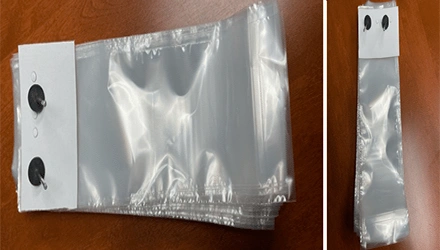
A standard wicket bag line and a wicket-plus-zipper line share the same basic sequence, but the zipper version inserts additional stations between film feeding and final cutting. The table below summarizes the main differences in configuration terms.
| Configuration area | Standard bakery wicket bag | Wicket bag with zipper |
|---|---|---|
| Zipper handling | None | Zipper feeding, alignment, and bonding/sealing station required |
| Film path | Straight feed to sealing/cutting | Additional tension and registration control around the zipper station |
| Sealing | Bag bottom/side seals only | Zipper seal plus bag seals; heat history of the film changes |
| Wicket punching | Standard hole punching and wicket insertion | Punching position must remain clear of zipper and seal zones |
| Stacking | Stack alignment based on plain bag profile | Stack alignment must accommodate zipper thickness and any local film distortion |
| Output expectation | Higher cycle rate for plain bags | Lower stable rate, to be verified by configuration |
The key configuration issue is registration between the zipper and the wicket holes. Wicket bags are collected on a wicket through pre-punched holes, and the header area must remain flat and consistent for stacking and dispensing. If the zipper sealing step introduces local film shrink, curl, or thickness variation near the header, the wicket stack may not sit flat or may not dispense smoothly. This is why the zipper position relative to the wicket punch pattern should be confirmed as part of the bag design, not treated as an afterthought.
LDPE is widely used for bakery wicket bags because it provides clarity, flexibility, and sufficient strength for bread and baked goods. Zipper attachment to PE or PP bags is an established machine function in the zipper bag making category. The compatibility question is therefore not whether LDPE can be used, but whether the specific LDPE film and zipper combination produces a consistent seal at the line speed and temperature profile available on the configured machine.
LDPE films can vary in density, slip additive, and sealing temperature range. A zipper seal that works on one LDPE film may require adjustment on another. Buyers should ask for the zipper bonding method (heat sealing, ultrasonic, or adhesive-based) and confirm that the supplier has experience with the intended film grade. For bakery applications where printed film may be used, the ink and coating on the seal area also need to be considered, because they can affect bond strength and appearance.
The zipper affects more than the bag-making machine. In a bakery or bread packing operation, wicket bags are loaded onto dispensing posts or wickets and opened one at a time at the point of sale or packing station. Adding a zipper changes two things in this workflow:
For retailers and bakeries that pack at the counter, the wicket format remains the same in principle: bags are still stacked on a wicket and dispensed one at a time. The difference is that the bag now carries a closure feature that the operator and the consumer interact with.
The checklist below is organized around the decisions that matter most when evaluating a zipper-capable wicket bag configuration.
For buyers who want to review the wicket bag format and its bakery applications in more detail, that page provides the base format specifications and dispensing logic. For the zipper attachment side, the zipper bag making machine category shows the range of bonding and configuration options that can be adapted to wicket-style production. If the evaluation points toward a PE/PP zipper attachment setup, the PE/PP zipper attachment page provides the relevant configuration reference. The next step is to discuss the zipper attachment requirements with the engineering team so that the speed, stack quality, and seal integrity can be confirmed against the actual production requirement.
It typically reduces the stable output compared with a plain wicket bag, because zipper feeding, alignment, and sealing add cycle steps. The exact reduction depends on the zipper type, film, sealing method, and how the stacking system is synchronized. Buyers should ask for a configuration-specific estimate.
That depends on the machine’s structure, control system, and available space for a zipper station. Some wicket platforms are designed with modular add-on capability, while others may require a different configuration. The upgrade path should be confirmed by the machine supplier after reviewing the existing line.
LDPE is a common film for bakery wicket bags, and zipper attachment to PE bags is an established function. The critical point is to confirm the sealing window for the specific LDPE grade and zipper combination, especially if the film is printed or has a coating in the seal area.
The wicket holes can remain functional, but the zipper seal zone must be positioned so it does not distort or interfere with the header area. The bag drawing should show the zipper position relative to the wicket punch pattern, and a stack-quality test should confirm flat stacking and clean dispensing.
It can require a slightly different opening motion because the zipper adds stiffness near the mouth. Whether the pre-opened wicket format still opens reliably should be tested with the chosen bag design and dispensing setup.
Prepare the target bag size, LDPE film grade and thickness, zipper type, required output range, wicket hole pattern, and whether the film is printed. A bag sketch showing the zipper and header layout helps the supplier evaluate the configuration accurately.
The most important thing to understand about adding a zipper to a wicket bag line is that it is a configuration change, not a feature toggle. It affects the speed envelope, the film sealing window, the header and wicket design, and the way the bag behaves in the bakery packing workflow. The buyers who get the best result are the ones who verify the zipper position relative to the wicket holes, confirm the LDPE and zipper compatibility through a material-specific review, and ask for a stack-quality check rather than relying on a headline speed.
If the application requires a resealable bakery bag in a wicket format, start by reviewing the wicket bag format and then discuss the zipper attachment requirements with the engineering team. The right configuration depends on the film, the zipper, the wicket layout, and the target output—and those should be confirmed together before the line specification is finalized.

Environmentally friendly materials
Integrated production lines
Maximising your return on investment