


 中文
 English
 Español

A clear zipper bag for apparel is judged in seconds: either the garment is visible and the branding looks intact, or the film reads as cloudy and the printed logo shows wear before the product reaches the customer. Film clarity is governed mainly by haze—light scattering within the film—while print smudging is an adhesion and drying problem, not simply a “bad ink” issue. Both are process-controlled outcomes. This article explains what drives each failure, how buyers can check them on samples, and where the production variables sit upstream.
Clarity is not a single property. It combines transparency (how much light passes through), haze (how much light is scattered), and surface condition (whether the film looks smooth or scuffed). In technical terms, haze is measured under methods such as ASTM D1003 or ASTM D1746, and a lower haze value corresponds to a clearer, less “milky” appearance. For apparel packaging, the buyer’s practical definition is simpler: under normal warehouse or retail lighting, the film should not look gray, wavy, or oily, and the garment color and folded condition should be identifiable without opening the bag.
A film that looks clear on a small swatch can turn cloudy across a full roll or a finished bag. Haze bands, cloudy patches, and surface scuffing are exactly the defects sample approval is meant to catch.
Haze in polyethylene or polypropylene zipper film typically traces to three interacting sources:
Do not judge a sample under a single light source. Hold the empty bag in daylight and under the lighting used in the packing area or retail floor. Then load the actual garment—a white tee, a black hoodie, and a textured knit each change the apparent contrast between film and contents. Look for haze bands, cloudy streaks, and surface marks that were not visible on an unloaded sample.
Smudging in the field usually has one of three meanings, and they have different root causes:
A flexographic printing guide identifies several process-side drivers of smudging: excessive retarder in the ink, insufficient dryer performance, too-high web temperature at the winder, excessive winding pressure, and low film pretreatment level. On the material side, polyethylene and polypropylene are smooth, chemically inert, and low in surface energy; untreated polyolefin surfaces often fall below 30 dynes/cm, making it difficult for ink to wet and anchor.
Ink adhesion depends on the ink’s surface tension being lower than the film’s surface free energy. Corona treatment raises surface energy by introducing polar groups, and treated films commonly target a range of 38–56 dynes/cm depending on the substrate and ink system. But treatment is not permanent: additives such as slip and anti-block agents can migrate back to the surface over time, and molecular chains relax, so treated film should be printed within a defined window or re-treated.
This is the point where “buying clear film” and “getting durable print” separate. A converter can source film with excellent optical clarity and still produce bags with poor rub resistance if the surface energy at the time of printing was inadequate or the ink system was mismatched to the substrate.
No single additive “solves” smudging. Rub resistance is the combined result of film surface condition, corona treatment freshness, ink formulation, drying profile, and winding tension. A supplier that can trace these variables is more useful to a garment brand than one that simply offers “rub-resistant ink” as a catalogue claim.
Material selection sets the baseline for both clarity and print behavior. The table below summarizes the practical trade-offs relevant to garment zipper bags, using ranges commonly reported in industry comparisons; actual values depend on grade, thickness, and supplier confirmation.
| Property (typical range) | PE (polyethylene) | CPP (cast polypropylene) | What it means for garment zipper bags |
| Haze / clarity | Moderate; often 5–8% haze | Low haze, often ≤3% | CPP has a clarity advantage, but PE offers softness and low-temperature toughness |
| Print surface energy | Often 32–36 dynes/cm before treatment; requires corona | Often 38–42 dynes/cm; still requires corona | Both need treatment; PE is more unforgiving if treatment is inconsistent |
| Heat-seal suitability | Good | Good | Both are used in zipper bag construction; zipper compatibility must be confirmed |
| Best-fit garment use | Heavy or bulky items, cold-chain or cold-climate shipping | Visual-first retail packaging, where clarity and stiffness are priorities | The “clearest” film is not automatically the most durable bag for every garment type |
For a retail-facing white-shirt program, the clarity difference may justify CPP. For a heavyweight fleece or a shipment moving through cold conditions, PE’s toughness can matter more than a small haze delta. The decision should be written into the bag specification rather than left as “clear film.”
Use this checklist during sample approval and incoming inspection. Each item is observable without a laboratory.
Clarity checks
Print checks
System checks
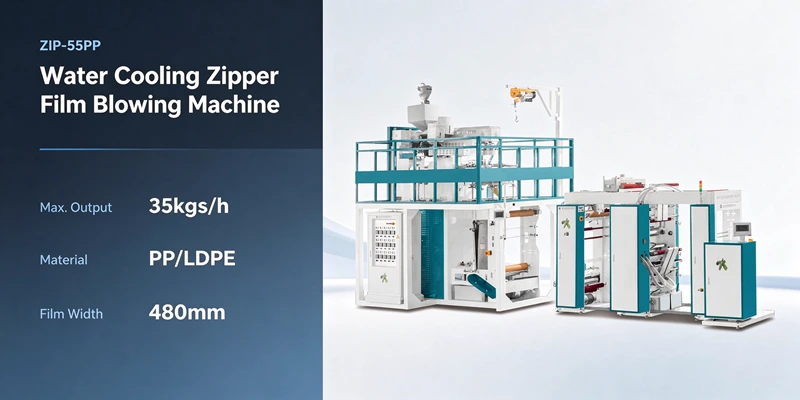
Clarity and print adhesion are often treated as bag-making problems, but their root causes frequently sit one step upstream: film blowing and surface preparation. Cooling uniformity affects haze; surface treatment freshness affects ink anchoring; winding tension affects both surface scuffing and ink transfer. For buyers evaluating a production setup, the relevant question is not only “what bag machine is used,” but “how is the film cooled and how is the print surface controlled before the bag is made.”
The water-cooling approach is one configuration designed for transparency-focused zipper film production, and it is worth reviewing in the context of the full film specification rather than as a standalone feature claim. Buyers can explore the water-cooling zipper film configuration for the technical variables involved, and review the broader zipper film bag range for application context when defining a garment packaging specification.
No. Clarity and toughness are different properties. CPP typically shows lower haze than PE, but PE offers better low-temperature toughness and softness for bulky or cold-shipped garments. The right choice depends on what the bag must survive and what the retail presentation requires.
Sometimes, but not reliably. Smudging can come from ink transfer during winding, poor adhesion from low surface energy, or incomplete drying. Changing ink without addressing corona treatment, drying, and winding tension may simply move the failure to a different stage.
Haze can be introduced or amplified during bag-making: uneven cooling across the original bubble, surface scuffing during winding and slitting, or heat effects near seal areas. A sample that is clear at the film stage should be re-checked after conversion into a finished bag.
A dry rub with a lint-free cloth under moderate pressure, followed by a tape-pull check on a non-critical printed area, provides a useful first screen. It does not replace a standardized abrasion test, but it can catch obvious adhesion and drying failures before bulk approval.
If clarity is a brand requirement, a numeric haze or clarity target—confirmed against the film supplier’s test method—is more controllable than “clear.” Without a target, resin and cooling variation can shift the appearance between lots.
Water cooling is a film-cooling method intended to improve transparency and dimensional stability in zipper film production. It is one variable among several; buyers should evaluate it alongside resin choice, corona treatment, and printing conditions rather than as a guarantee of finished-bag clarity.
Film clarity and print smudging are not cosmetic afterthoughts in garment zipper bag packaging. They are visible signals of whether the film was cooled consistently, whether the print surface was prepared correctly, and whether the ink was given a chance to anchor and dry. The most useful buyer behavior is to define clarity and rub resistance in the specification, check them on loaded samples under realistic lighting, and trace failures upstream to cooling, surface treatment, or winding conditions rather than treating them as isolated bag-making defects. When the garment program requires a transparency-focused film construction, the relevant production variables are easier to discuss with a supplier who can speak to both the film-blowing configuration and the printing process.

Environmentally friendly materials
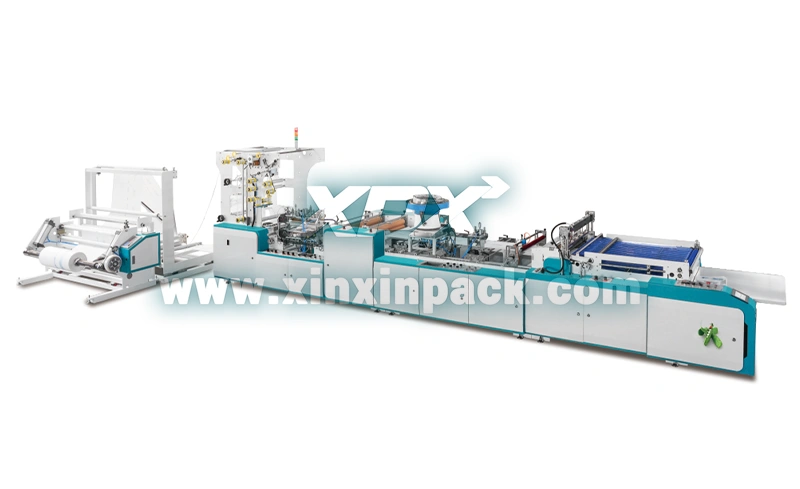
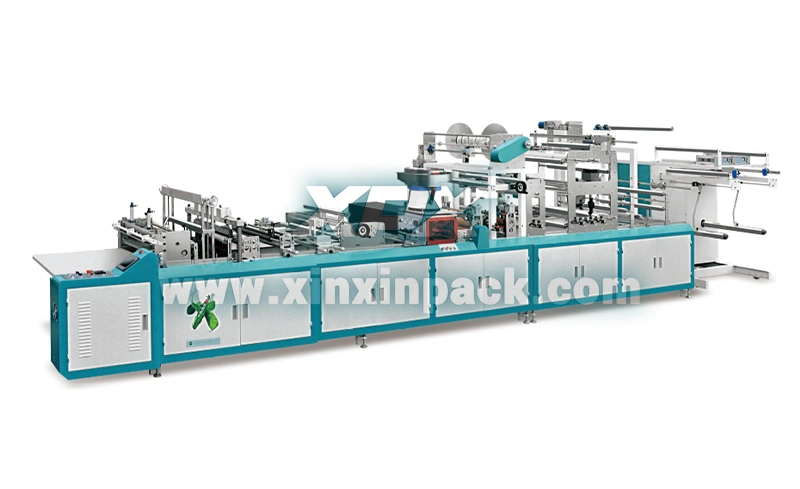
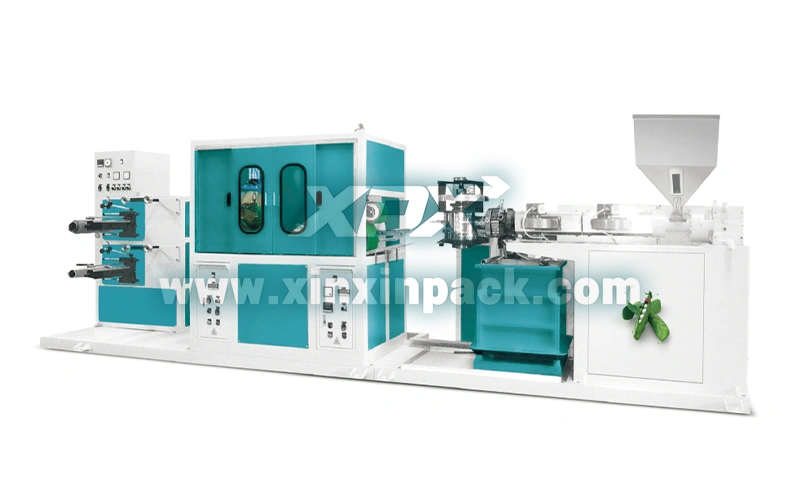
Integrated production lines
Maximising your return on investment