


 中文
中文 English
 Español
The morning shift at a mid-sized flexible packaging plant usually starts with a familiar, sinking feeling. The night supervisor leaves a note: "Registration drift on Line 3 again. 11% waste rate." You look at the stack of misaligned, half-printed pouches destined for regrind, and the cost isn't just the material—it's the lost time, the delayed shipment, and the creeping doubt about your equipment's reliability. In the competitive world of flexible packaging, precision isn't a luxury; it's the thin line between a profitable contract and a costly write-off.
When a machine that once produced flawless stand-up pouches with laser-sharp zipper seals starts to drift, the most common—and costliest—mistake is to treat the symptom, not the system. We jump to adjust the registration settings, tweak a single temperature controller, or, in frustration, slow the entire line down. These are temporary patches on a systemic problem. True, sustainable precision in pouch manufacturing comes from understanding the interconnected dance of film, tension, temperature, and time. Let's break down the root causes of production inaccuracy and build a systematic troubleshooting framework.
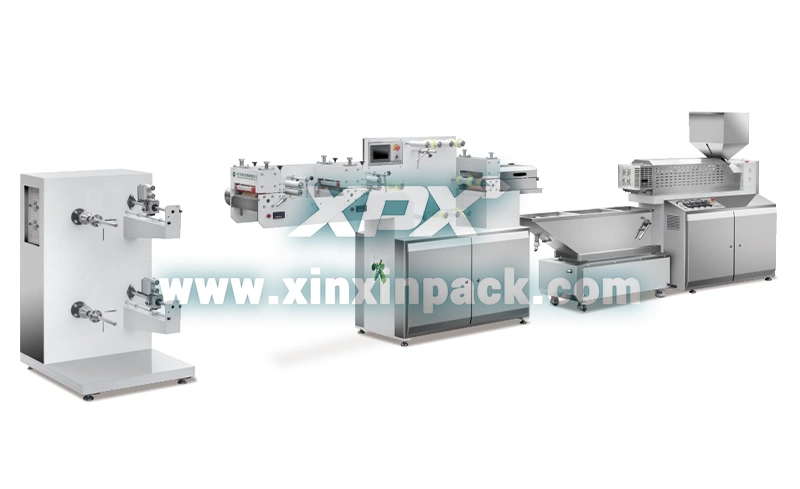
Before touching a single setting, it’s critical to recognize that precision issues rarely stem from one catastrophic failure. They are a conspiracy of micro-variations. We can categorize these root causes into three primary areas:
The journey of a flimsy web of film through dozens of rollers and dancers to the sealing station is a miracle of engineering, but a fragile one. A worn-out nip roller with a slightly eccentric bearing will introduce a rhythmic, maddening registration shift that's almost impossible to tune out with electronic adjustments. Similarly, a dancer arm that doesn't move freely due to mechanical stiction can't absorb tension fluctuations, transmitting every tiny jerk from the unwind directly into the sealing zone.
Sealing a zipper to a pouch body involves a precise heat transfer. The controller might read a steady 145°C, but the actual surface temperature of the sealing bar fluctuates with ambient conditions and line speed. A draft from an open bay door chilling one side of the machine, a failing cartridge heater that's working overtime, or a PID loop that's too aggressive can create a chaotic thermal environment. The result is often seen as "lee-back," where heat shrinks the film unevenly just before the seal point, warping registration marks.
Here is where the invisible becomes painfully visible in the finished pouch. If the zipper applicator and the cross-seal jaw are not in perfect geometric alignment, you are essentially trying to force a three-dimensional plastic bead onto a two-dimensional plane under heat and pressure. This misalignment doesn't just cause wrinkles; it creates a twisting force on the film that pulls it microscopically off-register for the next station. To master this intricate mechanical relationship, engineers often need to look beyond basic adjustments. For operations seeking to eliminate these fundamental mechanical variables, exploring advanced multi-station zipper pouch systems can provide valuable insights into modern design principles that inherently enhance precision.
With the root causes in mind, a methodical approach replaces frantic knob-turning. Follow this sequence to isolate the true culprit.
Before any electronic tuning, conduct a rigid mechanical check. Lock out the machine. Use a dial indicator to check all critical nip rollers for runout—anything over 0.05mm is suspect. Manually cycle the machine and feel for rough spots in linear bearings and seal jaw linkages. Verify all idler rollers spin freely and aren't polished into glassy slickness by years of film passing over them. A roller with no traction is a source of intermittent slippage.
Don't just trust the display; verify the web's behavior. At threading speed, observe how the film tracks into the forming shoulder. Does it wander? Does it flutter right before a critical processing point, like the zipper insertion guide? Use a hand-held tension meter to map the actual tension at various points and compare it to the setpoint. This "stress map" of your web path often reveals the exact location of tension spikes or drops that the main load cell doesn't see.
Run a test without film, but with the heaters on. Use a fast-response surface probe thermometer (not just an infrared gun, which can be fooled by shiny surfaces) to map the exact temperature profile across the entire length of the sealing bar. Is there a 2-3°C cold spot at the edge, exactly where your corner seal wrinkles appear? This pinpoint thermal mapping is far more valuable than the single-point reading from the thermocouple inside the bar. When you have confirmed your mechanical and thermal baseline is stable, evaluating high-performance pouch conversion equipment that offers refined control over these variables can be a logical next step for long-term capability enhancement.
A major pitfall is "over-calibration." An operator repeatedly "teaches" the registration sensor a new mark position to chase a drift caused by, say, a wobbling unwind roll. This just shifts the error elsewhere. Instead of teaching the machine to chase a ghost, fix the ghost.
Modern systems offer advanced process control to combat this. Features like automatic tension compensation linked to roll diameter calculation ensure the film isn't stressed more as the roll gets smaller. Precise zipper tension closed-loop control, which uses a dancer feedback to apply just enough tension to the zipper bead without pre-stretching it, is critical. This prevents the common defect where the zipper section of the pouch ends up shorter than the body after cooling.
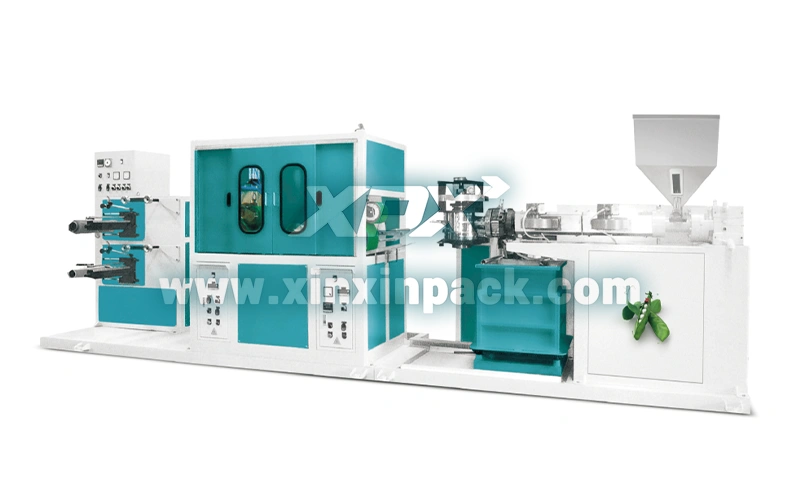
Ultimately, achieving world-class consistency—where every single pouch in a run of 500,000 has the zipper seal within 0.2mm of the same position relative to the edge—is a function of the machine's core architecture. The stiffness of the frames, the resolution of the motion control system, and the thermal uniformity of the sealing tools are built-in characteristics that no amount of retrofitting can fully replicate.
If you find your team perpetually fighting the same precision battles, it may be time to move beyond component-level fixes. Xinxin's range of flexible packaging solutions is engineered with a systemic focus on precision, from high-rigidity frames to advanced multi-axis motion control, designed to make consistent, high-quality output the default state, not a daily fight.
References & Further Reading:
The Society of the Plastics Industry (SPI), Guidelines for Process Control in Flexible Packaging
ISO 12647-7:2016, *Graphic technology — Process control for the production of half-tone colour separations, proof and production prints — Part 7: Proofing processes from flexible packaging (referenced for color registration standards)*
Disclaimer: This guide offers general troubleshooting principles. Always consult your specific equipment's manual and manufacturer's safety protocols before performing any maintenance.
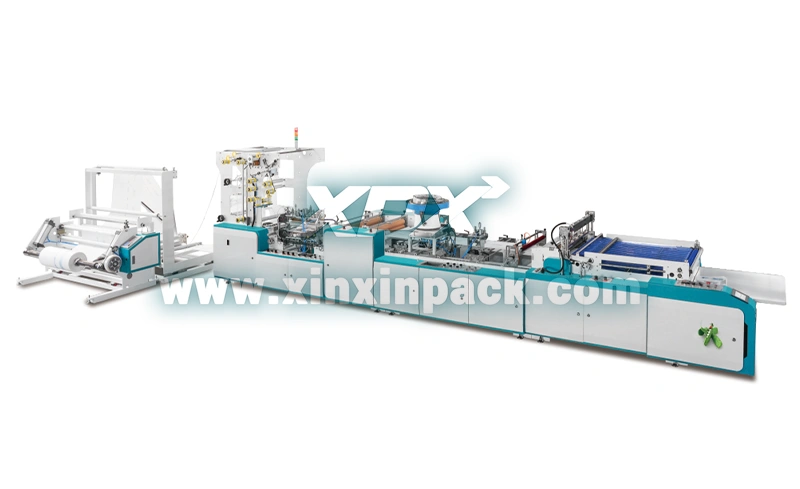

Environmentally friendly materials
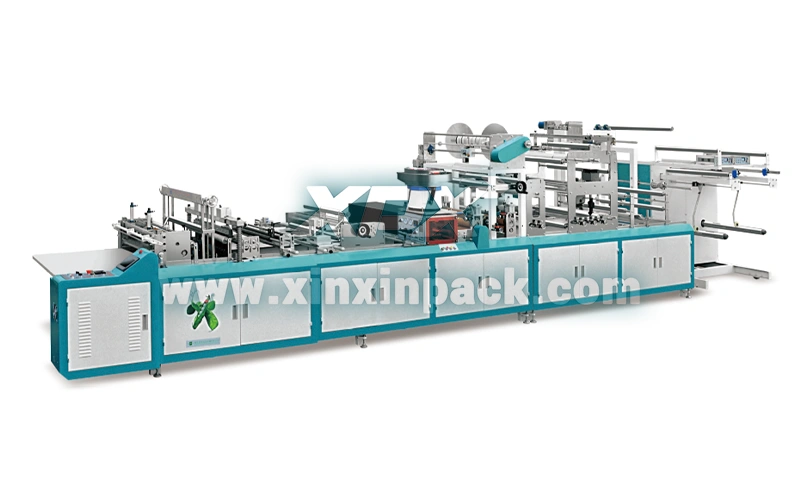
Integrated production lines
Maximising your return on investment